 Diabetes In Control. A free weekly diabetes newsletter for Medical Professionals. News and information for Medical Professionals.
Low mood in healthy children is associated with poorer metabolic health independently of adiposity… Mood comprises two main traits – positive and negative affect, both associated with depression and anxiety. Studies in children have linked depression with obesity, but the association with metabolic health is unclear. Researchers from Plymouth University …
Read More »Black Women Working Night Shifts Have an Increased Risk of Developing Diabetes
The association was also found to be stronger in younger women than in older women… Data from a large ongoing study into the health of African-American women show that those who work night shifts are significantly more likely to develop diabetes than those who have never worked night shifts, with …
Read More »Anemia and Much Older Type 2 Diabetes Patients
Anemia is higher in older type 2 diabetes patients… The chances of an anemia diagnosis increase with age and it affects roughly about 10% of those 65 years of age or older. In diabetes patients, the probability of diagnosing anemia could be two to threefold higher and furthermore, from previous …
Read More »New Enzyme Inhibitor May Prevent Onset of Type 2 Diabetes
The new drug apparently works by stabilizing metabolites of an omega-3 fatty acid called DHA… Researchers Bruce Hammock at the University of California, Davis, and Joan Claria at the University of Barcelona found that an enzyme called soluble epoxide hydrolase, or sEH, inhibitor both prevented the onset of diabetes and …
Read More »Severe and Nonsevere Hypoglycemia in Glargine Insulin Treatment
Hypoglycemia was relatively uncommon in the ORIGIN (Outcome Reduction with an Initial Glargine Intervention) trial… ORIGIN trial investigators have published results of their look at treatment with insulin glargine compared with standard care early in the course of dysglycemia, and its effects on hypoglycemia. A total of 12,537 people with …
Read More »Type 2 Diabetes Linked with Colorectal Cancer
A longer duration of obesity also increased risk of colorectal cancer for diabetic patients… Dutch researchers have assessed the risk of colorectal cancer associated with type 2 diabetes, as compared with a nondiabetic reference population. They conducted an observational population-based cohort study within the Clinical Practice Research Datalink (1987–2012). All …
Read More »FDA Approves Maestro Rechargeable System (EnteroMedics) for Treatment of Obesity.

The Maestro Rechargeable System is indicated for treatment of patients aged at least 18 years with a BMI of 35 to 45 with at least one obesity-related condition and who have failed to lose weight on a weight loss program. The novel device is the first to target the nerve …
Read More »Diabetes Mellitus 101 for Cardiologists, Part 15
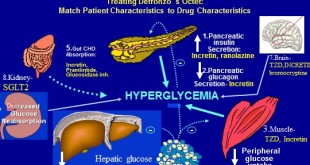
In this week’s Homerun Slides, we continue our exploration of the positive effects of Ranolazine, which is used to treat angina, and then begin to focus in on therapies for type 2 patients with cardiovascular concerns… To download these slides in PowerPoint (.ppt) format, use this link: Diabetes Mellitus 101 for Cardiologists, Part …
Read More »Dr. David Platt – BTI320, a New Approach to Therapy

Steve Freed: Please tell us a little about yourself and this new compound, BTI320. Dr. David Platt: My area of expertise is the recognition between carbohydrate and protein. In my previous two companies, I developed drugs for a recognition between sugar and protein. In one case, it was a protein that …
Read More »Handbook of Diabetes, 4th Ed., Excerpt #27: Diabetes in Childhood and Adolescence

Rudy Bilous, MD, FRCP Richard Donnelly, MD, PHD, FRCP, FRACP The vast majority of cases of diabetes in children are type 1, caused by autoimmune destruction of beta cells in the pancreatic islets. A steady increase in the incidence of type 1 diabetes has been reported worldwide (average increase 2.5-3% per year …
Read More »