Nov 24, 2014
Videos
4,490 views
Dr. Aaron Vinik addresses the question of why so much current diabetes therapy is focused on lowering blood glucose levels despite evidence that for some cardiovascular issues, this doesn’t have as much of an impact as other drugs which may have less BG-lowering capacities….
Read More »
Nov 24, 2014
Featured Writers
19,296 views
It was 8:15 pm. A patient who lives alone called me. “Joy, I just mixed up my Humalog and my Lantus. I took 20 units of Humalog but I was supposed to take 20 units of Lantus, and I took 10 units of Lantus.” I knew that the onset of …
Read More »
Nov 23, 2014
Cardiology, Clinical Presentations
3,818 views
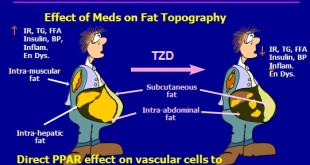
In this week’s Homerun Slides, Dr. Stanley Schwartz discusses the “Adipocytokine Syndrome” which he describes as “A New Model for Insulin Resistance and Beta Cell Dysfunction.” He also reviews and compares several diabetes drugs’ effects on insulin resistance and beta cell function as well as other diabetes comorbidities…. To download these …
Read More »
Nov 23, 2014
Clinical Gems, Devices
9,966 views
Rudy Bilous, MD, FRCP Richard Donnelly, MD, PHD, FRCP, FRACP Atherosclerosis For any given age, level of cholesterol or BP, the risk of atherosclerotic cardiovascular disease (CVD) is 3 to 5-fold higher among patients with diabetes compared with subjects without diabetes. Macrovascular complications include fatal and non-fatal coronary heart disease (CHD) events, …
Read More »
Nov 21, 2014
Articles, Type 1 Diabetes
2,881 views
A previous history of severe hypoglycemia is linked to increased death rates after a cardiovascular event in type 1 diabetes patients… Hypoglycemia is the most common and life-threatening complication of type 1 diabetes. The average type diabetes patient experiences about two episodes of hypoglycemia per week. Patients with type 1 …
Read More »
Nov 21, 2014
Articles, Type 2 Diabetes
7,208 views
Macrophages, a type of immune cell, were found invading pancreatic tissue during the early stages of the disease… Type 2 diabetes is characterized by the loss of beta cells, reduced insulin production and low-grade systemic inflammation. A new study compared healthy mice to obese mice that developed diabetes. The mice were followed …
Read More »
Nov 21, 2014
Articles, Type 2 Diabetes
3,944 views
Free fatty acids may play an important role in the development of diabetes and cardiovascular diseases… Diabetes increases the risk of cardiovascular disease and stroke. About 50% of people with diabetes die of cardiovascular disease. Hyperglycemia causes an increase in free fatty acids (FFA), which is derived from lipolysis. An …
Read More »
Nov 21, 2014
Articles, Obesity
2,202 views
Catheter-based procedure expected to decrease hormone responsible for appetite… Bariatric embolization is a minimally invasive technique whereby a small catheter is introduced into the groin or wrist and guided into the left gastric artery that supplies the upper stomach. Particles smaller than a grain of sand are then injected into …
Read More »
Nov 21, 2014
Articles, Nephrology
2,182 views
Convenience, cost, frequency contribute to decrease in mortality rates… A report from American Society of Nephrology (ASN) Kidney Week 2014 showed that home dialysis therapies may help prolong the lives of patients with kidney failure when compared to hemodialysis treatments administered in medical centers. It was shown that home dialysis …
Read More »
Nov 21, 2014
Articles
2,537 views
Prescribers can consider cheaper drugs until further studies are done…
Read More »
 Diabetes In Control. A free weekly diabetes newsletter for Medical Professionals. News and information for Medical Professionals.