 Diabetes In Control. A free weekly diabetes newsletter for Medical Professionals. News and information for Medical Professionals.
Have you recommended to any patients the drug treatment of using a GLP-1 receptor agonist and a SGLT-2 inhibitor combination? Follow the link to share your opinion.
Read More »GLP-1, SGLT-2 Combo


Have you recommended to any patients the drug treatment of using a GLP-1 receptor agonist and a SGLT-2 inhibitor combination? Follow the link to share your opinion.
Read More »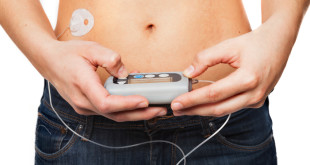
(This is a follow-up to the patient who was under the impression he would always need an insulin pump.) It was a "rocky" start at first. The patient had some early morning highs and some unexpected lows, but likes being off the pump. He wears his Dexcom, which he plans to continue with. This has been extremely helpful with alarms during the adjustments to his long-acting and rapid-acting insulins. The endocrinologist knew the patient was extremely sensitive to insulin, so his rapid-acting insulin has gone from using 1-unit increments to 0.5-unit increments instead and is doing well. At this time, the patient wants to stay off the pump, continue with MDI and the sensor. We're still making minor changes, but getting close to goal.
Read More »
In this week's Homerun Slides, the natural history and progressive behavior of type 2 diabetes.
Read More »
Loss of beta-cell functional identity: The dominance of beta-cell functional impairment in T2DM implies that beta-cells have lost, at least in part, their normal insulin secretory phenotype. The associated molecular features have been discussed in a number of insightful reviews and research articles, and the role of genetic, epigenetic, transcriptomic and proteomic changes has been described extensively. At the cellular level, beta-cell insulin degranulation and the recently hypothesized beta-cell dedifferentiation phenomenon could play key roles. Insulin granules can be easily identified by electron microscopy on the basis of their typical morphology, characterized by a dense core and a more or less clearly visible halo. In addition, secretory granules can be subdivided into mature and immature, based on distinct ultrastructural, biochemical, and functional, with a relative ratio of 6 to 10 in normal human beta-cells.
Read More »
Elevated BP readings at the doctor’s office linked to higher mortality than for those with consistently normal blood pressure.
Read More »
Use of expanded criteria thought best way to detect widest population with abnormal blood glucose levels.
Read More »
It can improve insulin sensitivity, pancreatic response to blood sugars, and even prevent prediabetes from turning into diabetes.
Read More »
2016 FDA warning conflicts with recent evidence showing no increased risk following use of treatment.
Read More »
ADA Guidelines highlight importance of social stability in diabetes management.
Read More »
After four years of good glycemic control with metformin 1500 mg a day, Mrs. Hunter returns for her 6-month follow-up visit. At this time, her office A1C is 8.2% and she has gained seven pounds. She is very concerned about her weight gain. If weight is a concern, what would be the best antiglycemic drug to add to her regimen? A. A sulfonylurea B. A DPP-4 inhibitor C. A thiazolidinedione D. A GLP-1 receptor agonist Follow the link for the answer.
Read More »