 Diabetes In Control. A free weekly diabetes newsletter for Medical Professionals. News and information for Medical Professionals.
According to a published study seven metabolites can predict the risk of type 2 diabetes in Native American patients… Using these metabolites improved risk prediction beyond established methods of predicting diabetes risk, including BMI, fasting glucose, and insulin resistance. Jinying Zhao, MD, PhD, of the Tulane University School of Public …
Read More »Patients with Type 1 Diabetes Can Still Produce Insulin 40 Years Later
According to a new study, about 1/3 of people with type 1 diabetes produce insulin, as measured by C-peptide, even upward of 40 years from initial diagnosis… The findings shed new light on the long-accepted belief that patients with type 1 diabetes lose all ability to produce any insulin. The …
Read More »New Food Ingredient Can Increase Satiety
Inulin-proprionate-ester helps to stimulate the gut to release hormones including GLP-1 that act on the brain to reduce hunger….
Read More »Patients Can Lose Years of Life Because of Excess Weight
A team of Canadian researchers found that as many as 8 years could be lost by men and the effects of overweight and obesity were greatest for younger patients.
Read More »Fasting Insulin Levels in Children May Predict Adult Diabetes
Elevated fasting insulin levels in children aged 3 to 6 years may help predict which children will develop type 2 diabetes as adults… Although researchers did not find the same association for older children and adolescents, they did find an association between body mass index (BMI) in peripubertal years and …
Read More »Economic Insecurities Linked to Poor Diabetes Control
Cost-related medication underuse was the most common “material need insecurity…”
Read More »Obesity Risk Can Depend on Year of Birth
Before 1942, environmental factors were not as significant as in later years, when they are believed to be twice as strong… A multi-institutional research team at Massachusetts General Hospital has found out that environmental factors may outweigh genetic ones, as the risk of obesity that runs even in the same …
Read More »Vibe Insulin Pump with CGMS Technology
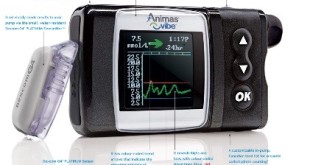
Animas, a division of Johnson & Johnson, has finally won FDA approval for its Vibe insulin pump and continuous glucose monitoring system. The pump is the first to pair with Dexcom’s G4 PLATINUM continuous glucose monitor that samples interstitial fluid every five minutes and provides a trending chart of …
Read More »Diabetes Mellitus 101 for Cardiologists, Part 12

In this week’s Homerun Slides, we continue our discussion of incretins and then examine the benefits of adding SGLT-2 inhibitors to patient medication regimens…. To download these slides in PowerPoint (.ppt) format, use this link: Diabetes Mellitus 101 for Cardiologists, Part 12 Other sets in this series: Diabetes Mellitus 101 for Cardiologists, Part …
Read More »Handbook of Diabetes, 4th Ed., Excerpt #24: Psychological and Psychiatric Problems in Diabetes

Rudy Bilous, MD, FRCP Richard Donnelly, MD, PHD, FRCP, FRACP Particular groups of patients with diabetes are at risk of different psychological problems (Table 25.1). Many children show remarkable resilience to the diagnosis of diabetes, but about one-third have some temporary psychological distress, mostly ‘adjustment disorders’ such as difficulty in sleeping, depression, …
Read More »