 Diabetes In Control. A free weekly diabetes newsletter for Medical Professionals. News and information for Medical Professionals.
With Sanofi's LixiLan® filed for FDA approval, GLP-1 agonist/basal insulin combinations may be potential game changers.
Read More »GLP-1 Agonist/Basal Insulin Combinations: New Headway for Diabetes Treatment


With Sanofi's LixiLan® filed for FDA approval, GLP-1 agonist/basal insulin combinations may be potential game changers.
Read More »
16-year-old male, type 1 diabetes since 2 years of age, pump therapy. Eats about the same thing daily. Post prandials vary widely. When corrects for highs, gets low.
Read More »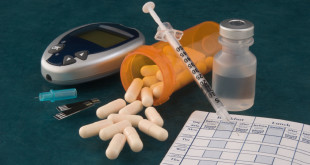
In this week's Homerun Slides, part 2 of the Canadian Diabetes Association's specific recommendations for patient-centered diabetes care.
Read More »
Metabolism-secretion coupling, triggering pathway: Glucose metabolism increases the cytosolic ATP concentration in pancreatic beta cells, this rise in ATP causing closure of the KATP channels and depolarization of the beta-cell membrane. Thus, KATP channels couple the cell’s metabolic state to electrical activity. The beta-cell KATP channel is composed of two subunits: Kir6.2 as a pore-forming subunit and the sulfonylurea receptor SUR1 as a regulatory subunit. Activity of the KATP channel is critical for GIIS. Membrane depolarization opens VDCCs, which allows Ca2+ influx into β cells, the resultant rise in intracellular Ca2+ triggering exocytosis of insulin granules. Thus, KATP channels and VDCCs are major ion channels required for metabolism-secretion coupling in insulin release.
Read More »
Baritastic is a tool for your patients. Already the most robust app built specifically for the bariatric patient, now your program can connect, support, and monitor your patients using the Baritastic app. They use many of the same features in Baritastic to create a unique free app specifically for your program.
Read More »
Are you changing your criteria for recommending metabolic surgery to your patients based on the new guidelines issued by International Diabetes Federation Taskforce on Epidemiology and Prevention of Diabetes (see article 1)?
Read More »
In part 4 of this Exclusive Interview, Dr. Chous discusses his findings during a clinical trial of a multi-component supplement used to intervene in the development of diabetic retinopathy and improve visual function.
Read More »
In this week's Homerun Slides, part 4 of the Canadian Diabetes Association's specific recommendations for patient-centered diabetes care.
Read More »
In pancreatic beta cells, glucose metabolism is essential for the regulation of insulin secretion. Glucose is taken up by glucose transporters and metabolized to generate adenosine triphosphate (ATP), which is the main driver of glucose-induced insulin secretion (GIIS). Increased cytosolic ATP causes closure of ATP-sensitive K+ (KATP) channels, depolarizing the plasma membrane, leading to the opening of voltage-dependent Ca2+ channels (VDCCs), which allows Ca2+ influx. The resultant rise in intracellular Ca2+ concentration ([Ca2+]i) induces exocytosis of insulin granules in the triggering pathway of insulin secretion. In addition, other signals generated by glucose amplify insulin secretion. Lipid metabolism is also involved in GIIS by interacting with glucose metabolism.
Read More »
New study indicates canagliflozin superior to glimepiride in lowering A1C.
Read More »