 Diabetes In Control. A free weekly diabetes newsletter for Medical Professionals. News and information for Medical Professionals.
When glucose numbers improve, patients are expected to feel better. Yet some people with type 1 diabetes report the opposite. A glucose level that looks reassuring on a continuous glucose monitor may leave them feeling tired, uncomfortable, or simply “off.” New research suggests that glycemic habituation may help explain this …
Read More »SGLT Inhibitors Protect the Heart and Kidneys: Why Is Type 1 Diabetes Still the Exception?
SGLT inhibitors have changed the treatment landscape for cardiovascular and kidney disease, particularly in people with type 2 diabetes, heart failure, and chronic kidney disease. That success raises an obvious question: why are SGLT inhibitors in type 1 diabetes still largely outside routine clinical practice? The answer is not a …
Read More »Three Decades of Better Type 1 Diabetes Care: Have Complications Actually Declined?

Three decades of advances in diabetes care have transformed how people with type 1 diabetes manage glucose. Insulin pumps, continuous glucose monitoring (CGM), improved insulin analogs, automated insulin delivery, and earlier screening have all changed daily treatment. However, have these advances actually reduced the long-term complications of type 1 diabetes? …
Read More »Human vs. Analogue Insulin: Does Newer Really Mean Better for Type 1 Diabetes?
The choice of human vs analogue insulin is especially important for people with Type 1 diabetes who live where healthcare resources are limited. Analogue insulins are often preferred because their action can be more predictable and flexible. However, human insulin is generally less expensive and may be easier for health …
Read More »Diagnosed Younger: Does Type 1 Onset Shape Later Risk?

Does being diagnosed with type 1 diabetes at age 6 carry the same long-term risks as being diagnosed at 16? Researchers have been asking that question for years. Increasingly, evidence suggests that age at type 1 diabetes onset may help explain differences in complication patterns later in life. However, age …
Read More »Beyond A1C: Can CGM Help Prevent Severe Hypoglycemia and DKA?
Continuous glucose monitoring has changed how clinicians and people with diabetes think about glucose control. Yet the next question is more important than whether CGM improves A1C or Time in Range. Can it prevent events that send patients to the emergency department or hospital? Growing evidence suggests that CGM may …
Read More »The Treatment Stopped—Did the Benefit Last? New Baricitinib Data in Type 1 Diabetes
New follow-up research on baricitinib for type 1 diabetes addresses a crucial question: what happens after the drug is stopped? The original BANDIT trial showed that 48 weeks of oral baricitinib helped preserve beta-cell function in people with recently diagnosed type 1 diabetes. However, new follow-up research examines participants through …
Read More »Can Weight Loss Delay Type 1 Diabetes? What the Pre-Symptomatic Data Really Show

Efforts to prevent or delay type 1 diabetes have traditionally focused on the autoimmune attack that destroys insulin-producing beta cells. However, emerging research suggests metabolic stress may also influence how quickly vulnerable people progress to clinical disease. A 2026 TrialNet analysis found that autoantibody-positive people with overweight or obesity who …
Read More »Could a Virus Vaccine Help Prevent Type 1 Diabetes? Inside the Human Trials
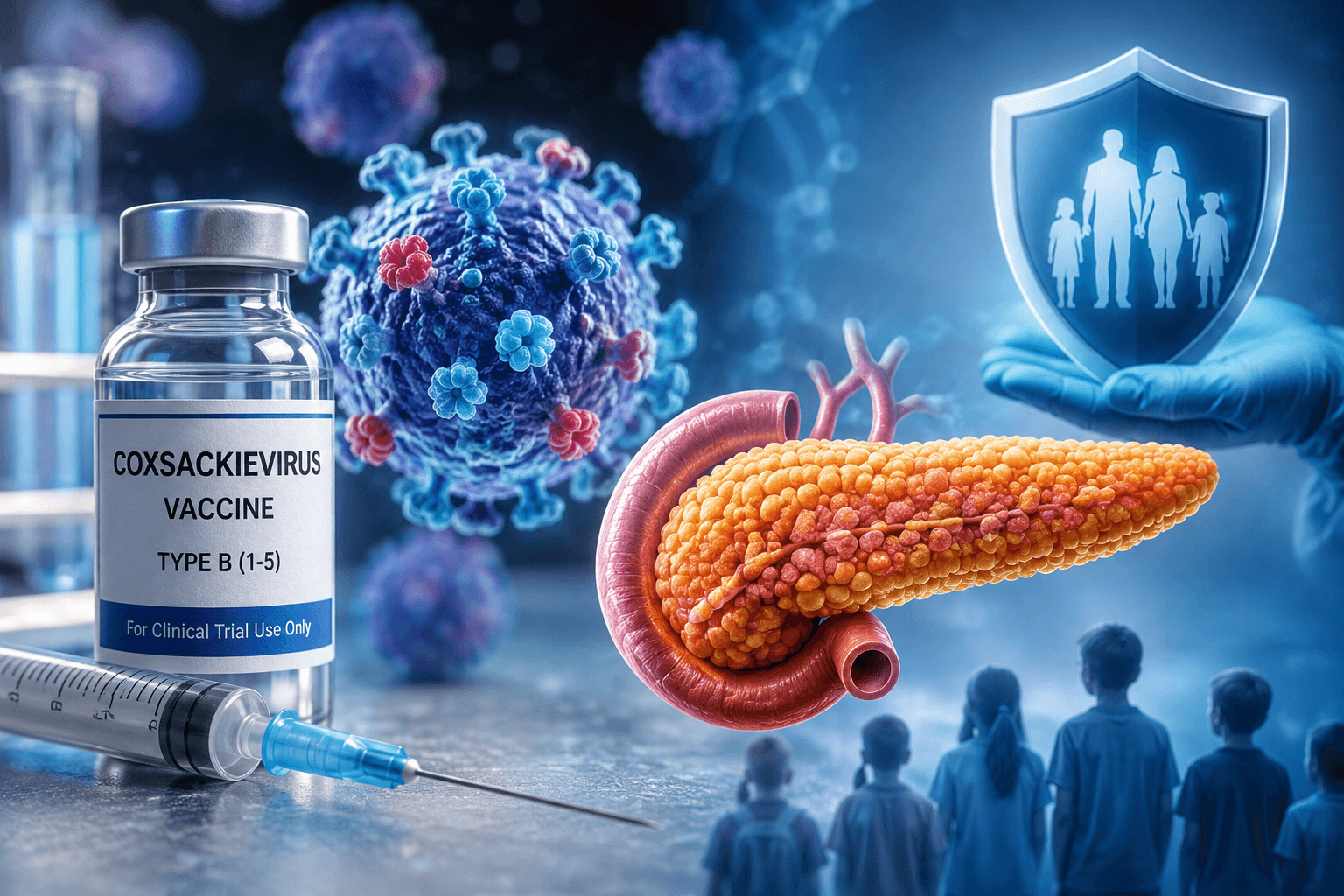
Could preventing a common viral infection also prevent some cases of type 1 diabetes? Researchers have pursued that question for decades, and the first human vaccine studies are providing important clues. The idea of using a Coxsackievirus vaccine to help prevent type 1 diabetes focuses on certain Coxsackie B viruses, …
Read More »A Type 1 Breakthrough: Can We Transplant Islets With Less Toxic Immunosuppression?

Donor islet transplantation has long offered an intriguing possibility for people with severe type 1 diabetes: restore the body’s ability to make insulin instead of only replacing insulin from the outside. However, there has always been a major tradeoff. Patients need powerful immunosuppressive drugs to keep transplanted cells alive, and …
Read More »