 Diabetes In Control. A free weekly diabetes newsletter for Medical Professionals. News and information for Medical Professionals.
When glucose numbers improve, patients are expected to feel better. Yet some people with type 1 diabetes report the opposite. A glucose level that looks reassuring on a continuous glucose monitor may leave them feeling tired, uncomfortable, or simply “off.” New research suggests that glycemic habituation may help explain this …
Read More »Could a Simple Blood Test Predict a Heart Event in Type 2 Diabetes?
Could a routine blood sample someday reveal cardiovascular danger that cholesterol, blood pressure, and HbA1c do not fully capture? New research suggests that epigenetic cardiovascular risk prediction could offer a new way to identify people with type 2 diabetes who face a higher short-term risk of major cardiovascular events. Instead …
Read More »Which Diabetes Drug Will Work Best? New Research Puts Precision Prescribing to the Test

Precision diabetes treatment aims to answer a question clinicians and patients face every day: which diabetes drug is most likely to work best for this particular person? A new analysis from the TriMaster crossover trial offers an important clue. Researchers compared several precision-medicine strategies for predicting responses to sitagliptin, canagliflozin, …
Read More »The Treatment Stopped—Did the Benefit Last? New Baricitinib Data in Type 1 Diabetes
New follow-up research on baricitinib for type 1 diabetes addresses a crucial question: what happens after the drug is stopped? The original BANDIT trial showed that 48 weeks of oral baricitinib helped preserve beta-cell function in people with recently diagnosed type 1 diabetes. However, new follow-up research examines participants through …
Read More »Beyond hs-CRP: Could suPAR Reveal Hidden Heart Risk in Type 2 Diabetes?
People with type 2 diabetes can face substantial cardiovascular risk even when clinicians address familiar risk factors such as LDL cholesterol, blood pressure, smoking, and blood glucose. Could another blood marker help reveal some of the risk that remains? Emerging research on the suPAR biomarker in diabetes suggests it may …
Read More »Could a Virus Vaccine Help Prevent Type 1 Diabetes? Inside the Human Trials
Could preventing a common viral infection also prevent some cases of type 1 diabetes? Researchers have pursued that question for decades, and the first human vaccine studies are providing important clues. The idea of using a Coxsackievirus vaccine to help prevent type 1 diabetes focuses on certain Coxsackie B viruses, …
Read More »A Type 1 Breakthrough: Can We Transplant Islets With Less Toxic Immunosuppression?

Donor islet transplantation has long offered an intriguing possibility for people with severe type 1 diabetes: restore the body’s ability to make insulin instead of only replacing insulin from the outside. However, there has always been a major tradeoff. Patients need powerful immunosuppressive drugs to keep transplanted cells alive, and …
Read More »Diabetes Research Is Being Reinvented: Why Today’s Clinical Trials Look Nothing Like a Decade Ago

Modern diabetes clinical trials look very different from the tightly controlled, site-centered studies clinicians relied on a decade ago. Remote visits, continuous glucose monitoring, wearable sensors, digital data collection, and broader enrollment are changing how evidence is generated. Meanwhile, newer trial designs can make studies more flexible and potentially more …
Read More »The Exercise Hormones That Could Become Tomorrow’s Diabetes Drugs
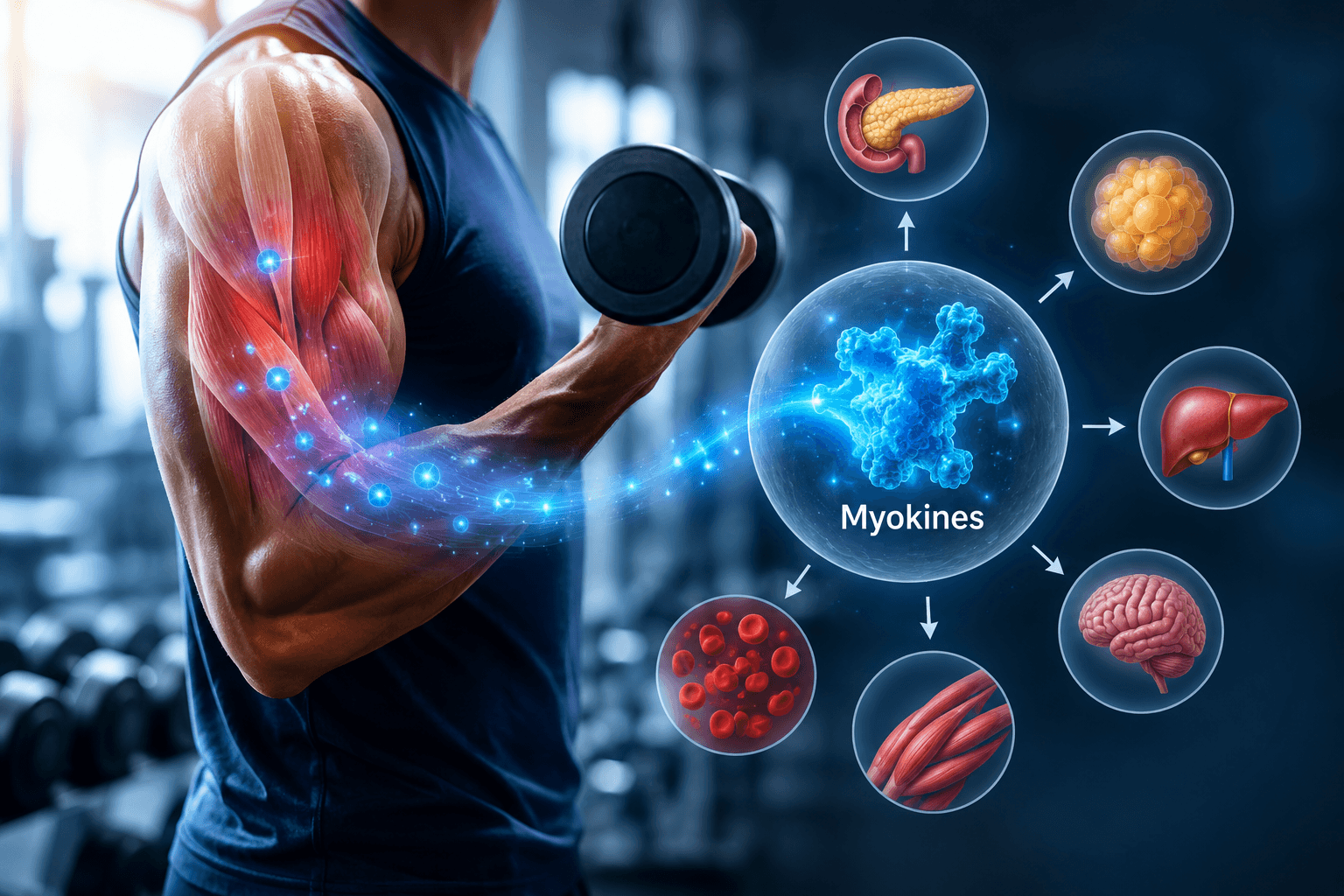
What if scientists could capture some of the metabolic benefits of exercise in a medicine? Research into the connection between myokines and diabetes is bringing that possibility closer to serious scientific discussion. When skeletal muscles contract, they do more than move the body. They release signaling molecules called myokines that …
Read More »Could a Stool Test Predict Your Patient’s Best Diabetes Medication?

Could a stool sample someday help clinicians choose a diabetes medication before writing the prescription? Emerging research into gut biomarkers in diabetes is moving that possibility closer to clinical reality. Rather than simply cataloging which bacteria live in the intestine, researchers are examining microbial genes, stool-derived metabolites, and functional signatures …
Read More »