 Diabetes In Control. A free weekly diabetes newsletter for Medical Professionals. News and information for Medical Professionals.
In this week's Homerun Slides, surprising information about SGLT-2 inhibitors.
Read More »Diabetes for Cardiologists Part 9
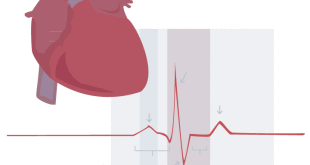
In this week's Homerun Slides, surprising information about SGLT-2 inhibitors.
Read More »
Twin and family studies indicate that genetic factors alone cannot explain the etiology of T1DM. Seasonality, increasing incidence and epidemics of T1DM as well as numerous ecological, cross-sectional and retrospective studies suggest a critical role of environmental factors, such as infections with certain viruses (especially enteric infections in early life) and effects of early childhood diet. Natural history studies that follow children at increased risk of T1DM provide the best opportunity to study environmental triggers.
Read More »
New management recommendations for the treatment of type 2 diabetes.
Read More »
Metformin, sulfonylureas, and insulin show varied survival rates in patients with type 2 diabetes.
Read More »
While interval training is routinely used by sports teams and athletes, is this type of training beneficial for most individuals with diabetes? It certainly saves time—who can’t fit in 10 minutes of exercise three days per week?—but would it benefit weight control in the average person?
Read More »
What is the most important aspect in treating diabetes -- lowering blood sugars or protecting the heart? Follow the link to respond!
Read More »
(Continued from Question #816, Question #817 and Question #818 ) Mrs. O’Doole is a 34-year-old of Irish descent. She works as a florist and is married with three children. She arrives at your clinic for her annual wellness exam. Her blood pressure is 130/84 mmHg, pulse 65, BMI 24 kg/m2 and her physical exam is notable for acne and mild hirsutism. Her only current medication is oral birth control pills. She recalls starting OCP, 15 years prior, due to irregular menses. Based upon her medical history and physical, you believe it would be prudent to screen Mrs. O’Doole for type 2 diabetes. You discuss your recommendations with her and she agrees to be tested. The lab returns a fasting plasma glucose (FBG) of 112 mg/dL. You share these results with your patient and inform her that while only mildly elevated, she has impaired fasting glucose. She was started on lifestyle modifications plus dietary modifications, and exercise for weight loss. At a follow-up appointment 6 months later, Mrs. O’Doole tells you despite good intentions, she has not been able to adhere to any meaningful lifestyle changes, in fact she has gained 5 pounds. At this time, her repeat fasting plasma glucose shows FPG 138 mg/dL. After discussing management options with her, you decide the best management would be metformin and lifestyle modifications. You discuss the benefits of lifestyle changes with Mrs. O’Doole and tell her that you are referring her to an exercise program specifically for individuals with type 2 diabetes. What schedule of exercise is recommended for patients like Mrs. O’Doole? Follow the link to answer!
Read More »
A 15-year-old type 1 diabetic is seen who frequently forgets to take her insulin because of time issues. At the time of her initial appointment, her A1C was 10.4. After discussing issues preventing her from taking her insulin, I suggested that she take her insulin through her clothes.
Read More »
In part 2 of this exclusive interview, Dr. Aaron Vinik shares an update on INGAP research.
Read More »
In this week's Homerun Slides, the cardiovascular risk of using sulfonylureas.
Read More »