Home / Resources (page 374)

Resources

RESOURCES

International Textbook of Diabetes Mellitus, 4th Ed., Excerpt #11: Epidemiology and Risk Factors for Type 1 Diabetes Mellitus Part 5 of 5

In industrialized countries, 20–40% of T1DM patients younger than 20 years present with diabetic ketoacidosis. After adjusting for age, gender, ethnicity, diabetes type, and family history of diabetes, diabetic ketoacidosis at diagnosis was associated with lower family income, less desirable health insurance coverage, and lower parental education. Younger children present with more severe symptoms at diagnosis, because children younger than 7 years old have lost on average 80% of the islets, compared to 60% in those 7–14 years old and 40% in those older than 14 years.

Read More »

Question #820

Test Your Knowledge

Mr. Hernandez is an overweight (BMI 30 kg/m2), 45-year old plumber of Hispanic heritage who arrives at your office for a first-time visit. He has not been to a physician during the last 7 years because he hasn’t always had health insurance and “doesn’t like going to the doctor.” However, he has been noticing lately that his vision seems a little blurry and he’s developed a red, itchy rash in his groin. He is a non-smoker and recalls being told a long time ago that he should eat a low salt diet, but he can’t remember why. On examination, his BP is 154/96 mm/Hg, and his pulse is 72, RR 22. His physical exam is notable for signs of a yeast infection in his groin. You order a CBC and A1C to be drawn that day before he leaves. You advise him how to treat his skin infection. When you receive the results of the chem 12 panel, it shows a random plasma glucose of 162 mg/dL and A1C 7.3%. You call Mr. Hernandez and ask him to return the next morning, before he has eaten, for additional labs. In this individual, you might order all the following labs EXCEPT...follow the link to select your answer!

Read More »

Create Safe Environment for Your Patients to Tell You the Truth

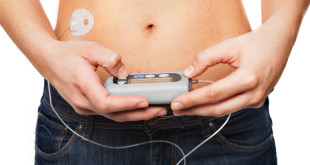
A teenage type 1 on an insulin pump was seen in our office for follow up. The download on her pump revealed some interesting numbers. First off, her glucose levels were out of target range and secondly her I:CHO ratio and her insulin sensitivity looked more like the numbers of a type 2 diabetic vs a type 1. Her I:CHO was 1:16 and her insulin sensitivity was 1:30. In my experience, I'm used to seeing a lower I:CHO and a higher insulin sensitivity in type 1 vs type 2.

Read More »