 Diabetes In Control. A free weekly diabetes newsletter for Medical Professionals. News and information for Medical Professionals.
BD has received FDA clearance for its new insulin pump infusion set with FlowSmart technology. The new set uses a novel catheter which allows insulin to flow out of two places: the bottom (like current infusion sets) and the side (a new innovation). the new tech innovation led to an …
Read More »Humalog U-200 KwikPen
Humalog U-200 KwikPen holds twice as many units of insulin (600 units vs. 300 units) as the U-100 formulation in the same three-milliliter cartridge. This offers patients a pen that lasts longer between pen changes, allowing for fewer changes every month. Humalog U-200 KwikPen delivers the same dose in …
Read More »The Bionic Pancreas
A collaborative group from Boston University and Massachusetts General Hospital are working together to make automated blood glucose control a reality. Engineers from Boston University have developed a bionic pancreas system that uses continuous glucose monitoring along with subcutaneous delivery of both rapid-acting insulin (to lower blood glucose) and glucagon …
Read More »Medications Via Microchip
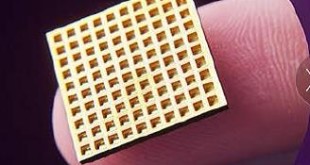
New investigational technology from MicroCHIPS (Lexington, Massachusetts) may make long-term, wireless drug delivery possible. The microchip-based implant is placed under the skin and contains 200 micro-reservoirs that can each store 1 mg of medication. Clinicians can remotely control medication release wirelessly; it can also be outfitted with sensors that …
Read More »t:flex Pump – Large Capacity Insulin Pump
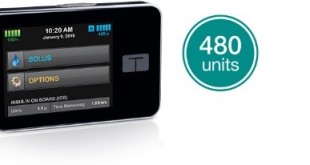
The FDA has approved the t:flex insulin pump for marketing. The pump, manufactured by Tandem Diabetes Care, can store the largest amount of insulin (480 units) of any pump available in the U.S. Designed for people who require more than 80 units of U-100 insulin per day, the t:flex …
Read More »Once-a-Year Implant for Diabetes: An Answer to Adherence
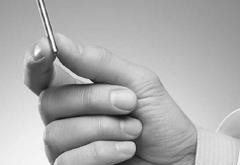
This matchstick-sized pump — currently called the ITCA 650 (Intarcia Therapeutics; Boston, Massachusetts) — could replace pills and injections for type 2 diabetes. It’s implanted under the skin of the abdomen and releases doses of the glucagon-like peptide-1 agonist exenatide (Bydureon®, Byetta®) to help control blood glucose. It must …
Read More »Glucose Sensing Contact Lens
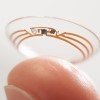
Google gets the patent on a system that would likely contain a couple of parts: the contact lens, which would sense glucose levels; a "reader" device, which would communicate and power the contact lens; and a user display, where the reader and user display could be on the same …
Read More »Cell Phone Pump

Nearly a century ago, the first patient was injected with insulin. Now, patients with diabetes are on the verge of being able to set their insulin doses using their smartphones. The progress in tech-based treatment in recent years is staggering, with wireless and implantable technologies emerging that just a …
Read More »An Artificial Pancreas
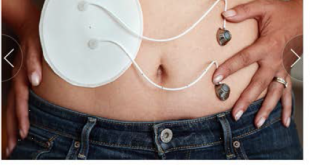
An Artificial Pancreas People with type 1 diabetes may soon be able to set their insulin doses by smartphone. Researchers from Massachusetts General Hospital and Boston University are testing a "bionic pancreas," a pump that goes under the skin that, when paired with an app and a small chip, tracks …
Read More »Scanadu Scout™
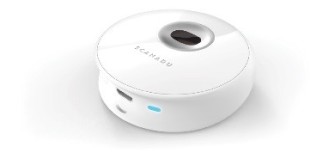
Scanadu Scout™ The Scanadu Scout, currently in the final stages of development, merges several technologies to measure and track vital signs including temperature, blood pressure, heart rate, ECG, and HRV among others. The portable scanner, which works with a smartphone at the moment, will be placed on the forehead and …
Read More »