Diabetes In Control. A free weekly diabetes newsletter for Medical Professionals. News and information for Medical Professionals.
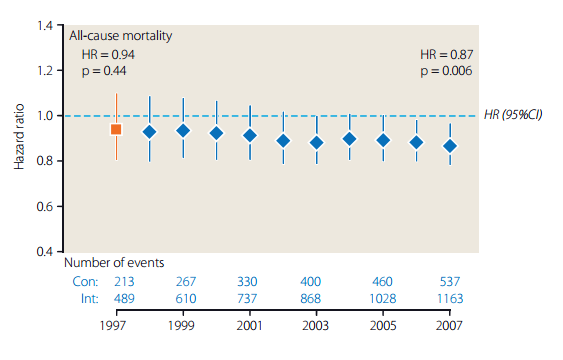
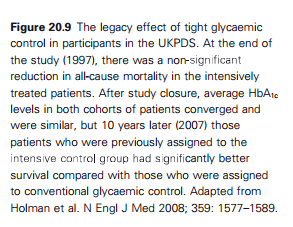
The cardiovascular benefits of tight glycemic control in the first few years after diagnosis of type 1 and type 2 diabetes may not be evident until 10+ years later. This has been well illustrated by the DCCT-EDIC trial in type 1 diabetes and by the UKPDS in type 2 diabetes. In both trials, long after study closure, and despite near-identical post-trial HbA 1c levels in the two groups, those patients who were previously assigned to intensive glycemic control obtained lasting benefits on survival. This has been described as a legacy effect, and reinforces the importance of tight glycemic control in the early stages of type 1 and type 2 diabetes (Figure 20.9).
Recent analyses have shown that low HbA1c (<6.7%), as well as high HbA1c, is associated with increased all-cause mortality and cardiac events, raising further doubts about the safety of intensive glycemic control (Currie et al, 2010).
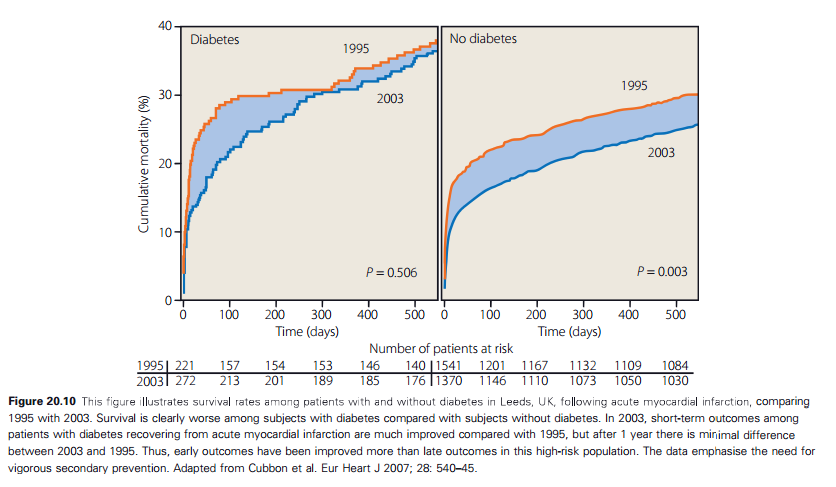
Macrovascular disease remains the leading cause of death among patients with diabetes. The presentation of ischemic heart disease in diabetes includes angina, AMI and heart failure, as it does in the non-diabetic population. However, angina and AMI may be relatively painless (‘silent’) in patients with diabetes. Both short and long-term mortality from myocardial infarction are increased in diabetes, largely through the increased risk of heart failure and reocclusion causing reinfarction. Neverthless, considerable progress has been made over the last 10 – 20 years in improving outcomes from macrovascular events (Figure 20.10).
Multiple risk factor intervention
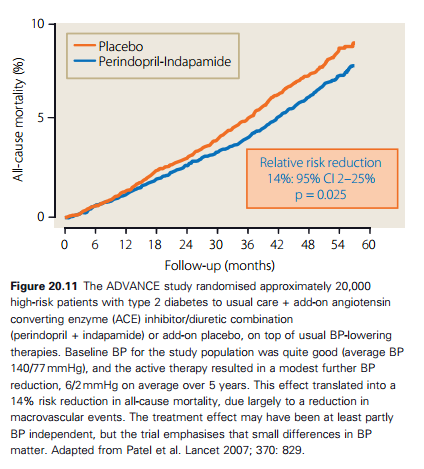
Tight control of BP and lipids is arguably more important than tight glycemic control in preventing deaths from macrovascular disease, but in practice a multifactorial intervention strategy, aggressively lowering all three risk factors, is the mainstay of best practice for cardiovascular protection (Figure 20.11). Thus, international guidelines set tough targets for patients treated for diabetes that include BP < 130/80 mmHg, LDL-cholesterol < 2.0 mmol/L (total cholesterol < 4.0 mmol/L) and HbA 1c < 6.5 – 7%. In those with established nephropathy, optimum BP targets are even lower.
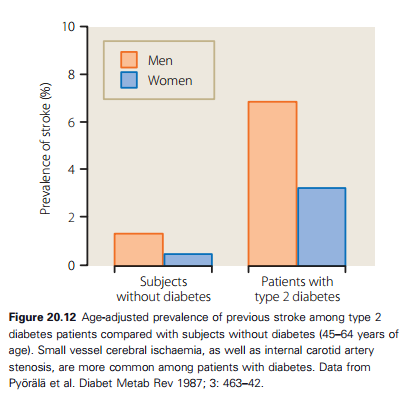
Transient ischemic attacks and stroke are also common in diabetes, and mortality and disability after a stroke are higher in people with diabetes compared to people without diabetes. Admission glucose is a prognostic indicator in acute stroke, but glucose-lowering in the early stages post-stroke has not been shown to improve outcomes (Figure 20.12).