Diabetes In Control. A free weekly diabetes newsletter for Medical Professionals. News and information for Medical Professionals.
Glycemic vascular injury
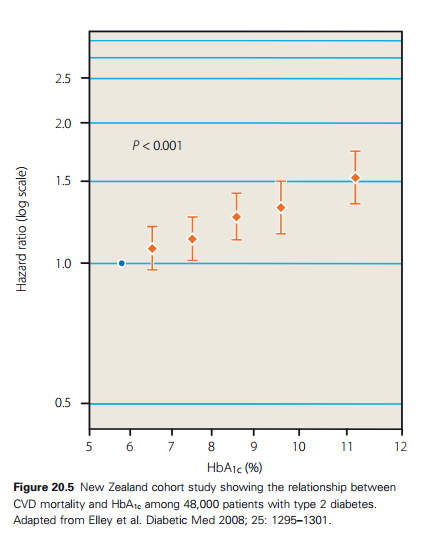
Observational epidemiological studies have shown a continuous linear relationship between HbA1c and CVD mortality which extends into the non-diabetic range of glucose levels, but the excess macrovascular risk in diabetes reflects multiple components of the diabetes syndrome as well as hyperglycemia (e.g. BP, lipids, proteinuria and inflammatory markers) (Figure 20.5). In addition, there is some concern that HbA1c may underestimate the link between glycemia and macrovascular outcomes; postprandial glucose levels may be a better indicator of CVD risk, but a major trial of prandial glucose lowering with nateglinide failed to show a benefit on CV outcomes.
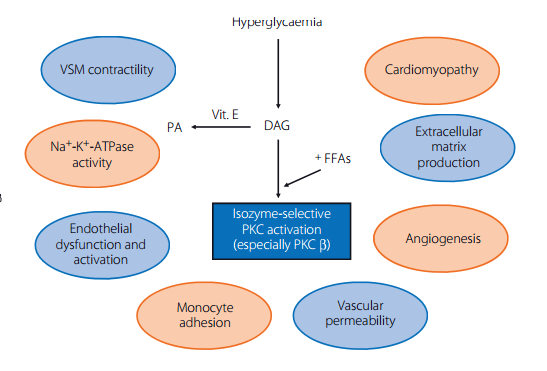
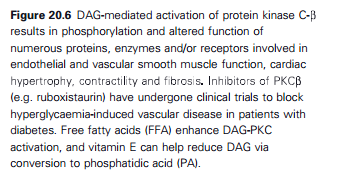
There are four principal mechanisms by which hyperglycemia causes the structural and functional vascular abnormalities associated with diabetes: (1) non-enzymatic glycation of tissue proteins and formation of advanced glycosylation endproducts (AGEs); (2) metabolism of glucose via the aldose reductase pathway; (3) excess formation of reactive oxygen species (ROS) leading to oxidative stress and formation of highly atherogenic endproducts such as oxidized-LDL; and (4) increased de novo synthesis of diacylglycerol (DAG) from intermediate steps in glycolysis, which in turn leads to activation of protein kinase C, especially PKCß. These pathways are not mutually exclusive, and indeed all four probably contribute and interact to influence the development, progression and complications from macrovascular disease (Figures 20.6, 20.7).

Evidence for glucose-lowering in CVD prevention
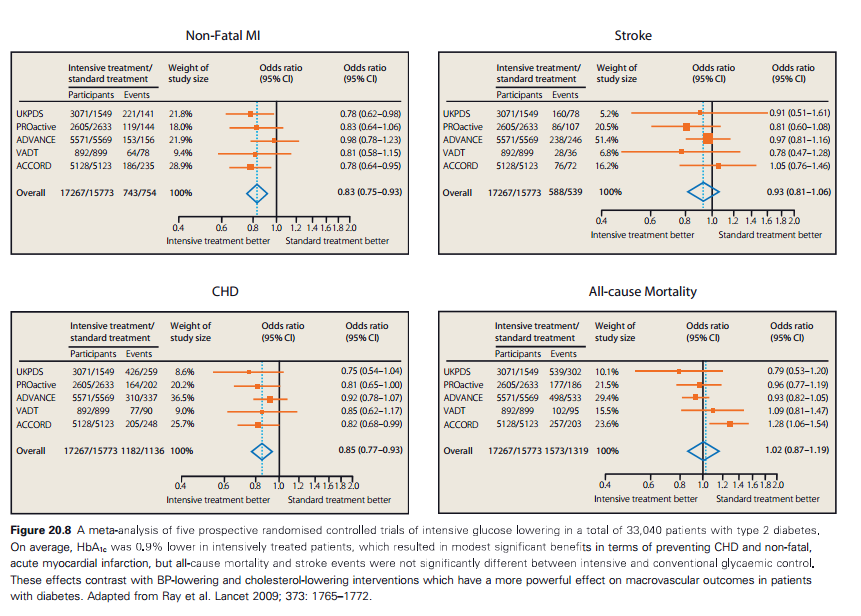
There is considerable interest in the effects of glucose-lowering therapy on macrovascular disease outcomes. In the original UKPDS population, intensive versus conventional glycemic control strategies (average HbA1c 7.0% versus 7.9%) had no significant effect on diabetes-related deaths (principally due to CVD), but more recent and much larger randomized controlled trials have provided a total study population of > 33,000 patients from which to assess the benefits versus harms of intensive glucose lowering. Overall, the meta-analysis showed that intensive glycemic control (on average HbA1c was 0.9% lower in intensively treated patients) resulted in a 17% reduction in non-fatal myocardial infarction, but no significant effect on stroke or all-cause mortality (Figure 20.8).