 Diabetes In Control. A free weekly diabetes newsletter for Medical Professionals. News and information for Medical Professionals.
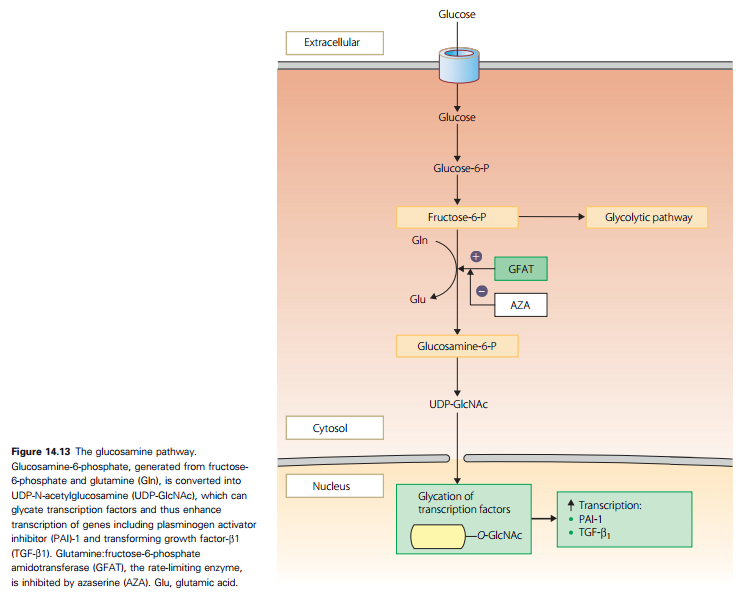
An increased flux of glucose can result in activation of the hexosamine pathway. Fructose-6-phosphate is diverted from glycolysis to form UDP-N-acetylglucosamine, which is used in the synthesis of glycoproteins. The rate-limiting step in the conversion of glucose to glucosamine is regulated by glutamine:fructose-6-phosphate amidotransferase (GFAT). It is thought that glycation of transcription factors by N-acetylglucosamine increases the activity of many genes. Amongst these are TGF-beta (a key profibrogenic cytokine), acetyl CoA carboxylase (the rate-limiting enzyme for fatty acid synthesis and which might increase insulin resistance) and plasminogen activator inhibitor-1 (PAI-1) which promotes thrombosis (Figure 14.13).
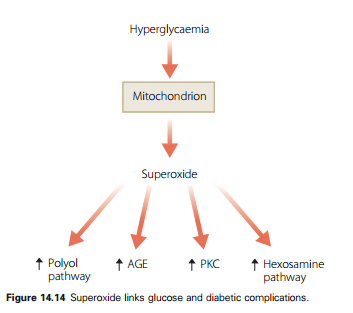
All the mechanisms listed above have a common effect of increasing reactive oxygen species and thus increasing oxidative stress (Figure 14.14). Some workers feel that this is the final common path which underpins the development of all diabetes complications.
For more information and to purchase this book, just follow this link:
Note: The contents of this work are intended to further general scientific research, understanding, and discussion only and are not intended and should not be relied upon as recommending or promoting a specific method, diagnosis, or treatment by physicians for any particular patient. The publisher and the authors make no representations or warranties with respect to the accuracy or completeness of the contents of this work and specifically disclaim all warranties, including without limitation any implied warranties of fitness for a particular purpose. In view of ongoing research, equipment modifications, changes in governmental regulations, and the constant flow of information relating to the use of medicines, equipment, and devices, the reader is urged to review and evaluate the information provided in the package insert or instructions for each medicine, equipment, or device for, among other things, any changes in the instructions or indication of usage and for added warnings and precautions. Readers should consult with a specialist where appropriate. The fact that an organisation or website is referred to in this work as a citation and/or a potential source of further information does not mean that the authors or the publisher endorse the information the organisation or website may provide or recommendations it may make. Further, readers should be aware that Internet websites listed in this work may have changed or disappeared between when this work was written and when it is read. No warranty may be created or extended by any promotional statements for this work. Neither the publisher nor the authors shall be liable for any damages arising herefrom.