May 14, 2015
Products
3,032 views
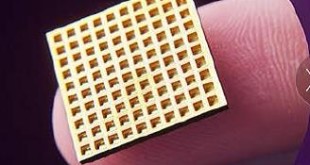
New investigational technology from MicroCHIPS (Lexington, Massachusetts) may make long-term, wireless drug delivery possible. The microchip-based implant is placed under the skin and contains 200 micro-reservoirs that can each store 1 mg of medication. Clinicians can remotely control medication release wirelessly; it can also be outfitted with sensors that …
Read More »
May 14, 2015
Letter From The Editor
1,813 views
Steve, Joy and I are spending our time at the 24th Annual Scientific and Clinical Conference of the American Association of Clinical Endocrinologists in Nashville, Tennessee. We have spent four days reviewing posters and interviewing the top researchers and practitioners in order to bring you the latest information. We will …
Read More »
May 11, 2015
Blood Glucose Control, Disasters Averted, Insulin Therapy Center
2,574 views
A married male patient, 68 years of age, has been prescribed long-acting insulin twice a day because once-daily does not work 24 hours for him, and his dose is large. Therefore breaking it into two smaller injections helps bring down his glucose, but only when he remembers to take his …
Read More »
May 10, 2015
Letter From The Editor
1,725 views
When I am discussing the value of physical activity with patients I will often start bending my left ring finger repeatedly and tell the patients that, "I can lower glucose just by doing this. However it is a small muscle and it will take a lot of repetitions." The goal …
Read More »
May 10, 2015
Exercise, Videos
2,556 views
Dr. Joe Houmard talks about how, if we all began working on “weight maintenance” immediately after leaving high school, it would reduce our national health care expenditure phenomenonally. Instead, the focus is on “weight loss” rather than healthy, gradual physical fitness. Joe Houmard, Ph.D. has been at East Carolina University …
Read More »
May 10, 2015
Clinical Presentations, Surgery
11,958 views
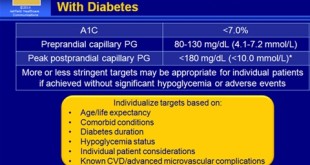
In this week’s Homerun Slides, we continue with the 2015 ADA Guidelines with slides on: Correlation of A1c With Average Glucose, Management of Hypoglycemia, and Bariatric Surgery in Type 2 Diabetes….
Read More »
May 8, 2015
Articles, Prediabetes
7,230 views
Legislation would provide coverage for National Diabetes Prevention Program to Medicare beneficiaries at high risk of developing type 2 diabetes… The American Diabetes Association (ADA), American Medical Association (AMA), and the YMCA have introduced the Medicare Diabetes Prevention Act (S. 1131/H.R. 2102). Sponsored by Senator Al Franken (D-MN), Senator Susan …
Read More »
May 8, 2015
Articles, Prediabetes
2,453 views
Asian Indians with prediabetes have one of the highest incidence rates for diabetes, despite being younger and having a much lower average BMI than other high-risk populations… There is little data on the incidence rates of diabetes and prediabetes (dysglycemia) in Asian Indians. Researchers led by Ranjit Mohan Anjana, MD, …
Read More »
May 8, 2015
Articles
2,142 views
Replacing one serving of a sugary drink with water, unsweetened tea or coffee daily can decrease the risk for developing diabetes by up to 25%… The study indicates that for each 5% increase of a person’s total energy intake provided by sweet drinks including soft drinks, the risk of developing …
Read More »
May 8, 2015
Articles, Prediabetes, Type 2 Diabetes
2,303 views
A large, population-based, observational study identified different profiles of inflammatory and immune biomarkers in people with no diabetes, prediabetes, or type 2 diabetes… Findings revealed an increase in the median concentrations of white blood cells, monocytes, granulocytes, interleukin-18, IL-1 receptor antagonist and fibrinogen in patients with diabetes and prediabetes compared …
Read More »
 Diabetes In Control. A free weekly diabetes newsletter for Medical Professionals. News and information for Medical Professionals.