 Diabetes In Control. A free weekly diabetes newsletter for Medical Professionals. News and information for Medical Professionals.
Lack of Protein Found in Obese People Can Be Risk Factor for Kidney and Heart Disease.
Read More »Diabetes In Control

Prescribed Walking Can Improve Physical Fitness
Exercise counseling with a prescription for walking at either hard intensity or high frequency produces improvements in cardiorespiratory fitness.
Read More »Artificial Sweetener Causes Cancer in Rats at Levels Approved for Humans
Carcinogenic effects occurred at 20mg/kg and the acceptable daily intake for humans is 50 mg/kg.
Read More »Diabetic Foot Ulcers, Amputations Are Preventable
For a condition that is largely preventable, the costs of treating diabetic foot disease is over 10 Billion dollars a year. To prevent amputations, all that is required is a 10-gm monofilament that cost less then fifty cents!
Read More »Continuous, Non-Invasive Glucose Monitoring Device, Shows Positive Results in Cl
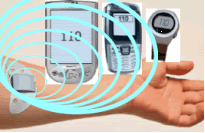
Continuous, Non-Invasive Glucose Monitoring Device, Shows Positive Results in Clinical Trials The device is worn on the arm and transmits the information to a palm device, watch device or phone.
Read More »Restless Legs Syndrome Common in Diabetics
Restless legs syndrome can be a major cause of sleep disruption in this population.
Read More »Precursors to Foot Disease in Diabetes Patients Identified
Foot ulcerations are one of the most serious complications of diabetes, resulting in more than 80,000 lower-leg amputations each year in the U.S. alone. “Nearly one in 40 diabetes patients will develop foot ulcers every year and more than 15 percent of these individuals will have to undergo amputation.
Read More »Diabetes in 2025 Report – Diabetes will Triple
Those With Diabetes Will Triple and Will Claim 622,000 Lives Annually by 2025.
Read More »Maltose, Galactose, and Xylose May Yield Falsely Elevated Glucose Readings
The U.S. Food and Drug Administration (FDA) has notified healthcare professionals regarding the potential for falsely elevated glucose readings in patients tested using glucose dehydrogenase pyrroloquinolinequinone (GDH-PQQ)–glucose monitoring systems after receiving other sugars.
Read More »Most Patients Treated for High Cholesterol Don’t Know Their Goal
Sixty-nine percent of U.S. adults who are being treated with cholesterol-lowering statin medications do not know their target cholesterol goal according to the results of a new consumer survey.
Read More »