 Diabetes In Control. A free weekly diabetes newsletter for Medical Professionals. News and information for Medical Professionals.
Continuous, Non-Invasive Glucose Monitoring Device, Shows Positive Results in Clinical Trials
The device is worn on the arm and transmits the information to a palm device, watch device or phone. 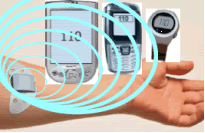 Glucon announced last week the recent trial results of its flagship product, Aprise, a continuous, non-invasive, glucose monitoring device. The data was presented by Glucon V.P. of R&D Dr. Benny Pesach at the Diabetes Technology Society Standards Workshop on November 10, 2005 at the Fifth Annual Diabetes Technology Meeting in San Francisco.
Three different protocols were employed to test Aprise. In the first protocol rapid glucose variations were induced by venous infusion of dextrose solution and insulin. In the second protocol, the glucose level was increased by drinking a glucose solution and decreased by the diabetic subject’s regular medications. And in the third protocol the glucose level was raised with a regular meal and decreased again by the diabetic subject’s regular medications. Thirty subjects participated in the studies. The prospective results were a Mean Absolute Relative Deviation of 19%,” explained Dr. Benny Pesach.
“There are several companies in the glucose monitoring space racing to develop an accurate, non-invasive system. Data collected with Glucon’s Aprise showed that the technology has surpassed that of the competition in terms of accuracy and speed. Glucon’s Aprise provides a glucose measurement every three seconds. It is also light weight, compact, comfortable, impressively accurate,” said Glucon President Mr. Ron Nager.
SOURCE: Glucon
================================
DID YOU KNOW:
Every 30 seconds, someone in the world has a lower limb amputated due to the effects of diabetes, says an article in this week’s issue of The Lancet journal. The lifetime risk of a person with diabetes developing a foot ulcer is as high as 25 percent and, if left untreated, these ulcers can lead to amputation. Diabetic foot ulcers and amputations accounted for $10.9 billion in U.S. health spending in 2001, the article said. It also noted that diabetes-related foot complications can be prevented by foot-care services and simple clinical tests that can identify people at risk for foot ulcers. “Identification of the at-risk foot does not require any expensive equipment: a tuning fork, pin, tendon hammer, and a 10 g monofilament should suffice,” author Andrew Boulton of the Manchester Royal Infirmary in the U.K. and of the University of Miami, Florida, said in a prepared statement. See this week’s Item #1