 Diabetes In Control. A free weekly diabetes newsletter for Medical Professionals. News and information for Medical Professionals.
Interleukin-2 boosted immune cells but failed to preserve insulin production in the DIABIL-2 trial. Discover what this means for type 1 diabetes.
Read More »The Immune Target Moved, but the Diabetes Didn’t: What a Failed Type 1 Trial Can Teach Us
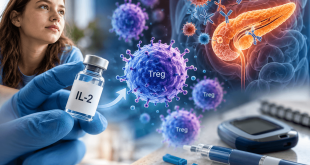
Interleukin-2 boosted immune cells but failed to preserve insulin production in the DIABIL-2 trial. Discover what this means for type 1 diabetes.
Read More »
For decades, treatment after a type 1 diabetes diagnosis focused almost entirely on insulin replacement and blood glucose management. While advances in technology have improved care, clinicians have had few ways to address the autoimmune process driving beta-cell loss. That is beginning to change. With the FDA’s expansion of teplizumab-mzwv …
Read More »
More adults living with type 1 diabetes are now developing obesity, insulin resistance, hypertension, and metabolic complications once linked mainly to type 2 diabetes. This growing overlap, often called double diabetes, is becoming a major concern for clinicians and patients alike. While insulin therapy remains essential for type 1 diabetes …
Read More »
GLP-1 receptor agonists as adjunct therapy in type 1 diabetes are gaining attention as clinicians look for new ways to improve glycemic control. But is this approach a promising tool or a risky shortcut? As emerging evidence builds, providers must balance potential benefits with safety concerns and patient-specific factors. Table …
Read More »Type 1 diabetes is a chronic condition that affects millions of people around the world. As technology advances, so too does the potential for improved treatments. Algorithm-based treatments are one type of technology that is being explored as a potential solution to the challenge of managing type 1 diabetes. This …
Read More »Type 2 diabetes is a chronic metabolic disorder that affects millions of people worldwide. It is characterized by high blood sugar levels, caused by the body’s inability to properly produce and utilize insulin. Not only can this lead to serious health complications, but it can also have an impact on …
Read More »Islet cell transplantation is a promising treatment for type 1 diabetes, a condition that affects millions of people worldwide. This procedure involves transplanting healthy islet cells from a donor into the patient, allowing them to produce insulin and better manage their diabetes. This article will discuss what islet cell transplantation …
Read More »Pharmacoeconomics is the study of the economic aspects of pharmaceutical products and services. It is used to assess the cost-effectiveness of pharmaceuticals and to inform decisions about drug utilization and reimbursement. Pharmacoeconomics of diabetes care is an important topic for healthcare providers, as it can help them to understand the …
Read More »Insulin is a hormone that is essential for regulating blood sugar levels in the body. Insulin analogs are modified forms of insulin that have been designed to act faster and more efficiently in the body. They are used to treat diabetes, a condition that affects millions of people around the …
Read More »Type 1 diabetes (T1D) is a chronic, autoimmune disorder in which the body’s own immune system attacks and destroys the insulin-producing cells of the pancreas. As a result, the body is unable to produce enough insulin to regulate blood sugar levels. Although the exact cause of T1D is unknown, research …
Read More »