Home / Tag Archives: postprandial glucose control

Tag Archives: postprandial glucose control

Post-Meal Blood Sugar Spikes: Are We Focusing on the Wrong Diabetes Numbers?

Healthy diabetes management scene showing a glucose meter, nutritious meal, and post-meal blood sugar tracking chart illustrating postprandial glucose control.

For decades, A1C has served as the cornerstone of diabetes management. It remains an essential marker because it reflects average blood glucose levels over approximately three months. However, many clinicians are recognizing that managing post-meal glucose levels may provide equally important insights into a patient’s metabolic health. A person can …

Read More »

Ultra-Rapid Insulin and Automated Delivery: Are Mealtime Boluses Becoming Less Critical?

Person using an automated insulin delivery system with ultra-rapid insulin during a meal while monitoring glucose levels on a smartphone app.

For years, diabetes care has relied on one key rule: insulin should be given before meals whenever possible. Yet many people living with diabetes still struggle with timing. Busy schedules, unpredictable eating habits, and delayed dosing often lead to postprandial glucose spikes. Now, with the rise of ultra-rapid insulin AID …

Read More »

Postprandial Glucose Spikes: Are We Missing the Most Actionable Metric in Diabetes Care?

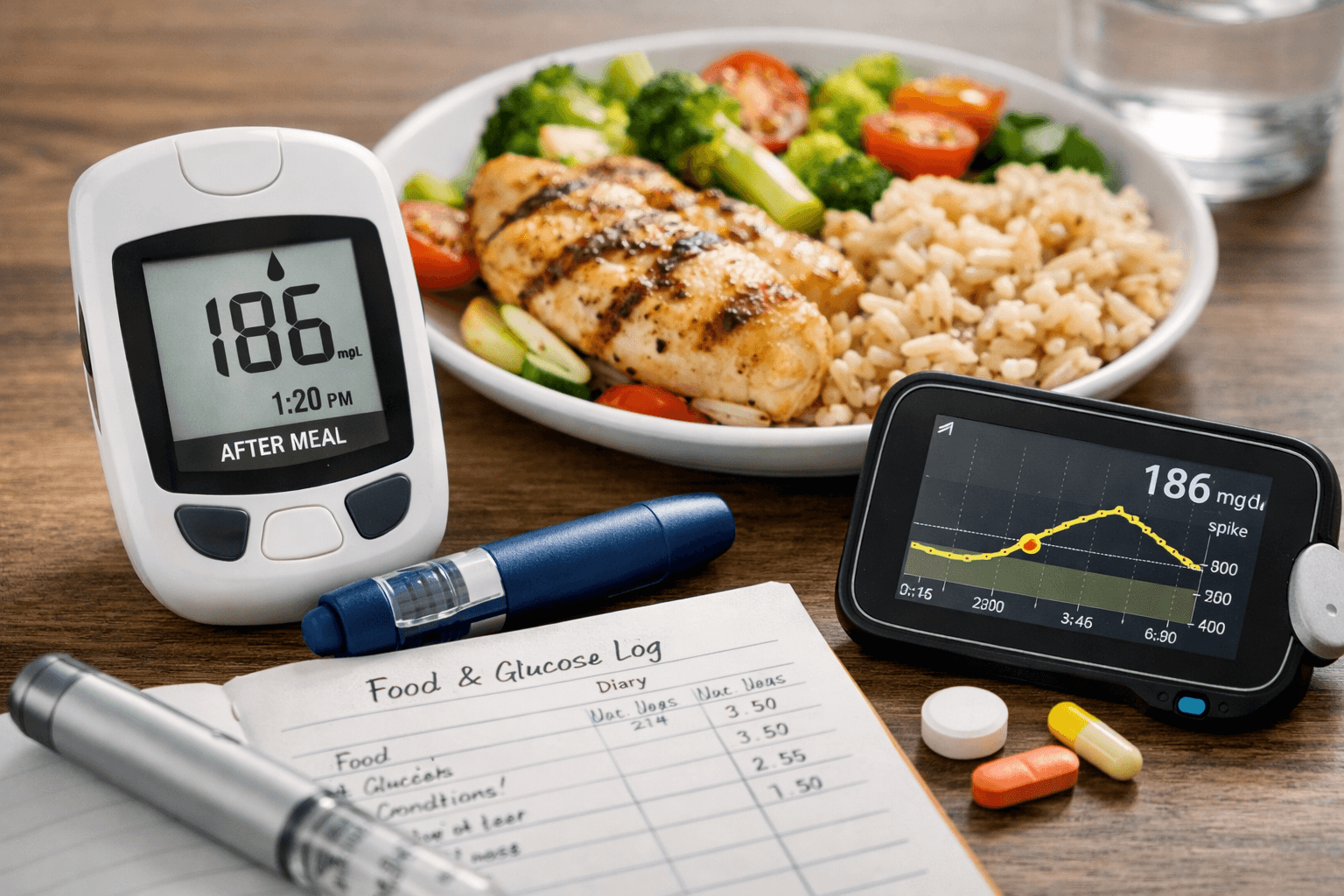
Glucose meter showing elevated post-meal blood sugar with healthy meal and CGM device illustrating postprandial glucose control

When managing diabetes, most people focus on A1C or time in range. However, what if the real opportunity lies in something more immediate and actionable? Managing post-meal blood sugar, often called postprandial glucose control, may hold the key to better outcomes. While long-term markers still matter, post-meal spikes often go …

Read More »

GLP-1s and Gastric Motility Over Time: Does the Body Adapt?

Medical illustration showing GLP-1 therapy affecting gastric motility and stomach emptying in diabetes treatment

Glucagon-like peptide-1 receptor agonists (GLP-1 RAs) have transformed the management of type 2 diabetes and obesity. However, one question clinicians increasingly ask is whether gastric motility adapts during long-term GLP-1 therapy. These medications slow gastric emptying, which contributes to appetite control and postprandial glucose reduction. Yet the human body often …

Read More »