2 days ago
Articles, Blood Glucose Control, Blood Glucose Control, Cardiology, Diabetes, Physician oriented, Prevention
3,160 views
Low potassium is usually viewed through a cardiovascular lens, especially in patients with heart failure. However, emerging evidence suggests clinicians may have another reason to pay attention. New research examining the relationship between hypokalemia and diabetes risk found that lower serum potassium levels were associated with a greater risk of …
Read More »
3 days ago
Articles, Blood Glucose Control, Blood Glucose Control, Cardiology, Nephrology, Safety, SGLT-2 Therapy Center, Type 1 Diabetes, Type 1 Diabetes
1,374 views
SGLT inhibitors have changed the treatment landscape for cardiovascular and kidney disease, particularly in people with type 2 diabetes, heart failure, and chronic kidney disease. That success raises an obvious question: why are SGLT inhibitors in type 1 diabetes still largely outside routine clinical practice? The answer is not a …
Read More »
Aug 6, 2026
Articles, Cardiology, Diabetes, Neuropathy & Pain, Therapies, Type 2 Diabetes, Type 2 Diabetes
1,308 views
Diabetes care has advanced dramatically over the past decade. While therapies such as GLP-1 receptor agonists and SGLT2 inhibitors have transformed glucose management and cardiovascular outcomes, many patients continue to develop long-term complications. Could an older therapeutic target finally provide the missing piece? Interest in aldose reductase inhibitors for diabetes …
Read More »
Jul 31, 2026
Articles, Cardiology, Diabetes, Prevention
3,768 views
Heart disease remains the leading cause of illness and death among people with diabetes. However, one of the most concerning complications, diabetic cardiomyopathy, often develops quietly for years before symptoms emerge. During this silent phase, routine echocardiograms frequently show a normal ejection fraction, creating a false sense of reassurance. Fortunately, …
Read More »
Jul 30, 2026
Articles, Cardiology, Therapies, Type 2 Diabetes, Type 2 Diabetes
1,028 views
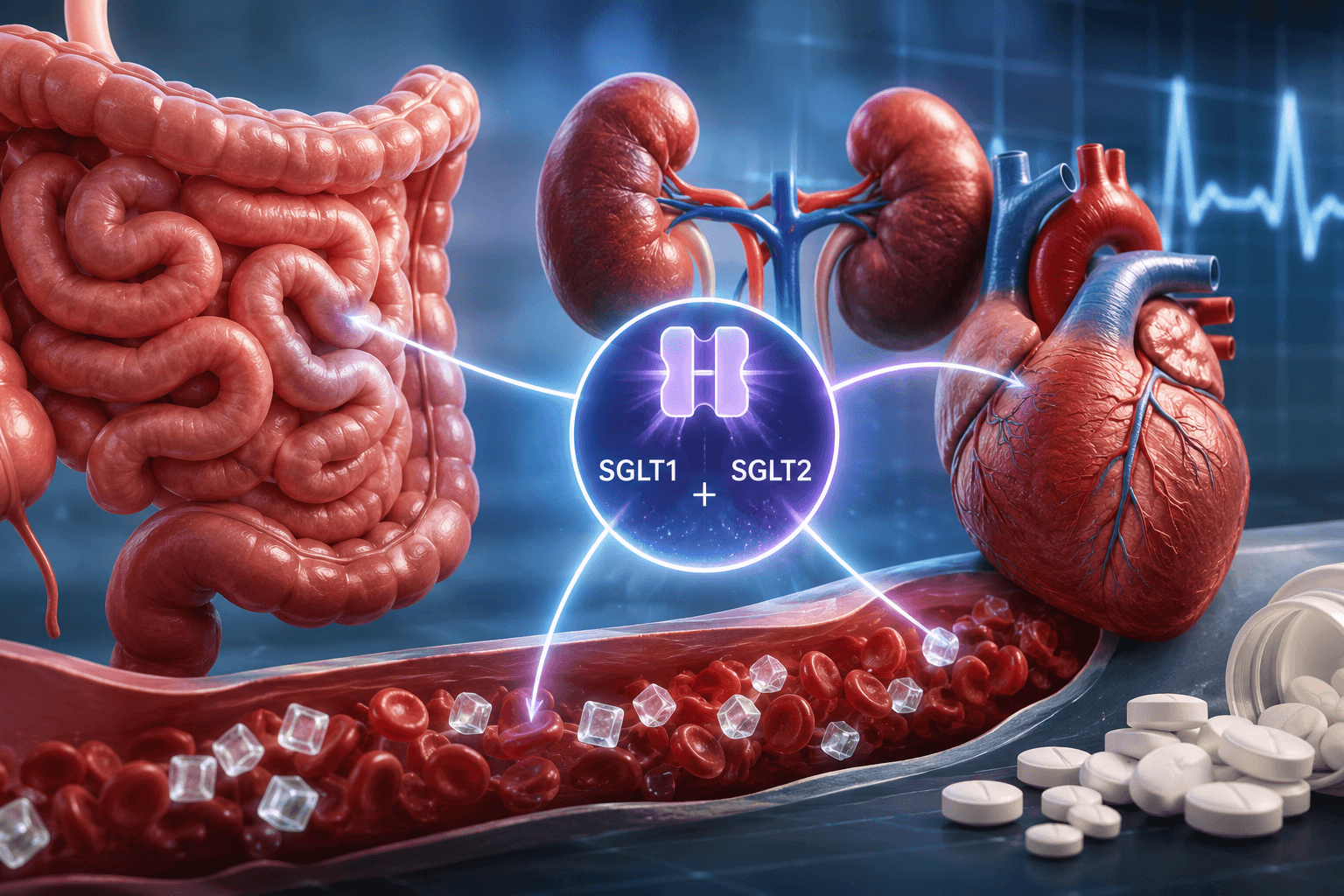
The treatment landscape for type 2 diabetes has changed dramatically over the past decade. While selective SGLT2 inhibitors have become a cornerstone of diabetes management because of their proven cardiovascular and kidney benefits, researchers are now exploring the added potential of dual SGLT1/2 inhibitor therapy for people with diabetes. By …
Read More »
Jul 21, 2026
Articles, Blood Glucose Control, Blood Glucose Control, Cardiology, Nephrology, SGLT-2 Therapy Center, Type 2 Diabetes, Type 2 Diabetes
2,988 views
For many people living with type 2 diabetes, the biggest challenge is not finding an effective medication. It is being able to afford it. That reality may begin to change now that the U.S. Food and Drug Administration (FDA) has approved the first generic versions of Farxiga (dapagliflozin), potentially making …
Read More »
Jul 9, 2026
Articles, Cardiology, Diabetes, Type 2 Diabetes, Type 2 Diabetes
1,146 views
Not long ago, diabetes management focused primarily on controlling blood glucose levels. Today, that approach has evolved dramatically as cardiologists and endocrinologists increasingly work together to reduce cardiovascular risk. Thanks to groundbreaking cardiovascular outcome trials (CVOTs), clinicians now understand that treating type 2 diabetes means protecting the heart, kidneys, and …
Read More »
Feb 27, 2026
Articles, Therapies, Type 2 Diabetes, Type 2 Diabetes
3,203 views
As GLP-1 receptor agonists dominate headlines and prescribing trends, many clinicians wonder whether older therapies are losing relevance. However, SGLT2 inhibitors remain foundational in type 2 diabetes care. More importantly, evidence now supports the use of SGLT2 inhibitors and GLP-1 combination therapy in patients at high cardiovascular and renal risk. …
Read More »
 Diabetes In Control. A free weekly diabetes newsletter for Medical Professionals. News and information for Medical Professionals.