3 days ago
Articles, Blood Glucose Control, Blood Glucose Control, Cardiology, Nephrology, Safety, SGLT-2 Therapy Center, Type 1 Diabetes, Type 1 Diabetes
1,375 views
SGLT inhibitors have changed the treatment landscape for cardiovascular and kidney disease, particularly in people with type 2 diabetes, heart failure, and chronic kidney disease. That success raises an obvious question: why are SGLT inhibitors in type 1 diabetes still largely outside routine clinical practice? The answer is not a …
Read More »
6 days ago
Articles, Blood Glucose Control, Blood Glucose Control, Diabetes, Type 2 Diabetes, Type 2 Diabetes
887 views
A1C is one of the most useful tools in diabetes care, but it has an important limitation: it takes time to reflect change. Could a faster-moving marker help clinicians know sooner whether treatment is working? New randomized research on glycated albumin in diabetes offers an intriguing answer. Glycated albumin reflects …
Read More »
2 weeks ago
Articles, Blood Glucose Control, Blood Glucose Control, Insulin Therapy Center, Pediatrics, Type 1 Diabetes, Type 1 Diabetes
1,348 views
The choice of human vs analogue insulin is especially important for people with Type 1 diabetes who live where healthcare resources are limited. Analogue insulins are often preferred because their action can be more predictable and flexible. However, human insulin is generally less expensive and may be easier for health …
Read More »
3 weeks ago
Articles, News, Therapies, Type 1 Diabetes, Type 1 Diabetes
843 views
New follow-up research on baricitinib for type 1 diabetes addresses a crucial question: what happens after the drug is stopped? The original BANDIT trial showed that 48 weeks of oral baricitinib helped preserve beta-cell function in people with recently diagnosed type 1 diabetes. However, new follow-up research examines participants through …
Read More »
4 weeks ago
Articles, Cardiology, Diabetes, Therapies, Type 2 Diabetes, Type 2 Diabetes
1,547 views
Poor medication persistence remains one of the hardest barriers to long-term blood pressure control. For people with diabetes, the stakes are especially high because hypertension adds to cardiovascular and kidney risk. Now, research into RNAi for hypertension in people with diabetes is raising an intriguing possibility: could an injection given …
Read More »
Aug 6, 2026
Articles, Cardiology, Diabetes, Neuropathy & Pain, Therapies, Type 2 Diabetes, Type 2 Diabetes
1,309 views
Diabetes care has advanced dramatically over the past decade. While therapies such as GLP-1 receptor agonists and SGLT2 inhibitors have transformed glucose management and cardiovascular outcomes, many patients continue to develop long-term complications. Could an older therapeutic target finally provide the missing piece? Interest in aldose reductase inhibitors for diabetes …
Read More »
Jul 31, 2026
Articles, Therapies, Type 1 Diabetes, Type 1 Diabetes
1,595 views
For more than 100 years, the Bacillus Calmette-Guérin (BCG) vaccine has been used worldwide to help prevent tuberculosis. However, researchers are now exploring another possible role for this familiar vaccine. Recent studies suggest that the BCG vaccine may play a role in treating type 1 diabetes by modifying the immune …
Read More »
Jul 30, 2026
Articles, Cardiology, Therapies, Type 2 Diabetes, Type 2 Diabetes
1,028 views
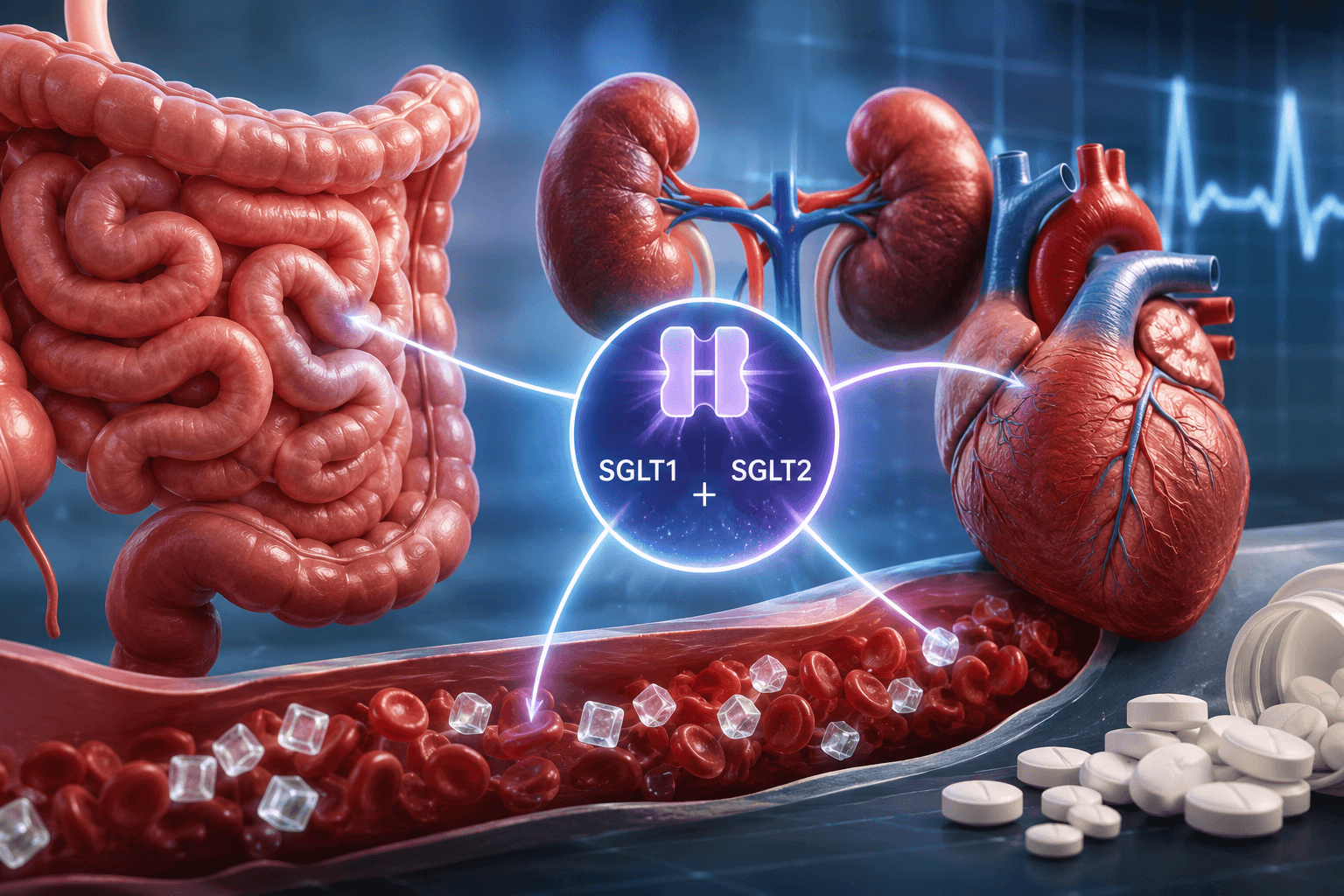
The treatment landscape for type 2 diabetes has changed dramatically over the past decade. While selective SGLT2 inhibitors have become a cornerstone of diabetes management because of their proven cardiovascular and kidney benefits, researchers are now exploring the added potential of dual SGLT1/2 inhibitor therapy for people with diabetes. By …
Read More »
Jul 21, 2026
Articles, Blood Glucose Control, Blood Glucose Control, Cardiology, Nephrology, SGLT-2 Therapy Center, Type 2 Diabetes, Type 2 Diabetes
2,989 views
For many people living with type 2 diabetes, the biggest challenge is not finding an effective medication. It is being able to afford it. That reality may begin to change now that the U.S. Food and Drug Administration (FDA) has approved the first generic versions of Farxiga (dapagliflozin), potentially making …
Read More »
Jul 20, 2026
Articles, Therapies, Type 1 Diabetes, Type 1 Diabetes
1,921 views
For more than a century, insulin therapy has remained the cornerstone of treatment for type 1 diabetes. While continuous glucose monitors, insulin pumps, and automated insulin delivery systems have dramatically improved diabetes management, they still do not replace the body’s natural ability to regulate blood sugar. As a result, researchers …
Read More »
 Diabetes In Control. A free weekly diabetes newsletter for Medical Professionals. News and information for Medical Professionals.