Jan 26, 2015
Cardiology, Clinical Presentations
3,236 views
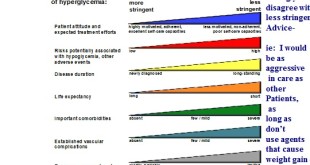
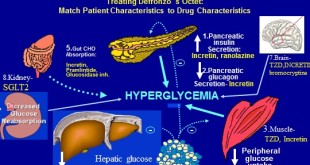
In this week’s Homerun Slides from Dr. Stanley Schwartz, we look into exactly what a more aggressive therapy towards treating diabetes might look like with a review of dual and triple therapy approaches as well as which medications can be used and when. We also examine the cardiovascular impact of these …
Read More »
Jan 23, 2015
Articles, Cardiology, Metformin Therapy Center
3,546 views
According to a new retrospective study acarbose may not have a cardioprotective effect as good as metformin when used as first-line therapy… This study analyzed 17,366 patients who initiated acarbose therapy and 230,023 who initiated metformin therapy. Both nephropathy and diabetes complication severity index were strongly associated with the patients …
Read More »
Jan 23, 2015
Articles, Blood Glucose Control, Oncology, Prediabetes
3,302 views
For every 0.56 mmol/L increase in fasting blood glucose there was a 14% increase in the rate of pancreatic cancer… In previous studies, an assumption has been made that diabetes may be either a risk factor or a symptom of pancreatic cancer. To investigate this connection, researchers examined both linear …
Read More »
Jan 23, 2015
Articles, Women's Health
1,816 views
The association was also found to be stronger in younger women than in older women… Data from a large ongoing study into the health of African-American women show that those who work night shifts are significantly more likely to develop diabetes than those who have never worked night shifts, with …
Read More »
Jan 23, 2015
Articles, Oncology, Type 2 Diabetes
2,286 views
A longer duration of obesity also increased risk of colorectal cancer for diabetic patients… Dutch researchers have assessed the risk of colorectal cancer associated with type 2 diabetes, as compared with a nondiabetic reference population. They conducted an observational population-based cohort study within the Clinical Practice Research Datalink (1987–2012). All …
Read More »
Jan 19, 2015
Cardiology, Clinical Presentations
8,718 views
In this week’s Homerun Slides, we continue our exploration of the positive effects of Ranolazine, which is used to treat angina, and then begin to focus in on therapies for type 2 patients with cardiovascular concerns… To download these slides in PowerPoint (.ppt) format, use this link: Diabetes Mellitus 101 for Cardiologists, Part …
Read More »
Jan 19, 2015
Clinical Gems, Devices, MODY/LADA, Pediatrics
13,088 views
Rudy Bilous, MD, FRCP Richard Donnelly, MD, PHD, FRCP, FRACP The vast majority of cases of diabetes in children are type 1, caused by autoimmune destruction of beta cells in the pancreatic islets. A steady increase in the incidence of type 1 diabetes has been reported worldwide (average increase 2.5-3% per year …
Read More »
Jan 16, 2015
Clinician Mobile Apps, Obesity, Pediatrics
4,175 views
Change Talk: Childhood Obesity is a role-play simulation where you take the role of a healthcare provider and engage in a practice conversation with a virtual mother and her child. Through the conversation, you learn to apply Motivational Interviewing (MI) techniques to help them identify motivation for change, supporting them …
Read More »
Jan 16, 2015
Articles, Insulin Therapy Center, Metformin Therapy Center, Oncology, Sulfonylurea, Type 2 Diabetes
4,789 views
Can metformin reduce the risk of cancer for those with type 2 diabetes?… In previous studies, metformin has been shown to decrease the risk of cancer in type 2 diabetes. A recent meta-analysis showed a 34% reduction in the incidence of any cancer and a 33% reduction in cancer mortality; …
Read More »
Jan 16, 2015
Articles, Insulin Therapy Center, Women's Health
2,050 views
The women also experienced reduced beta cell function…. Researchers from the University of Southern California, Los Angeles, assessed associations between dietary intake and rates of change in insulin resistance and β-cell function in Hispanic women with prior gestational diabetes mellitus (GDM). Sixty-two nondiabetic Hispanic women with pregnancies complicated by GDM …
Read More »
 Diabetes In Control. A free weekly diabetes newsletter for Medical Professionals. News and information for Medical Professionals.