 Diabetes In Control. A free weekly diabetes newsletter for Medical Professionals. News and information for Medical Professionals.
Much research has been carried out on why diabetes patients develop complications. Now researchers are asking the question the other way around. They want to know why some diabetic patients do not develop complications. What is it that protects them?
Read More »Vitamins D, C, and E in Preventing Type 2 Diabetes
This review examines current knowledge linking oxidation, inflammatory signaling pathways, and vitamin supplementation or intake to the risk of T2DM….
Read More »Acarbose: The Forgotten Drug Comes Back as a Generic
New study shows a 1 point drop in A1c, and the drug is now available as a generic from Mylan….
Read More »Diabetes Care Will Cost $336B by 2034
More than 44 million Americans will have diabetes within 25 years under current trends, and the annual cost of caring for them will triple to $336 billion in constant 2007 dollars….
Read More »Heart Disease Death Rate Drops with Each Added Fruit and Veggie Serving
According to new research from the University of Oxford, UK, increasing your diet with fruits and vegetables from 5 a day to 8, isn’t just good for your waistline — it could save your life….
Read More »Half in U.S. Have Pre-Existing Conditions
As many as 129 million Americans under age 65 have medical problems putting them at risk of being rejected by insurance companies or having to pay more for coverage….
Read More »Diabetes Drug Perks Up Weight Loss in Obese Kids
In severely obese, insulin-resistant children, metformin treatment improves weight loss and raises insulin sensitivity compared with placebo….
Read More »Diagnosis and Management of Type 2 Diabetes, 10th Edition, Ch 15, Pt1

Long-Term Complications: Macrovascular Steve V. Edelman, MD Robert R. Henry, MD The long-term, chronic complications of diabetes have the greatest impact on the health of individuals with diabetes as well as on the health care system. Diabetes and its associated vascular complications are the fourth leading cause of death in …
Read More »New Product: The iPhonECG
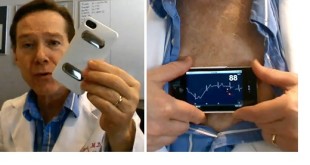
The iPhonECG The iPhonECG uses a slim, low-power sleeve with a couple of electrodes on the back to provide clinical-quality cardiac event readings. You can either hold it in your hands to get a reading of your pulse, or place it on the patient’s chest. The sleeve can also work …
Read More »Why Don’t People Take Their Insulin as Prescribed?
Risk factors differed between Type 1 and Type 2 diabetic patients, with diet nonadherence more prominent in Type 1 diabetes and….
Read More »