 Diabetes In Control. A free weekly diabetes newsletter for Medical Professionals. News and information for Medical Professionals.
T2 patients may be at increased risk of developing tangles in the brain that indicate dementia.
Read More »How Type 2 Diabetes is Linked with Alzheimer’s Disease

T2 patients may be at increased risk of developing tangles in the brain that indicate dementia.
Read More »
Plateaus mark possibly better screening methods, survival among diagnosed patients...
Read More »
Studies in heart failure and hypertension have shown that people who identify themselves as black may have a less active renin-angiotensin system and a lower bioavailability of nitric oxide. The A-HeFT study was conducted to determine if a fixed dose of isosorbide dinitrate (ISDN) and hydralazine would provide additional benefit in black patients with heart failure.
Read More »
With the prevalence of mail-order pharmacies, I’ve always recommended that my patients use their local pharmacy for at least one prescription. Why? If an emergency arises, and they need a medication or supplies right away, they can get great service locally because they have established a relationship
Read More »
David Levy, MD, FRCP Diuretics Thiazide diuretics have been the mainstay of antihypertensive treatment since the first potent thiazide was introduced in 1957, and have often been the agents against which other drug classes have been compared in important clinical trials [18]. They are especially useful in low-renin (salt-sensitive) states, for example older people, and black or obese patients. Resistant hypertension (see below), common in these groups, is frequently due to inadequate diuretic therapy. Despite half a century of use, disagreement continues about their optimum dosing and whether blood pressure lowering effects and cardiovascular benefits are common to all agents in the class. There is continuing controversy about their potential metabolic disadvantages – concern about these, together with their low pharmaceutical profile, prevents their being used in many patients – but there is no evidence that these in any way blunt their cardiovascular benefits, even in people with diabetes (Box 11.7). They are as effective in reducing coronary events as any other class of antihypertensive agents, but in ALLHAT were more effective in reducing heart failure and stroke than lisinopril or amlodipine...
Read More »
The Diabetes Diet Richard K. Bernstein, MD, FACE, FACN, FACCWS Part 1 of Chapter 3 Essential Guidelines for the Diabetes Diet WHY YOU OUGHT TO IGNORE THE GLYCEMIC INDEX In the days before low-carb diets began their tremendous upswing in popularity, it was difficult for people to over-come resistance to …
Read More »
The Diabetes Diet Richard K. Bernstein, MD, FACE, FACN, FACCWS Part 2 of Chapter 3 Essential Guidelines for the Diabetes Diet What’s Wrong with the Glycemic Index The glycemic index seeks to measure the impact that particular foods have on blood sugar. It’s my opinion that there is simply no …
Read More »
The Diabetes Diet Richard K. Bernstein, MD, FACE, FACN, FACCWS Part 3 of Chapter 3 Essential Guidelines for the Diabetes Diet Keeping It Simple There are no complicated formulas or calculations in the Diabetes Diet. In the following pages I will show you the foods that you ought to emphasize …
Read More »
A 43-year old patient with a 2-year history of type 2 diabetes presents to your office for a follow-up visit. She is a highly motivated patient and doesn’t have any significant co-morbidities, so together, you have set a target A1C= 6.5%. Her current medications are metformin and sulfonylurea. Despite her good efforts, her current A1C is 7.3%. You would like to add a third agent to her regimen, however she is concerned about any additional weight gain as she has gained a few pounds since starting the sulfonylurea. Which drug class would you add to minimize any additional weight gain? A. Basal insulin B. GLP-1 agonist C. Thiazolidine D. DPP-4 Inhibitor Follow link to take the test!
Read More »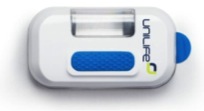
Unilife Corporation has launched the world’s first instant insulin patch, Imperium. Imperium is a prefilled, preassembled, multi-day wearable insulin pump for continuous subcutaneous insulin infusion and on-demand bolus delivery through the push of a button. It is equipped with Bluetooth connectivity to wirelessly connect with smartphone apps for patient reminders …
Read More »