 Diabetes In Control. A free weekly diabetes newsletter for Medical Professionals. News and information for Medical Professionals.
Annie A. Mavian, DO; Stephan Miller, PhD; and Robert R. Henry, MD Abstract: Most patients with type 2 diabetes present with comorbid overweight or obesity. Reaching and maintaining acceptable glycemic control is more difficult in overweight and obese patients, and these conditions are associated with increased risk for cardiovascular and …
Read More »A Review of Insulin Pen Devices
Emily K. McCoy, PharmD and Bradley M. Wright, PharmD, BCPS Abstract: Optimization of glycemic control is a fundamental aspect of diabetes management, and rates of diabetes-related microvascular complications are significantly decreased when glycemic control is improved. Currently, > 5 million Americans require insulin therapy to manage their diabetes, and this …
Read More »How to Obtain Appropriate Type 2 Diabetes Control in the First 180 Days of Treatment Initiation
Louis Kuritzky, MD; Benjamin J. Epstein, PharmD, BCPS; and Frank Lavernia, MD Abstract: Good control of diabetes provides meaningful microvascular risk reduction; yet, patients with type 2 diabetes mellitus commonly languish at unsatisfactory levels of glycated hemoglobin (HbA1c) for protracted periods. A variety of factors contribute to this clinical inertia, as …
Read More »Effective Switch From Premixed to Basal-Prandial Insulin to Achieve Glycemic Goals in Type 2 Diabetes
Frank Lavernia, MD Abstract: Objective This article describes a patient with type 2 diabetes mellitus achieving glycemic control after transitioning from premixed to basal-prandial insulin.
Read More »Partnering with Patients to Improve Therapeutic Outcomes: Incretin-Based Therapy for Type 2 Diabetes
Daniel A. Nadeau, MD Abstract: The prevalence of type 2 diabetes mellitus has reached epidemic proportions. Current treatment options for patients with diabetes include lifestyle modifications (eg, diet and exercise) along with pharmacotherapy (eg, oral antidiabetic drugs [OADs], incretin-based therapies, and insulin). Despite the availability of effective and safe treatments, …
Read More »Presentation of the Week: Know Your Numbers!
There are so many numbers involved in managing your diabetes, from your A1C to your cholesterol levels. An easy way to have your patients find out more about what numbers are important to know — and carefully monitor — use as part of your diabetes management plan. Click here for …
Read More »Metabolism in diabetes mellitus

By Francis Gano Benedict, Elliott Proctor Joslin PART I. INTRODUCTION. Perhaps no chronic disease makes such rapid inroads on health, strength, and weight as does diahetes. The large amounts of sugar in the urine, the polydipsia, polyphagia, and polyuria are observations so common in many cases that it is …
Read More »Hyperglycemic Emergencies
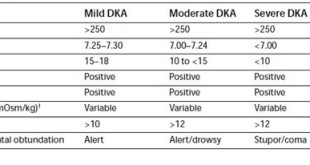
Lana Kravarusic Doctor of Pharmacy Candidate, University of Florida
Read More »Intermittent High-Intensity Exercise: Higher Now, Lower Later?

By Sheri Colberg, PhD In a previous column, we talked about how insulin action is affected by many different factors. The one with the biggest impact is the amount of glycogen stored in skeletal muscles and how that is impacted by regular physical activity. This week, though, we need …
Read More »To Increase Insulin Action Best, Do You Need Fewer Carbohydrates, Low-GI Ones, or More Exercise?
By Sheri Colberg, PhD Insulin action is affected by many different factors, but arguably the one that may have the biggest impact in the case of diabetes and management of hyperglycemia is the amount of glycogen that is already stored in skeletal muscles. The body can only store …
Read More »