 Diabetes In Control. A free weekly diabetes newsletter for Medical Professionals. News and information for Medical Professionals.
Letter from the Editor

Most of you know that I love to cycle, and getting in as many miles as possible is always something I am looking for. Although I consider 60 miles to be a long ride, some of my riding buddies believe that is a drop in the bucket. On Friday morning, one of my pharmacist friends put together a ride that most of us only dream of. They rode 145 miles around Tampa Bay. The group had about 10 people, and although most of them were men, there were a couple of women in the group. In addition, the average age was close to 50 years. One of the female riders works as a waitress in a local breakfast spot, and she can usually put any of the men in their place. It turns out her secret is yoga, and a lot of it. It is unlikely that you or your patients will ever be as good as her, but if you read Item #4 you will likely want your patients to try it, even if they say they can’t get off of a chair.
In case you missed it: dMeetings is a new way to educate your diabetes patients that gives them the freedom to learn at their own pace from knowledgeable certified educators.To learn how to get started with dMeetings, see our recent New Product item.
*****************************
We can make a difference!
*****************************
Dave Joffe
Editor-in-chief
This Week's Survey
We are reviewing a new product that can tell if your insulin has been exposed to extreme temperatures. So can you please answer the question:
Have you had any patients whose insulin lost its effectiveness due to being exposed to extreme temperatures?
Please follow the link to respond!
New Product: sugarBeat® Non-Invasive, Needle-free, Disposable, Inexpensive Wireless CGM
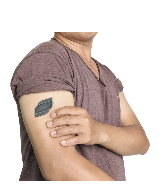 It slices, it dices, it’s faster than a speeding bullet. Yes, we have heard this many times before, so don’t get too excited yet. On February 15, 2017, Loughborough, UK. Nemaura Medical Inc., a medical device company developing a non-invasive, needle-free, pain-free, daily-disposable, and cost effective wireless CGM (Continuous Glucose Monitoring) patch known as sugarBEAT®, announced that its multicenter open label clinical study has been selected for poster exhibit at the Advanced Technologies and Treatments for Diabetes (ATTD) Conference in Paris.
 So, how does it work? Passing a mild, non-perceptible electric current across the skin, the BEAT™ technology draws a small amount of selected molecules, such as glucose, into a patch placed on the skin. These molecules are drawn out of the interstitial fluid, which naturally sits just below the top layer of the skin. Via a sensor, the patient-friendly patch measures the amount of molecule present, converting it into a meaningful concentration value for clinical diagnosis or preliminary guidance for self-treatment and then shows up on your smartphone. The firm expects to release the system toward the end of this year in Europe.
Test Your Knowledge
Glucose-lowering drugs and insulin resistance:
Which one of the following categories of glucose-lowering drugs improves insulin resistance as its primary mechanism of action?
A. Sulfonylureas (e.g. glipizide)
B. Thiazolidinediones (e.g. pioglitazone)
C. GLP-1 receptor agonists (e.g. liraglutide)
D. DPP-4 inhibitors (e.g. sitagliptin)
E. SGLT-2 inhibitors (e.g. canagliflozin)
Follow the link to see the correct answer!
Fact: How to Double Your Risk of Diabetes
 New research warns that just eating just two slices of toast a day can double the risk of diabetes. A study of more than 3,000 people found those who consumed just 12 grams (0.42 ounces) were twice as likely to develop the disease within the next five years. Scientists say the finding underlines the importance of switching to a Mediterranean style or lower carbohydrate diet. They added that increasing evidence is suggesting plant-based diets benefit health and also have less impact on the environment. Butter is rich in unhealthy saturated fatty acids and trans fats and has been linked to a high risk of suffering type 2 diabetes, the form linked with obesity. At the start of the study, all participants were free of diabetes but at high risk of heart disease or stroke. After four and a half years, 266 of them had diabetes and this was twice as likely among those who consumed higher amounts of saturated fatty acids and animal fat. Dr. Marta Guasch-Ferre, of Harvard University, said: “These findings emphasise the healthy benefits of a Mediterranean diet for preventing chronic diseases, particularly type 2 diabetes, and the importance of substituting saturated and animal fats, especially red and processed meat, for those found in vegetable sources such as olive oil and nuts.” Previous large-scale studies have linked a Mediterranean diet with a lower chance of developing diabetes. A traditional Mediterranean diet is principally composed of oily fish, poultry, fresh fruit and vegetables, legumes, fresh bread, pasta and olive oil. Journal of Science Feb 17, 2017
Diagnosis of prediabetes for prevention of diabetes and diabetes-related complications.
Progression of arterial stiffness directly linked to diabetes.
Fasting shown to reduce risk of diabetes, heart disease, cancer and other diseases.
Yoga proven to stimulate the organs to improve metabolic activities leading to efficient chemical transformations within a cell.
Study answers question of just how effective is a SGLT-2 inhibitor with metformin.
Prediabetes, previously undiagnosed diabetes patients interviewed.
Quote of the Week!
“Excellence is not an act but a habit. The things you do the most are the things you will do best.”
…Marva Collins
Your Friends in Diabetes Care
Steve and Dave
Diabetes In Control
810 Bear Tavern Road Suite 102
Ewing, NJ, 08628
USA
www.diabetesincontrol.com