 Diabetes In Control. A free weekly diabetes newsletter for Medical Professionals. News and information for Medical Professionals.
- Metabolic Surgery: Standard Treatment Option for Type 2?
- Canagliflozin Lowers BP As Well As A1C
- Why the New Food Label? What to Tell Your Patients
- Canagliflozin and the Risk of Leg and Foot Amputations
- Higher Fitness Levels Reduce Risk for Developing Diabetes
- Featured Writer: Dr. Sheri Colberg, Ph.D., FACSM
Letter from the Editor

I was watching “Beyond the Tank” on TV last week. For those of you who are not familiar with that show, it is a followup to “Shark Tank” and looks at how businesses that the Sharks invested in are doing months later. This episode focused on Mission Belt company and described how the business grew and the product improved. I was impressed enough that I bought one of the belts and love it.
This got me thinking about some other shows and what happened after the winner was crowned. We all have seen the stars that have been made on “American Idol” and “The Voice” and the success some of them have had, but do you have any idea what happened after a couple years to the winners on health-related shows like “Biggest Loser”? When I went looking, I found that some of these contestants had returned to their former physical conditions and then some. This is why our fitness expert Dr Sheri Colberg wants us to look for the Biggest Maintainer and not the Biggest Loser.
Announcements:
dLifeTV.com: Sunday, June 5, 7PM ET
From dLife.com: “Nat Strand takes us through planning a diabetes-friendly wedding; Chef Michel Nischan cooks up a hearty, spicy casserole with a potato crust; and Jim Turner finds out what people would do if they didn’t have diabetes for 24 hours.” Sundays live online at dLifeTV.com at 7 PM ET, 6 PM CT, and 4 PM PT. Keep up on the latest dLife news at dLifeTV.com.
*****************************
We can make a difference!
*****************************
Dave Joffe, Editor-in-chief
Newsflash: FDA Approves Once-Daily DPP-4 Inhibitor, Expands Invokamet Indication
- The US Food and Drug Administration (FDA) has approved a once-daily oral combination of linagliptin and metformin hydrochloride (Jentadueto XR, Boehringer Ingelheim and Eli Lilly & Co) for treating adults with type 2 diabetes.The tablets combine 2.5 mg or 5.0 mg of the dipeptidyl peptidase-4 (DPP-4) inhibitor linagliptin with 1000 mg of metformin.
- The FDA recently approved Janssen’s Invokamet as a first-line treatment in adults with type 2 diabetes. The new approval will allow treatment for adults with type 2 diabetes who are not already being treated with canagliflozin or metformin and may benefit from dual therapy.
This Week's Survey
With over 33,000 yearly accidental deaths from guns, should medical professionals have the responsibility to talk about safety to their patients who own guns?
Follow the link to respond — and to see what others think.
Featured Product: Intelligent Stockings
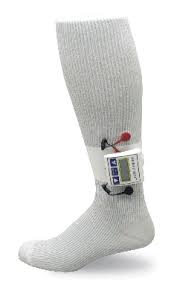 The world’s first electronic stocking can now be sold without a prescription for the treatment of painful neuropathy or for wound healing while sleeping. PRIZM MEDICAL, INC. announced the market release of the world’s first stocking electrode – the Silver-Thera™ stocking for the treatment of lower leg and foot pain, possibly eliminating the need for expensive medication and their side effects. The FDA has approved it to be marketed without a prescription and it is eligible for reimbursement from Medicare and private insurance. This type of DC stimulation has a 50-year track record in the hospital setting with 109 peer reviewed published clinical studies. In addition, Prizm Medical has four published studies on Diabetic Foot Disease for pain and wound healing. Silver-Thera™ Stocking is comfortable, washable, highly conductive stocking combines the medicinal benefits and conductivity of silver fibers enabling evenly distribution of DC stimulation. This non-drug treatment provides dramatic increases of microcirculation in the lower leg helping to heal soft tissue, which in turn relieves the pain. The novel treatment can be done during the day, but it’s recommended to do it while you are sleeping when the body goes into a more regenerative hormonal phase of healing. For more information
Test Your Knowledge
(Continued from Question #835)
Mr. Fontello is an overweight, Caucasian 63-year-old patient who comes in for a 6-month check-up. He has a 12-year history of type 2 diabetes. He was diagnosed at age 33 with high blood pressure, but had never really done much about it as it was “too much of a hassle” and he felt “just fine.” At the time his diabetes was diagnosed, he was referred to a diabetes education program and was started on metformin, lovastatin, losartan and aspirin. He has an individualized A1C goal of 7%. Four years after diagnosis, pioglitazone was added to Mr. Fontello’s diabetes regimen. Three years ago, he came in for an appointment complaining of polyuria, polydipsia and fatigue with an office A1C of 9.3%. At that time he was started on nightly basal insulin detemir. Since that time, he has made concerted efforts to eat a healthy diet and get to the gym. Today, he reports his SBGM fasting plasma glucose levels are on target (FPG<130mg/dL). He also states that his feet always feel a little bit swollen. BP 128/78, HR 73, RR 19. Physical exam is remarkable for peripheral edema and mildly decreased pedal pulses. Current medications: metformin, pioglitazone, insulin detemir, lovastatin, losartan, aspirin. At today’s visit, his office A1C is 8.1%. A rapid-acting insulin analogue was added to his largest meal of the day. Labs taken last year show Mr. Fontello had a serum creatinine 1.2mg/dL with an eGFR 61mL/min. Today, his serum creatinine is 1.6 mg/dL and his eGFR is 44 mL/min. Because guidelines indicate when a patient’s eGFR falls below 60mL/min, dose reduction of medications should be considered, you decide to adjust Mr. Fontello’s medication. In type 2 diabetes, which one of the following medications does not need to be considered for dose reduction? Select one answer: A. Glyburide B. Metformin C. Insulin D. Pioglitazone E. Exenatide Are you right? Follow the link to find out!
Did You Know: NovoNordisk’s New Combination Drug Approved
The FDA has approved NovoNordisk’s new combination drug, Xultophy. The 16-0 vote was in favor of approving the long-acting insulin and GLP-1 combination. The same drug was approved in Europe in 2014. The drug combines Novo’s drug Tresiba, known also as insulin degludec, with its GLP-1 agonist Victoza, known also as liraglutide. The advisory committee will consider a similar drug, Sanofi SA’s iGlarLixi, which combines the company’s experimental GLP-1 agonist lixisenatide with its insulin treatment Lantus, also known as insulin glargine. The two companies’ products would be the first to combine a GLP-1 and a basal insulin in a single injection. The idea is to treat patients earlier with a combination drug rather than waiting for patients to lose control of their blood glucose on one drug before moving to another. The FDA reviewers found no new safety issues with IDegLira that were not already known for degludec and liraglutide but said, “It is important to note that use of IDegLira would expose patients to safety risks associated with both products.” The reviewers also said the use of IDegLira allows for lower doses of liraglutide than have been proven efficacious while incurring safety risks associated with liraglutide use. — FDA News Release May 2016
New guidelines cite effectiveness, cost efficiency, and safety as reasons to consider procedure.
Study shows the SGLT-2 inhibitor can lower HbA1c, BP, and weight in T2DM patients.
New FDA nutrition facts label aims to make it easier for consumers to make informed choices about what they’re eating.
FDA issues alert about interim safety results from ongoing clinical trial, but study of potential canagliflozin amputation risk is ongoing.
Higher level of cardiorespiratory fitness (CRF) over two decades was shown to reduce risk for developing prediabetes and T2, even after adjusting for changes in BMI.
Featured Writer: Dr. Sheri Colberg, Ph.D., FACSM
A recent study published in Obesity in May 2016 reported very discouraging findings for a group of participants who had lost weight on “The Biggest Loser” (TBL) reality TV show: not only did almost all of them regain a significant amount of weight over the 6-year period following the show, but they also had lower resting metabolic rates than expected for their body weights, even six years later. With the way the media ran with this story, it will not be a surprise if everyone just gives up staying thinner and blames excess weight on a faulty, and unchangeable, metabolism.
Quote of the Week!
“No one saves us but ourselves. No one can and no one may. We ourselves must walk the path.”
…Buddha
Your Friends in Diabetes Care
Steve and Dave
Diabetes In Control
810 Bear Tavern Road Suite 102
Ewing, NJ, 08628
USA
www.diabetesincontrol.com