 Diabetes In Control. A free weekly diabetes newsletter for Medical Professionals. News and information for Medical Professionals.
Surgery could lower patients' development of future medical issues.
Read More »Gastric Bypass – Beneficial or Not?

Surgery could lower patients' development of future medical issues.
Read More »
In part one of this special interview, Dr. Stanley Schwartz and DIC publisher Steve Freed discuss Dr. Schwartz's proposed new beta-cell centric classification of diabetes.
Read More »
Type 1 diabetes (T1DM) is one of the most prevalent severe chronic diseases of childhood, affecting more than 170,000 children in the United States, an increase of 23% since 2001. In the US, more than 25,000 children are diagnosed annually with 1:200 children and 1:100 adults diagnosed with T1DM during the lifespan.
Read More »
Research study finds high levels of glucose could be affecting kidneys even prior to diabetes diagnosis.
Read More »
Can decreased lung function be used as a diabetes predictor?
Read More »
Product may offer simpler solution to hypoglycemia over intramuscular injections.
Read More »
Consider protein intake in addition to counting carbohydrates when calculating insulin doses.
Read More »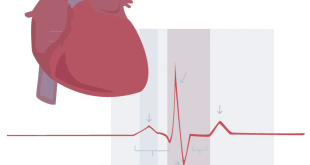
In this week's Homerun Slides, the cardiovascular benefits of pioglitazone.
Read More »
Impaired glucose tolerance (IGT) and impaired fasting glycemia (IFG) are categorized as stages in the natural history of disordered carbohydrate metabolism. They occur in all individuals as they progress from normal to diabetes, but since the transition through these states is rapid in type 1 diabetes, they are rarely identified in such individuals. Therefore, nearly all of the literature dealing with IGT and IFG is concerned with issues relating to type 2 diabetes, such as risk of developing type 2 diabetes and CVD.
Read More »
Some think you can’t be too rich or too thin. A stylish female, type 2 diabetes, 46 years of age came into the office (a weight loss clinic) for a follow up. Everyone was telling her how great she looked. She said she was feeling great and excited because she could fit into clothes she couldn’t fit in the past few years. She lost 9 pounds in three months. She had not been self monitoring her glucose. She was thrilled, but her doctor wasn’t so thrilled, at least not yet. He was concerned her glucose was elevated.
Read More »