 Diabetes In Control. A free weekly diabetes newsletter for Medical Professionals. News and information for Medical Professionals.
Patients with hypertension, diabetes and coronary artery disease who maintained their systolic blood pressure at less than 130 mm Hg did not have improved cardiovascular outcomes compared to patients with usual blood pressure control, according to a study.…
Read More »Diabetes In Control

Managing Clinical Problems in Diabetes, Case Study #16: Nutritional Management and Physical Activity

Edited by Trisha Dunning AM, RN, MEd, PhD, CDE, FRCNA and Glenn Ward MBBS, BSc, DPhil (Oxon), FRACP, FRCPath Mr. WC self-referred to a diabetes centre at a tertiary hospital. “I am confused about the recommendations for diet, especially the GI. As a veteran of 27 years of type 1 …
Read More »GLP-1 Effectiveness, Mechanisms of Action and Potential, Part 2 of 4
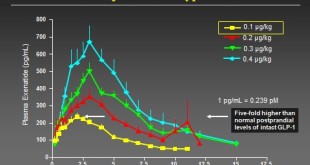
This week, we continue with Part 2 of our Homerun Slides series on GLP-1 Agonist Therapy…. Link to download (.ppt format): GLP-1 Effectiveness, Mechanisms of Action and Potential, Part 2 of 4 Other sets in this series: GLP-1 Effectiveness, Mechanisms of Action and Potential, Part 1 of 4 GLP-1 Effectiveness, Mechanisms …
Read More »Editor’s Note: Dangers of Hospital “One-Size-Fits-All” Strategies
This week’s Disaster Averted highlights one of the common risks of hospital stays for diabetic patients: the discontinuation of their normal insulin regimen and the initiation of a reactive, sliding-scale, “one-size-fits-all” strategy for glycemic control. Often times this strategy is used with food choices for our patients and this week’s …
Read More »The Other Insulin Story of 1921
The year 1921 was an important year as far as insulin was concerned. A dedicated team of scientists led by Banting and Best discovered the hormone which won them the Nobel Prize, offering hope to millions of people with diabetes. The year is still remembered worldwide by people involved in …
Read More »Letter from the Editor: Dr. Rosalyn Yalow, Dr. John Eng, Pioneers in Endocrine Research
Many of you have never heard the name Dr. Rosalyn Yalow, and few of us would have known her as the “Mother of Endocrinology.” This scientist, who made the possibility of measuring such things as insulin and thyroid levels a reality, passed away a couple of months ago and my …
Read More »Tylenol Maker Lowers Maximum Dose
Tylenol Maker Lowers Maximum Dose McNeil Consumer Healthcare announced it is lowering the maximum daily dose instructions for Extra Strength Tylenol to six pills a day (3,000 mg) to reduce the risk of acetaminophen overdose and possible kidney problems.
Read More »Generic Acarbose: FDA Approves Generic Acarbose
Generic Acarbose: FDA Approves Generic Acarbose The FDA has approved a generic drug for diabetes made by Indian generic drug maker Strides Arcolab. The FDA approved acarbose tablets in the 25-mg, 50-mg and 100-mg strengths. The drug is a niche drug used to treat type 2 diabetes. Acarbose tablets have …
Read More »Some Ethnic Groups More Vulnerable to Dangerous Fat
South Asians tend to store fat around organs, raising coronary artery disease risk, study finds. This organ-hugging fat, which can lead to diabetes and coronary artery disease, is more common among people from South Asia, the researchers reported. “The study showed South Asians have less space to store fat below …
Read More »More Kids Eating Calorie-Packed Take-out Food
A third of food eaten now is cooked outside the home according to a study. The obesity epidemic is being fueled still further by a growing trend among kids to eat out and bring take-out food home. Such foods are high in sugar and calories, and their increasing popularity means …
Read More »