Home / Tag Archives: oxidative stress

Tag Archives: oxidative stress

The Return of Aldose Reductase Inhibitors: Could an Old Idea Finally Pay Off?

A hand holding a diabetes medication tablet in front of an anatomical heart illustration with diabetic complication icons representing the nerves, retina, kidneys, and polyol pathway research.

Diabetes care has advanced dramatically over the past decade. While therapies such as GLP-1 receptor agonists and SGLT2 inhibitors have transformed glucose management and cardiovascular outcomes, many patients continue to develop long-term complications. Could an older therapeutic target finally provide the missing piece? Interest in aldose reductase inhibitors for diabetes …

Read More »

A Newly Discovered Form of Cell Death May Explain Why Diabetes Causes So Many Complications

Scientific illustration showing ferroptosis, an iron-dependent form of cell death, contributing to diabetic complications affecting the kidneys, eyes, nerves, and heart.

Diabetes is known for raising blood sugar levels, but its long-term complications often have the greatest impact on health. Kidney disease, vision loss, nerve damage, and cardiovascular disease affect millions of people living with diabetes. For years, researchers focused on inflammation, oxidative stress, and poor circulation to explain these complications. …

Read More »

The Blood Vessel Damage Doctors Can’t See—Until It’s Too Late

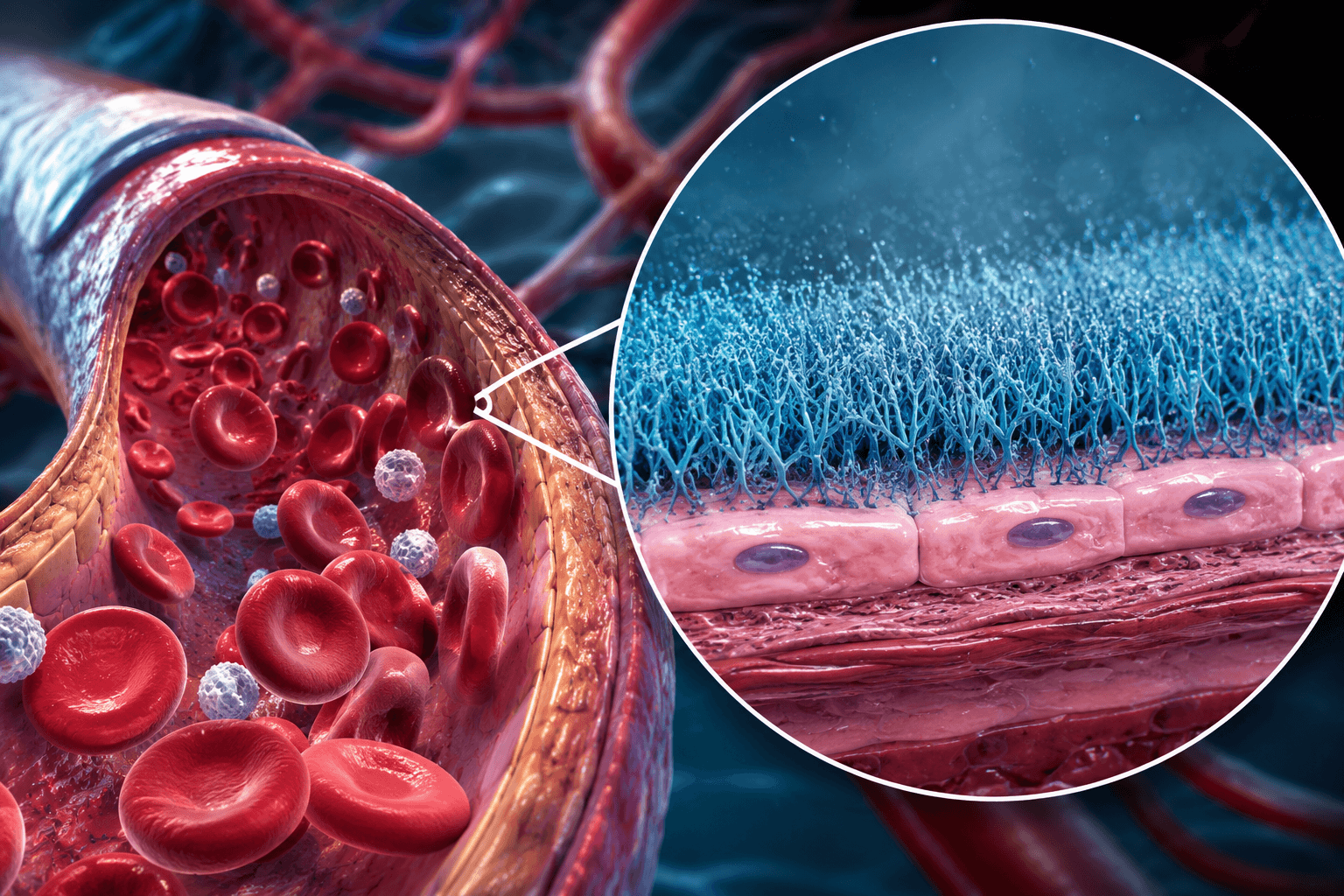
Medical illustration showing the endothelial glycocalyx lining healthy blood vessels with a magnified view of microscopic vascular damage associated with diabetes.

Most people think diabetes-related blood vessel damage begins only after years of high blood sugar. However, scientists are uncovering evidence that injury may start much earlier, in a structure so thin it cannot be seen during a routine medical exam. This microscopic layer, known as the endothelial glycocalyx, acts as …

Read More »

Could Mitochondria Be the Missing Link to Slowing Type 2 Diabetes?

Realistic medical illustration showing healthy and damaged mitochondria inside human cells alongside blood glucose monitoring, representing mitochondrial dysfunction in type 2 diabetes.

Type 2 diabetes has traditionally been viewed as a disease driven by insulin resistance and declining pancreatic beta-cell function. However, researchers are now looking much deeper into the cell itself. Increasing evidence suggests that mitochondrial dysfunction in diabetes may be a key factor linking impaired energy production, chronic inflammation, oxidative …

Read More »

Is Diabetes Making People Age Faster? What the New Science Reveals

Split-face medical illustration showing a woman with youthful features on one side and advanced aging on the other, alongside DNA strands, a glucose meter, and cellular imagery representing accelerated biological aging in diabetes.

For decades, scientists have known that people with type 2 diabetes face a higher risk of heart disease, kidney disease, cognitive decline, and other age-related conditions. However, emerging research suggests these complications may be linked to something even more fundamental: accelerated biological aging in diabetes. In other words, diabetes may …

Read More »