Jul 7, 2026
Articles, Diabetes, GLP- 1 Agonist Therapy Center, GLP-1 Agonist Therapy Center, Obesity, Obesity, Therapies, Type 2 Diabetes, Type 2 Diabetes
1,733 views
For decades, glucagon has been viewed as insulin’s opposite. While insulin lowers blood glucose, glucagon raises it by signaling the liver to release stored sugar into the bloodstream. Because of this, glucagon has traditionally been considered a hormone to suppress in people living with type 2 diabetes. However, modern research …
Read More »
Jun 25, 2026
Articles, Blood Glucose Control, Blood Glucose Control, Diabetes, Gastroenterology, Prevention, Type 2 Diabetes, Type 2 Diabetes
1,632 views
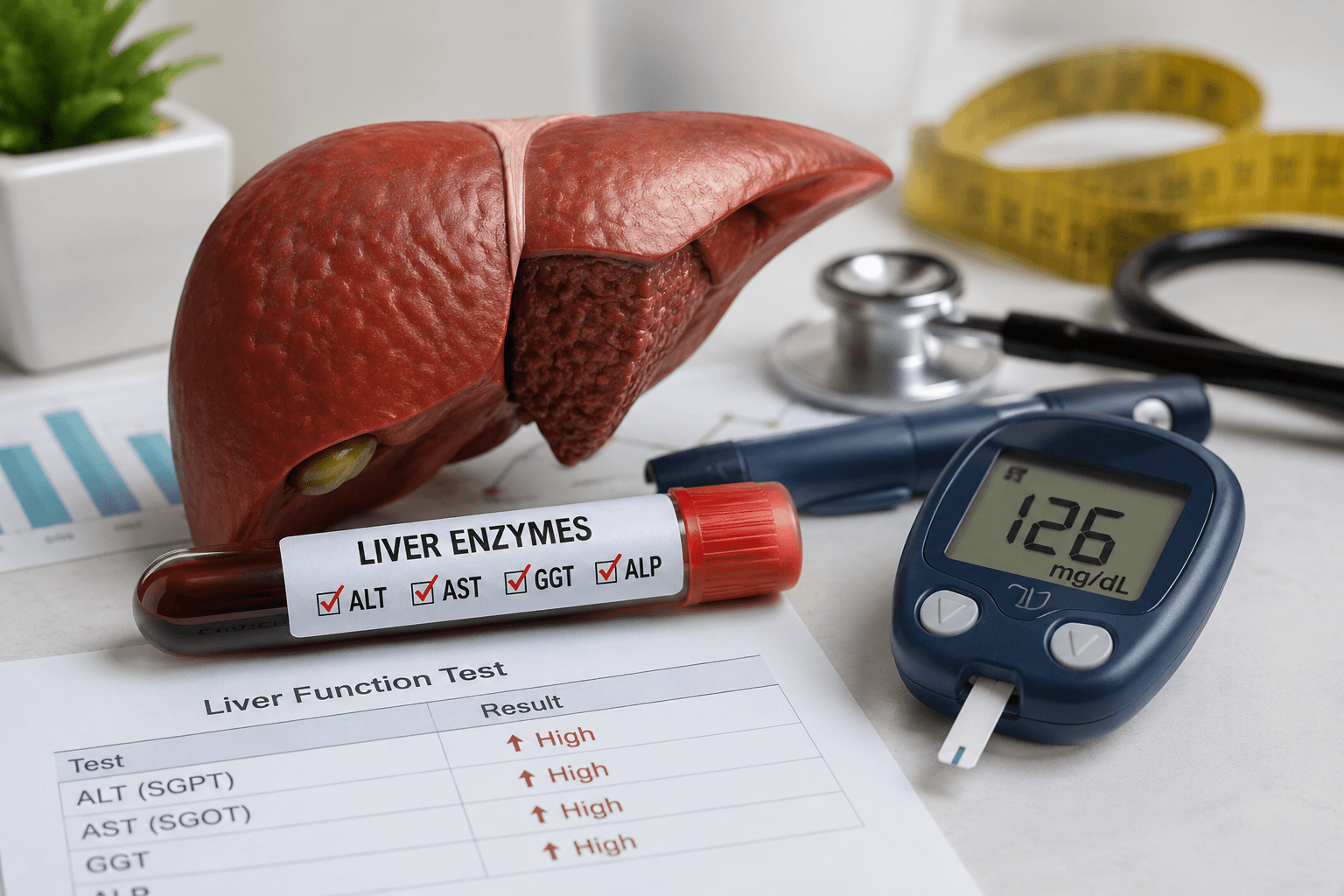
Many people think of liver function tests as a way to detect liver disease. However, researchers are discovering that routine liver enzymes may also reveal important clues about future metabolic health. Understanding liver enzymes diabetes risk is becoming increasingly important because these commonly ordered blood tests may help identify people …
Read More »
May 20, 2026
Articles, Diabetes, Gastroenterology, Obesity, Obesity, Type 2 Diabetes, Type 2 Diabetes
2,080 views
Screening for fatty liver disease in patients with diabetes is no longer limited to identifying elevated liver enzymes or calculating a fibrosis score during an annual visit. Instead, clinicians are entering an era where diabetes care and hepatology increasingly overlap, especially as metabolic dysfunction-associated steatotic liver disease, or MASLD, becomes …
Read More »
Jan 26, 2026
Articles, Diabetes, Featured, Obesity, Therapies, Type 2 Diabetes, Type 2 Diabetes
3,252 views
Nonalcoholic steatohepatitis (NASH) and metabolic dysfunction–associated steatotic liver disease (MASLD) are rapidly becoming leading causes of chronic liver disease worldwide. Traditionally, clinicians have associated MASLD with obesity, insulin resistance, and type 2 diabetes, often using body mass index (BMI) and A1C as screening triggers. However, an important shift is occurring …
Read More »
Jan 16, 2026
Articles, Diabetes, Obesity, Therapies, Top Articles, Type 2 Diabetes, Type 2 Diabetes
2,752 views
The rising interest in GLP‑1 MASLD MASH treatment has transformed how clinicians view metabolic therapies for patients with type 2 diabetes and obesity. While GLP‑1 receptor agonists have long been recognized for their glucose-lowering and weight-loss effects, they now offer potential for improving liver outcomes, especially in individuals with metabolic …
Read More »
Dec 11, 2025
Articles, Diabetes, Gastroenterology, Geriatric Medicine, Neurology, Oncology, Prevention, Type 2 Diabetes, Type 2 Diabetes
1,532 views
Early in training, many clinicians learn the classic “eye–kidney–foot” framework for recognizing and managing complications of diabetes. However, as science advances, the range of recognized consequences of diabetes—and opportunities for earlier intervention—continues to broaden. Today, the concept of diabetes complications screening must evolve to include conditions such as metabolic dysfunction–associated …
Read More »
 Diabetes In Control. A free weekly diabetes newsletter for Medical Professionals. News and information for Medical Professionals.