 Diabetes In Control. A free weekly diabetes newsletter for Medical Professionals. News and information for Medical Professionals.
Type 2 diabetes: the multimodal approach
In a typical general practice population of type 2 patients, about one-quarter will have microalbuminuria. It is a strong independent risk factor for cardiovascular mortality (at least twofold increased risk), and even minor degrees of microalbuminuria within the reference range show a strong consistently graded cardiovascular risk. Other cardiovascular risk factors, traditional and otherwise, are highly prevalent in people with microalbuminuria, in particular hypertension: nearly all patients have blood pressure in excess of 140/90 mmHg. Renal tract ultrasound scan, especially in people with established microalbuminuria, is necessary to exclude unrelated structural abnormalities. Resting ECG should probably be done annually; although there are no clear guidelines on this, the cardiovascular risk at this stage remains the major concern.
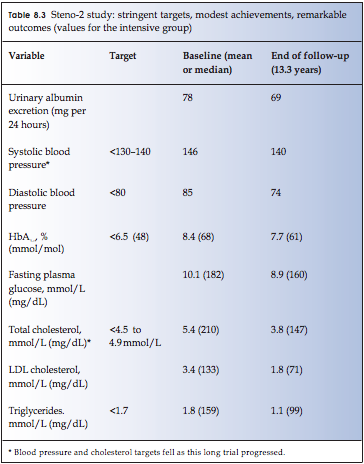
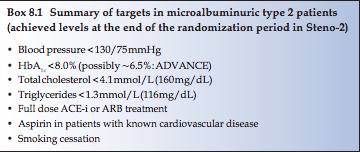
Smoking increases the risk of progression from microalbuminuria to macroalbuminuria and is independently associated with a more rapid fall in eGFR. Quitting markedly reduces the risk of albuminuria progression, and is a priority target (in general as well, of course). However, intervention in all other risk factors is critical. Steno-2 (2008) in type 2 patients with mid-range microalbuminuria found that with intensive targeting of several factors for 8 years, cardiovascular deaths and events (and the need for laser treatment of retinopathy) were reduced by about 50% over the following 6 years, even after allocation to intensive or conventional treatment had stopped. End-stage renal failure, autonomic neuropathy, coronary interventions and amputations were all markedly reduced, though not all targets, especially glycemia, were achieved (Table 8.3 and Box 8.1) [11]. The intensive targets of Steno-2 are now routinely achieved, and show that mortality and complications can be substantially reduced in high-risk type 2 patients, though these are not short-term gains.
Glycemic control and microalbuminuria
Nephropathy seems to be the most responsive of the microvascular complications to glycemic intervention. In the UKPDS tighter glycemic control (average HbA1c 7%, 53 mmol/mol) decreased risk of progression to microalbuminuria and to clinical albuminuria by about one-third, albeit over a very long period (9–12 years), and there was also an impressive risk reduction in doubling of serum creatinine. In the ADVANCE study very tight glycemic control (mean HbA1c 6.3%, 45 mmol/mol) reduced the risk of developing microalbuminuria by about 10% compared with less tight glycemic control (7.0%, 53 mmol/mol), and of new or worsening nephropathy by 20%, but neither glycemic target is realistic in the long term. Nevertheless, in a comprehensive management regimen it should be possible to emphasize glycemic control where there are renal complications. High-dose B-vitamin therapy (folic acid, B6 and B12) hastens the decline in GFR and increases vascular events in patients with nephropathy; ensure that microalbuminuric patients are not taking these vitamins. This is another reminder always to take a comprehensive medication history, and to actively discourage vitamin supplements in diabetes [12].