 Diabetes In Control. A free weekly diabetes newsletter for Medical Professionals. News and information for Medical Professionals.
- Special Feature: New Drug Cocktail That Increases Human Beta Cell Proliferation at Rapid Rates
- Appropriateness of Time in Range as a Measure of Diabetes Outcomes
- Bidirectional Association Between Type 2 Diabetes and Sleep Apnea
- The More Whole Grains, The Less Prevalence of Type 2 Diabetes
- Beta Cell Preservation by Gastric Banding in Prediabetes
- Prevalence of Urological Complications Among People Who Have Type 1 Diabetes
Letter from the Editor
 CGMS use is on the uptake as more and more insurers, including Medicare, see the value of constant knowledge of glucose levels and trending changes that can help prevent hypo- and hyperglycemia before they occur. There is no doubt that CGMS will eventually replace finger sticks for many patients as we move forward. This week, our intern, Michael Zaccaro, found some research from Dr. Richard Bergenstal that points to another reason for using CGMS. In item #2, Michael shares info on how “time in range” can be very valuable in reducing the risk of vascular complications in our patients.
*****************************
We can make a difference!
*****************************
Dave Joffe
Editor-in-chief
This Week's Survey
Have you provided all your new patients who take insulin with a prescription for Glucagon or similar product? Follow the link to see how you and your colleagues compare.
News Flash: Breakthrough Research: New Drug Cocktail to Increase Beta Cell Regeneration
Andrew Stewart, MD, Director of the Mount Sinai Diabetes, Obesity, and Metabolism Institute, and researchers at Mount Sinai have discovered a novel combination of two classes of drugs that induce the highest rate of proliferation ever observed in adult human beta cells—the cells in the pancreas that produce insulin. The result is an important step toward a diabetes treatment that restores the body’s ability to produce insulin. See Item #1.
New Product: FDA approves POPS! Diabetes
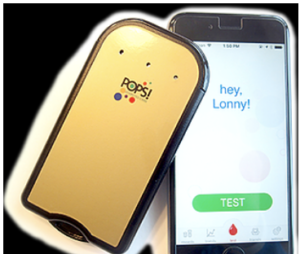 The POPS!® one System is a new approach to diabetes management. The digital health system combines the power of the user’s phone with a coaching app and a small, portable, and integrated glucose monitor. The differentiation of POPS!® one is through the combination of a very simple glucose testing experience with in-app coaching for the user. People who use the system will also be able to review their results and trends at the touch of a button and share them with family or healthcare professionals. — Coming in 2019. Learn more here https://www.popsdiabetescare.com/.
Test Your Knowledge
Which of the following ADA statements about recommended treatment algorithms for type 2 diabetes is true?
A. The ADA algorithm includes a specific hierarchy of recommended therapies while the AACE algorithm does not.
B. The ADA’s algorithm specifies agents to be considered for cardiovascular risk reduction.
C. Both AACE and the ADA stratify the choice of initial therapy according to baseline HbA1C less than 7.5% or greater than/equal to 7.5%.
D. The risk-benefit profiles of antihyperglycemic classes are not reflected in the AACE or ADA algorithm.
Follow the link for the answer.
Did You Know: Are You Aware Patients Withhold Medical Information?
According to the results of a recent study, patients often do not disclose medically relevant information to their healthcare providers. However, the reasons for not reporting all relevant facts during the taking of a medical history have not been well studied. For this study, they assessed the frequency with which patients failed to disclose to their clinicians, the information relevant to their care. Data was collected from a total of 4,510 patients. The primary outcome measures were self-reported nondisclosure of seven types of information to the clinician and the reasons for withholding this information. The researchers defined healthcare providers as “any medical caregiver, such as a doctor, physician’s assistant, or nurse.” Of the participants, 3,165 reported withholding information. The most common situations in which information was withheld were not agreeing with the clinician’s recommendation and not understanding the clinician’s instructions. The five reasons most commonly indicated for participants not disclosing information were not wanting to be judged or lectured, not wanting to hear how harmful their behavior is, embarrassment, not wanting the clinician to think they were difficult patients, and not wanting to take up more of the clinician’s time. “If patients are withholding information from clinicians as frequently as this research suggests, then clinicians are routinely not receiving the information that they need to provide high quality care to patients, especially sicker patients,” the researchers conclude. They note that sicker patients were more likely to withhold information. The study may itself suggest an opportunity to correct the problem. The authors have implicitly suggested a remedy worth trying: to shift questions that are the most difficult to answer candidly in a face-to-face clinical interview to an impersonal survey instrument. The success of this study in eliciting data on the prevalence of nondisclosure suggests that this technology might be useful in solving the problem. — Published online November 30 in JAMA Network Open.
Diabetes in Control is pleased to bring you an exclusive interview with Dr. Andrew Stewart. Dr. Stewart and his fellow researchers at the Icahn School of Medicine at Mount Sinai have discovered a novel combination of two classes of drugs that induces the highest rate of proliferation ever observed in adult human beta cells—the cells in the pancreas that produce insulin. The result is an important step toward a diabetes treatment that restores the body’s ability to produce insulin.
Time in glycemic range inversely correlated to risk of developing vascular complications in patients with diabetes
Study finds relationship between diabetes and OSA cofactors in development of CVD.
Study strengthens existing dietary advice that patients should switch from products made from white flour to whole grains.
Rise Study compared gastric banding to metformin in preserving beta cell functions in people who have prediabetes.
Research shows urological issues more frequent than once thought.
Quote of the Week!
“I was going to have cosmetic surgery until I noticed that the doctor’s office was full of portraits by Picasso.”
….Rita Rudner
Diabetes in Control gratefully acknowledges the assistance of the following pharmacy doctoral candidates in the preparation of this week’s newsletter:
Angela Reyes, Pharm.D. Candidate, LECOM College of Pharmacy
Arsalan Hashmi, PharmD. Candidate, LECOM College of Pharmacy
Melissa Bailey, Pharm.D. Candidate, USF College of Pharmacy
Michael Zaccaro, Pharm. D. Candidate 2019, LECOM School of Pharmacy
Your Friends in Diabetes Care
Steve, Dave, and Joy
Diabetes In Control
810 Bear Tavern Road Suite 102
Ewing, NJ, 08628
USA
www.diabetesincontrol.com