 Diabetes In Control. A free weekly diabetes newsletter for Medical Professionals. News and information for Medical Professionals.
In this week’s Homerun Slides, we talk about some of the Potential Adjunctive Treatments for Type 1 Diabetes including: Incretins, SGLT-2 Inhibitors, and Insulin Sensitizers….
Read More »Type 1 Diabetes Treatment Options, Part 5

In this week’s Homerun Slides, we talk about some of the Potential Adjunctive Treatments for Type 1 Diabetes including: Incretins, SGLT-2 Inhibitors, and Insulin Sensitizers….
Read More »
In this week’s Homerun Slides, we focus exclusively on Pramlintide as a treatment therapy for type 1 diabetes including topics on how Pramlintide Reduces Postprandial Glucagon; Clinical Effects; and the Safety and Tolerability in Type 1 Diabetes….
Read More »
In this week’s Homerun Slides, we cover topics including: The Basal/Bolus Insulin Concept; The Insulin Pump as Adjunctive Therapy; and Addressing the Alpha Cell in Type 1 Diabetes….
Read More »
In this week’s Homerun Slides, we continue our discussion of type 1 treatment options and intensive insulin management, tying in the factors of glucose variability, and the possibility of a different style of classification to increase treatment efficacy… To download the complete set of these Homerun Slides in PowerPoint (.ppt), just …
Read More »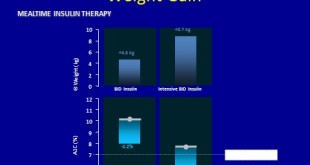
With this week’s Homerun Slides, we begin a new series focused on the treatment of type 1 diabetes. We start with a brief overview of the pathophysiology of type 1 diabetes and then delve into some of th challenges of tight insulin control including hypoglycemia…. To download the complete set …
Read More »Advanced technologies and treatments should be implemented to improve metabolic control and outcomes in type 1 diabetic patients… An analysis to assess current diabetes treatments performed by T1D Exchange researchers shows a need for improvement in outcomes across all age groups, most notably adolescents and young adults. More than 16,000 …
Read More »Diesease progression possible with presence of two or more autoantibodies… Autoimmune type 2 diabetes is preceded by the appearance of islet insulin autoantibodies: GAD autoantibodies (GADAs), insulinoma-associated protein 2 autoantibodies (IA-2AS), and zinc transporter 8 autoantibodies. Previous studies show that diabetes will develop within 10 years in 27-40% of children with …
Read More »Studies yet to determine if gluten-free diet will decrease risk of retinopathy, nephropathy… Celiac Disease (CD) and type 1 diabetes are frequently associated with each other, as they have common genetic disorders. Current guidelines recommend screening patients with new onset diabetes for celiac disease and regularly thereafter. New studies have …
Read More »In the Pre-POINT pilot study, five of six children who were at extremely high risk of developing type 1 diabetes and who received a high dose of oral insulin had a protective immune response, and the insulin did not cause hypoglycemia… Children at risk for type 1 diabetes, who were …
Read More »DR prevalence of DR higher in T1s; T2s have the major burden…. One of the microvascular complications of type 1 and type 2 diabetes is diabetic retinopathy (DR), which can cause blindness and low vision in this patient population along with other age-related eyes condition. Many screening programs have been …
Read More »