 Diabetes In Control. A free weekly diabetes newsletter for Medical Professionals. News and information for Medical Professionals.
Poor glucose control speeds progression of dementia… A new study by researchers from Johns Hopkins Bloomberg School of Public Health in Baltimore, MD, suggests that a midlife diagnosis of diabetes may accelerate the rate of cognitive decline over the following 20 years. Elizabeth Selvin, PhD, and her research team analyzed …
Read More »Awareness of Glycemic Status Changes Macronutrient Intake
Although those diagnosed with diabetes consumed more protein and less sugar, all individuals consumed less fiber and more saturated fat than recommended….
Read More »Diabetes Mellitus 101 for Cardiologists, Part 8
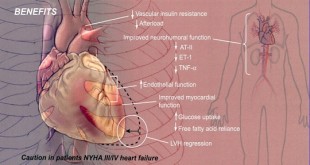
In this week’s Homerun Slides, Dr. Stanley Schwartz reviews pioglitazone as a therapy for both diabetes and cardiovascular issues. Topics include: Pioglitazone in Dysmetabolic Syndrome, Prediabetes, Type 2 Diabetes; Effect of Pioglitazone on Cardiac Mass and Function: and Glitazones (including rosiglitazone) and Cardiac Function…. To download these slides in PowerPoint (.ppt) format, …
Read More »Pistachios Associated with an Improved Metabolic Risk Profile in Prediabetes
In a study, patients who consumed pistachios showed improvement in fasting glucose, insulin, and HOMA of insulin resistance…. Spanish researchers examined whether a diet rich in pistachios could be beneficial in delaying prediabetes onset and promoting a healthier metabolic profile in patients with prediabetes. A randomized clinical trial was held …
Read More »Does Sweet Taste Sensitivity Affect the Development of Diabetes?
Pre-diabetes patients show blunted taste response similar to diagnosed diabetes patients… The decrease in sweet taste sensitivity which can lead to an increase in sugar intake might be a factor driving people with prediabetes to overt diabetes. Researchers assessed the sweet taste sensitivity in pre-diabetics in comparison with diabetics …
Read More »Hyperglycemia and Incidence of Subclinical Myocardial Damage
Hyperglycemia associated with myocardial damage appears to begin before the diagnosis of diabetes and requires a highly sensitive assay to detect it… Cardiovascular disease is the leading cause of death among individuals with diabetes. Hyperglycemia is believed to induce coronary microvascular dysfunction and result in myocardial injury. Previous studies have …
Read More »Stanley Schwartz, MD, FACP, FACE: Introduction, ADA 2014

Dr. Stanley Schwartz introduces himself briefly and talks about how much he enjoying his “working retirement” and actually get more academic work done since he left academia. He also says that he is “having great fun taking care of my patients and advacning the ideas I come up with as …
Read More »Stanley Schwartz, MD: A New Way of Classifying Diabetes – The Beta-Cell Centric Approach
Dr. Stanley Schwartz talks about his groundbreaking presentation at the 2014 ADA in which he outlined a new approach to classifying diabetes based on the health of the patient’s beta-cells. He explains in detail here how the current system of classification is full of contradictions and overlap between different types …
Read More »Stanley Schwartz, MD: Picking the Right Drugs for the Right Patients
Dr. Stanley Schwartz talks about choosing the right drugs for each individual patient, and which ones should be first tier choices, which ones second, and the efficacy we should be looking for from them…. More videos in this series with Dr. Schwartz Stanley Schwartz, MD, FACP, FACE: Introduction, ADA …
Read More »Stanley Schwartz, MD: Positive Effects of More Aggressive Treatment
Dr. Stanley Schwartz relates his overwhelmingly positive experience treating patients with newer drug therapies such as GLP-1 agonists and SGLT-2 inhibitors. He explains that he will sometimes put patients, on the very first day of their visit, on these medications when their A1c’s are very high and, one month later, …
Read More »