 Diabetes In Control. A free weekly diabetes newsletter for Medical Professionals. News and information for Medical Professionals.
The FDA has approved a key testing phase for an artificial pancreas developed by researchers of the University of Virginia, which could potentially automate care for millions of those with type 1 diabetes….
Read More »Diabetes In Control

Circadian Rhythms Profoundly Influence Metabolic Output
Circadian rhythms greatly control the production of such key building blocks as amino acids, carbohydrates and lipids, researchers discovered when they analyzed the hundreds of metabolic products present in the liver….
Read More »New Evidence Links Alzheimer’s and Diabetes
An emerging body of research suggests that Alzheimer’s disease may be linked to insulin resistance, constituting a third type of diabetes….
Read More »Diet Soda May Increase Glucagon-Like Peptide 1 Levels
The increase was seen in healthy youths and those with type 1 diabetes, but not in those with type 2 diabetes….
Read More »Editor’s Desk DCMS #77: Honest A1c Results
Have you ever had a patient who tells you that their readings are all under 150mg/dl but then their A1c is 9.5? Often we scratch our heads and wonder why these patients are less than honest about their readings. There could be another reason though, and this week our Clinical …
Read More »Letter from the Editor #618: Are You Exercising?
This week, our publisher, Steve Freed, wants to know if you are setting a good example for your patients by engaging in physical activity. A good reason to think about this is that we are seeing more and more information about the benefits of physical activity and why we need …
Read More »Joslin’s Diabetes Deskbook, A Guide for Primary Care Providers, Updated 2nd Ed., Excerpt 2: Do You Know the Conditions that May Cause Inaccurate Results from the A1C Test?
By Richard S. Beaser, M.D. Chapter 3: Monitoring Diabetes The Importance of Self-Monitoring of Blood Glucose and Glycohemoglobin Measurements The Glycohemoglobin Measurement (A1C) One of the functions of the red blood cells is to carry oxygen to the cells throughout the body. Hemoglobin within the red blood cells is …
Read More »Hypo and Hyperglycemia, Part 4 of 4
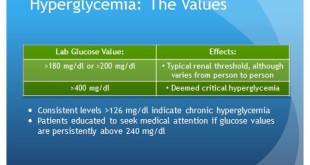
This week, we continue our Homerun Slides series on Hypo and Hyperglycemia focusing in on Hypoglycemia in the hospital. Although hypoglycemia is easily treatable, the medications used are also subject to errors and included in this week’s collection of slides is a dramatic and tragic demonstration of what can …
Read More »Stand-Up Desk

Stand-Up Desk If you’re reading this, chances are you’re sitting down. In a recent study in Medicine & Science in Sports & Exercise of more than 17,000 men and women over 13 years, they found that those who sit for most of the day were 54% more likely to die …
Read More »Losing Belly Fat Improves Blood Vessels
Overweight people who lose weight, especially belly fat, can improve blood vessel function no matter what diet they choose, U.S. researchers say. They studied 60 men and women who weighed an average of 215 pounds at the start of the program. Half went on a low-carb diet while the others …
Read More »