 Diabetes In Control. A free weekly diabetes newsletter for Medical Professionals. News and information for Medical Professionals.
- HbA1c Variability and Risk of All-Cause Mortality and Cardiovascular Events
- Effect of Elevated Triglycerides on Glycemic Management by Patients with Type 2 Diabetes
- Novel Use of SGLT-2 Inhibitors for Treatment of Early-Stage Lung Adenocarcinoma
- People with Type 2 at Risk with Use of Sulfonylureas as Second-Line Medication
- Link Between Type 1 Diabetes and Psychiatric Comorbidities in Children
- Gestational Diabetes Risk May Be Identified in First Trimester
Letter from the Editor

As we move into 2019 we may find that our patients are eligible for more technology and less expensive medications.
Over the past few days I have been receiving ads on my Facebook page for the Dexcom 5 and 6 and Medicare coverage. Since my wife has been using mealtime and correction insulin and is on Medicare this is great news. In the past 3 months she has also gotten information on pumps from Medtronic and patches from V-go in the mail.
This has all happened without her requesting a single thing. The big question will be the cost. Hopefully it will be reasonable enough everyone can afford the supplies.
Insulin will also be cheaper in 2019. Sanofi started it with their guaranteed pricing of $90 cash for a vial of insulin and $150 for a box of pens. Lilly has joined the act with a decreased pricing program as well.
For those patients who are on Medicare, insulin is not a problem for many until they reach the donut hole, and this year it will be easier to get thru the donut hole as the new federal budget increases the amount that manufacturers have to pay towards your patient’s donut hole from 63% to 75%. Once these patients reach the catastrophic coverage portion a box of insulin pens will cost the Medicare patient between $6 and $25.
There is also a movement afoot for manufacturers to sell directly to patients through dedicated dispensaries, cutting out the PBM’s and the wholesalers, allowing lower direct cost; and finally, some of the PBM’s are offering to share the rebates that Pharma pays to the PBM directly to the patients when they pick up their prescriptions. Considering at times rebates can be as much as 80%, if only half is passed to the patient, drugs will get much cheaper.
Here’s to hoping that all this takes place and we can all feel more comfortable that our patients will get the medications we want them to use.
*****************************
We can make a difference!
*****************************
Dave Joffe
Editor-in-chief
This Week's Survey
Should we treat prediabetes pharmaceutically, along with diet and physical activity, for patients with an A1c of 6-6.4%? Follow the link to see how you compare to your colleagues.
New Product/News Flash: Second Artificial Pancreas Approved in Europe
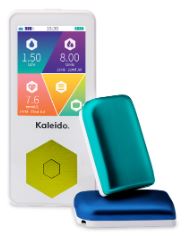 Diabeloop recently received CE marking for a hybrid closed-loop system. The second so-called artificial pancreas to receive such a designation in Europe. The hybrid closed-loop system connects DexCom’s G6 Continuous Glucose Monitor, Kaleido’s patch insulin pump and an algorithm to a user’s phone to predict blood glucose levels and command the insulin pump at an optimal rate. Currently, the only FDA-approved hybrid closed-loop system is the Medtronic 670G. The Omnipod Horizon system (Insulet) and Tandem Control IQ system are both in development. Originating from a French artificial pancreas research program, the DBLG1™ System is a self-learning device that embeds AI to better serve patients.
Test Your Knowledge
John S. is a 63-year-old white male with significant abdominal obesity, type 2 diabetes, hypertension, and dyslipidemia as well. On the basis of an exercise stress test, John was recently diagnosed with silent ischemia. John’s current medications include metformin, a DPP-4 inhibitor, an ACE inhibitor/HCTZ agent, a calcium channel blocker, a high-dose statin, and ezetimibe. John’s relevant physical exam and laboratory findings are as follows:
BMI: 34.8 kg/m2
Blood pressure: 140/86 mm Hg
HbA1C: 7.2%
Total cholesterol: 150 mg/dL
LDL-C: 79 mg/dL
HDL-C: 42 mg/dL
Triglycerides: 145 mg/dL
non-HDL-C: 118 mg/dL
eGFR: 65 mL/min/1.73 m2
ACR: 100 mg albumin/g creatinine
Question: In consideration of John’s overall risks and guideline recommendations, which of the following options would you recommend to manage his type 2 diabetes?
A. Stop the DPP-4 inhibitor due to risk of heart failure. It will not be necessary to add another antihyperglycemic agent as long as John’s HbA1C remains less than 8%.
B. Encourage John with practical advice for improving his lifestyle, and continue with the current regimen.
C. Add basal insulin to John’s regimen and titrate the dose until his HbA1C is less than 7%.
D. Recommend starting a GLP-1 receptor agonist or an SGLT2 inhibitor to improve John’s glucose control.
Follow the link for the answer.
Did You Know: Medical Costs Higher Even 10 Years Prior To Diabetes Diagnosis
According to a published study, adults who had diabetes during the study period had higher total medical expenses at 10 years before and after diagnosis, compared with those who did not have diabetes. For the study, they examined data from 2001 to 2013 from the Truven Health Market Scan Commercial Claims database to create two matched cohorts and identify medical expenses. The first cohort was made up of adults age 25 to 64 years who were diagnosed with diabetes during the study period. The second cohort, was made up of adults of the same age who did not have a diabetes diagnosis during the study. Each cohort was followed for up to 10 years before and after diagnosis. All participants (n = 254,049) had continuous enrollment in a fee-for-service health insurance plan, including prescription drug coverage, for the entirety of the study period. Matched cohort sizes ranged from 3,922 to 39,726 depending on the year. The researchers defined medical expenditures as all paid claims during follow-up, including costs that arose on the day of diagnosis. Mean excess expenditures were also estimated, with all costs made according to 2013 U.S. dollars.
At 10 years before diagnosis, those in the diabetes cohort had total medical expenses of $4,722 compared with $3,679 for those in the control cohort. The diabetes cohort also had higher medical expenses 10 years after diagnosis ($11,886 vs. $5,724). In between the two endpoints, the researchers noted a trend for both total and excess medical costs in the diabetes cohort, specifically a spike in the year before and after diagnosis, followed by a decrease and plateau in years 2 through 5 and a gradual increase from years 6 to 10. Excess medical costs in the year after diagnosis were the highest ($8,109) when comparing the two cohorts, reaching a mean of $6,162 by year 10. Prescription costs exhibited the smallest increase a year after and before diagnosis but were the highest component cost in years 2 through 10 after diagnosis. The researchers wrote that, “The substantial increases in expenditures and excess expenditures prior to diabetes diagnosis may be due to higher health care utilization associated with the natural progression of diabetes, including prediabetes or undiagnosed diabetes, before approaching diagnosis.” From the results, it was concluded that the higher prevalence of comorbidities, such as cardiovascular conditions, obesity, hyperlipidemia, hypertension and others, may have also led to a greater utilization of health services. This suggests that managing the risk factors of diabetes, such as obesity, hypertension, and cardiovascular conditions, could not only lower the risk of developing type 2 diabetes and related complications, but also reduce subsequent costs.
Sundar S. Shrestha, Ping Zhang, Israel A. Hora and Edward W. Gregg; Diabetes Care 2018 Nov; dc172683.https://doi.org/10.2337/dc17-2683
Study assesses effect of variable glycemic levels on risk of vascular complication in patients without diabetes.
Study attempts to determine association between elevated triglyceride levels and achieving glycemic goals for those with insulin-treated diabetes.
Study assessed association of cancer and sodium glucose transporter 2 expression as well as potential benefit of SGLT-2 treatment.
Drugs shown to increase risk of hypoglycemic and cardiovascular events.
Following diabetes diagnosis, children and adolescents have high risk of developing psychiatric condition.
Researchers find every 0.1% increase in HbA1c above 5.1% increases diagnosis risk by 22%.
Quote of the Week!
“The remarkable thing is, we have a choice everyday regarding the attitude we will embrace for that day.”
….Charles R. Swindoll
Diabetes in Control gratefully acknowledges the assistance of the following pharmacy doctoral candidates in the preparation of this week’s newsletter:
Angela Reyes, Pharm.D. Candidate, LECOM College of Pharmacy
Melissa Bailey, Pharm.D. Candidate, USF College of Pharmacy
Michael Zaccaro, Pharm. D. Candidate 2019, LECOM School of Pharmacy
Your Friends in Diabetes Care
Steve, Dave, and Joy
Diabetes In Control
810 Bear Tavern Road Suite 102
Ewing, NJ, 08628
USA
www.diabetesincontrol.com