Diabetes In Control. A free weekly diabetes newsletter for Medical Professionals. News and information for Medical Professionals.
 Impact on healthcare expenditure
Diabetes is an expensive disease. About 75% of the direct costs are absorbed by the long-term complications, rather than the management of diabetes itself. In the USA in 2002, the annual economic burden of diabetes was estimated at $132 billion (accounting for > 10% of total US healthcare expenditure). About 75% of the direct costs are attributable to managing the long-term vascular complications of diabetes, and 90% of resources are spent on type 2 diabetes. In terms of the costs of managing hyperglycemia, self-monitoring of blood glucose concentrations is the single biggest item….
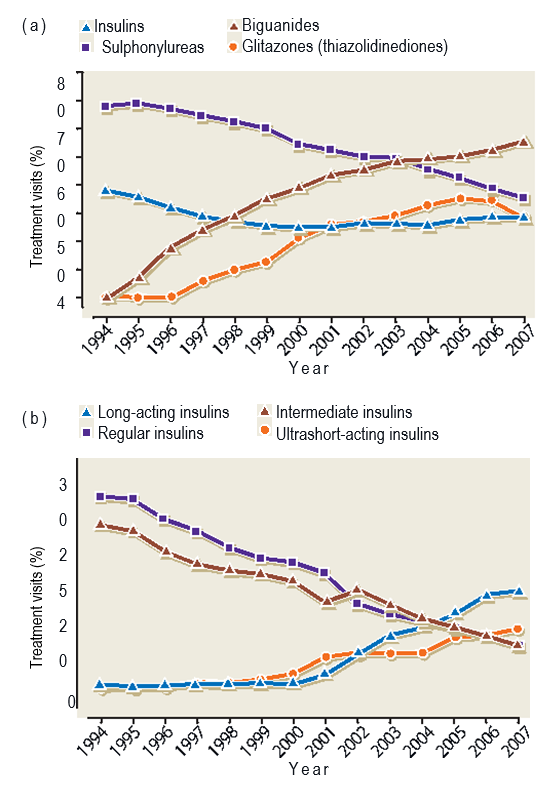
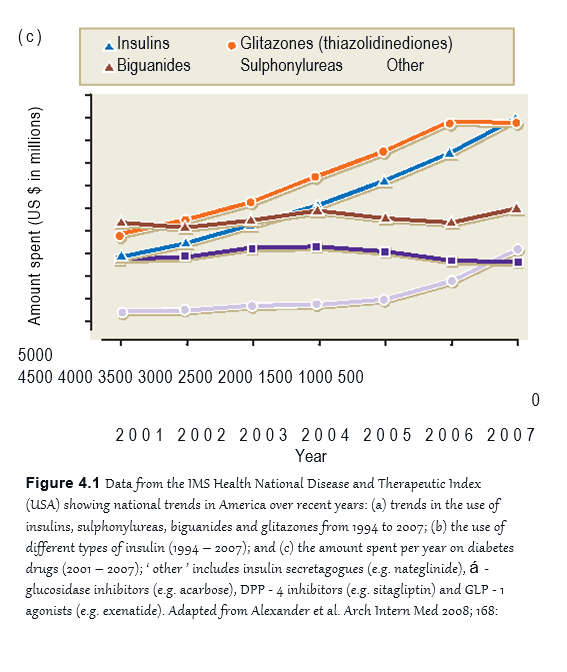
The management of diabetes is becoming more complex and more intensive, and therefore more expensive (Figure 4.1). The mean number of diabetes medications per treated patient increased from 1.14 in 1994 to 1.63 in 2007. Recent trends in the use of newer insulins and oral antidiabetic drugs have resulted in extra costs (mean cost per prescription in the USA increased from $56 in 2001 to $76 in 2007). Overall, drug expenditure in the US rose from $6.7 billion in 2001 to $12.5 billion in 2007.
There is an increasing awareness of the clinical and cost-effectiveness of diabetes interventions on the longer term outcomes. Based on the UK Prospective Diabetes Study (UKPDS), each quality- adjusted life-year (QALY) gained by intensive blood glucose control cost approximately 10,300 dollars (in 2014 values). In contrast, the equivalent cost for implementing an intensive blood pressure (BP) control policy was only 600 dollars. Both of these estimates are well below the threshold, or affordability index, of 34,000 per QALY set by the UK National Institute of Health and Clinical Excellence (NICE) when advising on the use of a new technology in the National Health Service (NHS). In particular, the total annual cost of providing UKPDS treatment to reduce diabetes complications amounted to < 1% of the UK NHS budget for 2001 – 5.
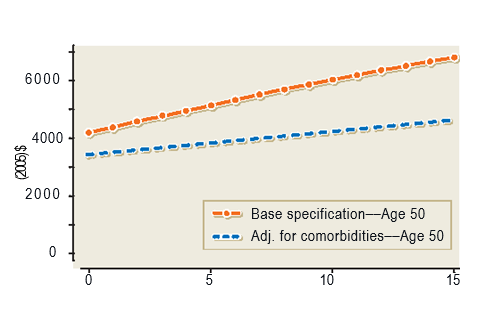
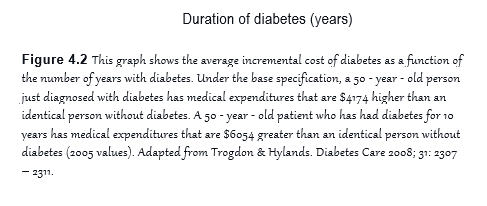
Health economic analyses in the US have shown that a 50-year-old patient recently diagnosed with diabetes has an annual medical expenditure that is $4174 greater than an identical person with diabetes. Furthermore, each additional year with diabetes increases the annual medical expenditure by $158 over and above the increases in medical costs attributable to ageing (Figure 4.2).
Patterns of survival and cardiovascular outcomes
The overall life expectancy of patients with diabetes is reduced by about 25%, and cardiovascular disease accounts for three-quarters of all deaths among patients with diabetes.
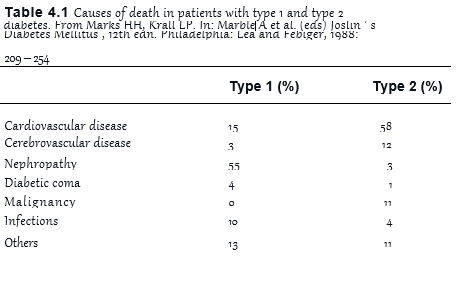
Diabetes confers an equivalent risk to ageing 15 years. The causes of death are proportionately different in type 1 and type 2 diabetes (Table 4.1). In long-duration type 1 diabetes, for example, nephropathy and heart disease are common, whereas in type 2 diabetes most deaths are due to premature cardiovascular disease (coronary heart disease and stroke). After adjustment for other risk factors, an increase in HbA1c of 1% is associated with an 18% increase in the risk of a cardiovascular event and a 12 – 14% increase in the risk of death.
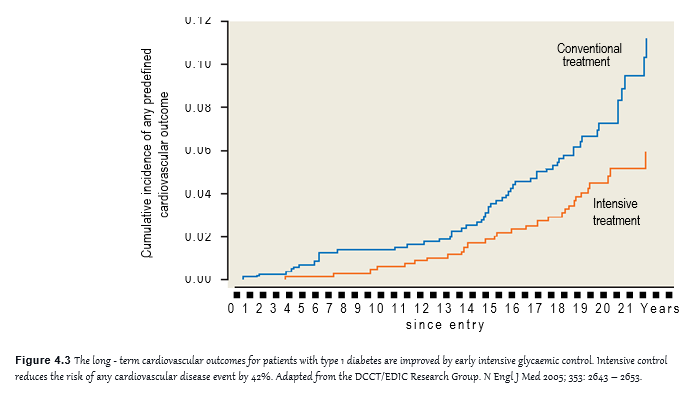
Type 1 diabetes is associated with at least a 10-fold increase in cardiovascular disease compared with an age-matched population without diabetes, and in recent years mortality rates from type 1 diabetes have been falling in many countries as a result of more intensive glycaemic and BP control (Figure 4.3).
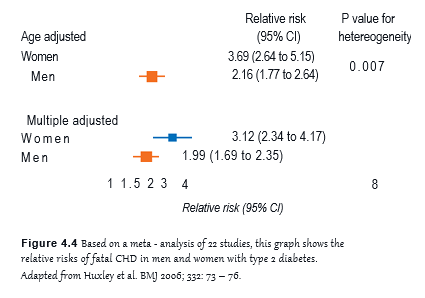
The relative risk for fatal coronary heart disease (CHD) in patients with type 2 diabetes compared with no diabetes is significantly higher for women (3.5-fold increased risk) than for men (2.5-fold) (Figure 4.4). Patients with diabetes also have a worse prognosis following a cardiovascular event. For example, the relative risk of death after myocardial infarction is 2 to 3-fold higher in patients with diabetes compared with non-diabetics.
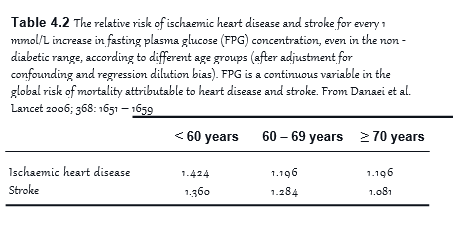
Cardiovascular mortality risk increases continuously with blood glucose concentrations starting at levels well below the current thresholds for defining diabetes or impaired fasting glycaemia. Based on population health surveys in 52 countries and a meta-analysis involving > 200,000 subjects in the Asia-Pacific region, public health analysts have concluded that 21% of all deaths from ischaemic heart disease and 13% of deaths from stroke were attributable to higher than optimum blood glucose levels (Table 4.2).
Diabetes is a serious global health problem, and one that is going to become much worse. It already affects at least 5 – 7% of the world’ s population, and its prevalence is expected to increase from 171 million in 2000 to 366 million people by 2030; 90% of these people will have type 2 diabetes. Currently, there are 57 million people in the USA with prediabetes; most have the ‘metabolic syndrome’.
Incidence of type 1 and type 2 diabetes and regional variations
An epidemic of obesity is driving the increased prevalence of type 2 diabetes, but the incidence of type 1 diabetes is also steadily increasing. If the present trends continue, there will be a doubling in the number of children in Europe with type 1 diabetes below the age of 5 years before 2020. An emerging dietary risk factor for type 1 diabetes is consumption of root vegetables (potatoes, carrots, etc.). In addition, placental transmission of viruses leading to type 1 diabetes (e.g. rubella) has been recognised. The genetic risk for type 1 diabetes is conferred mainly by HLA-DR and HLA-DQ haplotypes, but environmental triggers are needed to induce islet autoimmunity in genetically predisposed individuals.
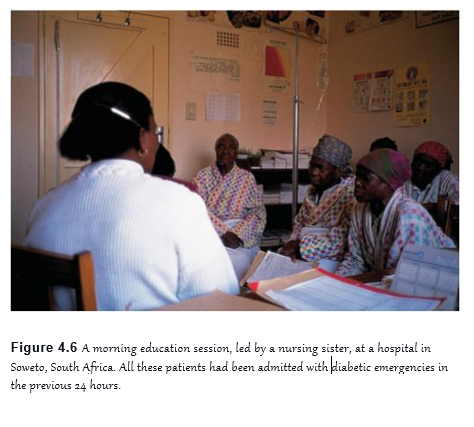
The frequency of diabetes is rising, especially in developing countries, where the lifestyle has changed from one based on traditional, agricultural subsistence to a westernised, urban culture. Readily available high-energy foods and physical inactivity lead to obesity, and to diabetes in these susceptible populations. Many diabetic patients in developing countries present late with serious infections or tissue complications. Diabetic emergencies have a high mortality. Practical difficulties in developing countries include lack of doctors, nurses and dietitians and shortages of drugs, including insulin (Figure 4.6). India and China are particularly affected by the type 2 diabetes epidemic. There are an estimated 40 million patients with diabetes in India alone, and available data suggest that the mean HbA1c is high, at 9%.
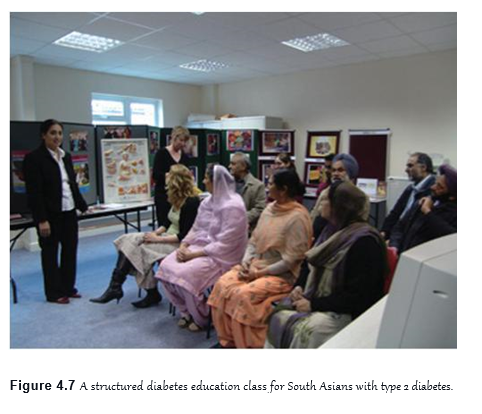
In the UK and other Western countries, type 2 diabetes is increasing most rapidly among south Asian people living in urban communities (Figure 4.7). Their risk of developing type 2 diabetes is 4 to 6-fold higher, the disease occurs at an earlier age and the risk of renal and cardiovascular complications is much higher than for other ethnic groups. Overcoming health inequalities, and providing intensive multiple risk factor interventions, is a priority for this group of patients who require specialist medical and dietetic input.
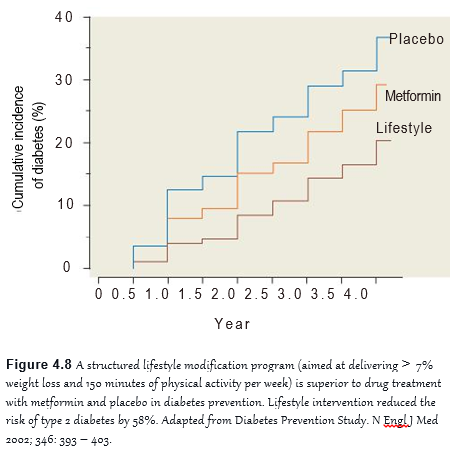
Despite the rising incidence, costs and morbidity associated with diabetes, there is no clear policy in many countries for routine screening. A new primary care initiative in the UK recommends systematic assessment of cardiovascular risk among people aged 40 – 75 years, which includes testing for diabetes and impaired glucose tolerance (IGT) in high-risk groups. Adoption of HbA1c for screening and diagnosis overcomes many of the practical limitations of fasting glucose and OGTT. Lifestyle modification is the most clinically effective and cost-effective intervention to prevent type 2 diabetes (Figure 4.8).
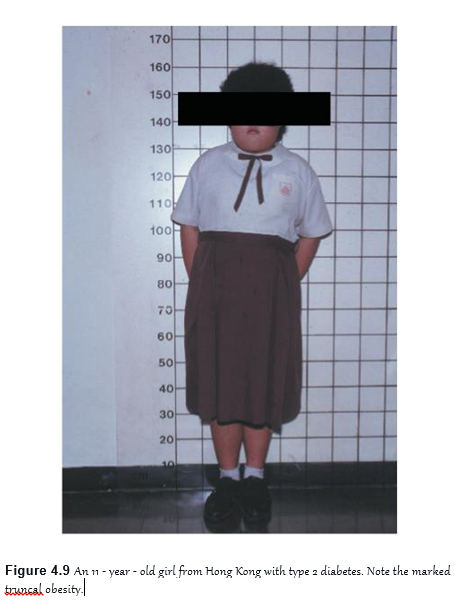
Traditionally, type 2 diabetes has been a disease of the middle aged and elderly, but the disease is now becoming a problem among adolescents and even children (Figure 4.9). A sedentary lifestyle and obesity are the main contributory factors, though many have a positive family history of type 2 diabetes. In some parts of the USA, type 2 diabetes now accounts for one-third of new cases of diabetes in adolescence.