 Diabetes In Control. A free weekly diabetes newsletter for Medical Professionals. News and information for Medical Professionals.
Sheri R. Colberg, PhD, and Michael C. Riddell, PhD

Regulation of Glucose Metabolism: Effect of Physical Activity on Metabolic Control
Importantly, the glycemic response to aerobic exercise has some degree of reproducibility within an individual with T1D, as long as many of the variables known to impact glucose homeostasis are held constant (such as pre-exercise meal, insulin dose, and the exercise task itself).49 Unfortunately, the glycemic response differs markedly from patient to patient even if the relative exercise intensity and timing are identical, thereby making universal guidelines for the prevention of exercise-associated dysglycemia difficult.49–52
Lipid levels and blood pressure. Regular physical activity may be considered the best non-pharmacological and most cost-effective approach for maintaining optimal lipid and blood pressure levels. Reductions in lipid levels, increased C-reactive protein (CRP) level, and increased plasminogen activator inhibitor-1 (PAI-1) levels are thought to play a role in the maintenance of an inflammatory state and in the development of cardiovascular disease. Elevations in PAI-1 are also linked with muscle dysfunction in rodent models of T1D.53 Importantly, individuals who are physically trained have improvements in lipid profile and lower PAI-1 levels compared to sedentary individuals.54 Lifestyle intervention improves lipid profiles and lowers PAI-1 levels in patients with T2D, according to the Look AHEAD study.55 A majority of other studies of physical activity and T1D show a beneficial effect on lipid levels. 33,35,56–63 Studies lasting up to 4 months demonstrate increases in HDL-cholesterol by 8–14%, reductions in LDL-cholesterol by 8–14% and triacylglycerols by 13–15%.2 In general, the improvements in lipid profile appear independent of changes in glycemic control and weight and are more evident in those with a poor initial lipid profile.2
Evidence that regular exercise improves blood pressure levels in T1D is equivocal, with some studies showing a small improvement (2–3% reduction)35,58 and others no effect.56,60 However, these studies typically had small numbers of young subjects who did not have elevated blood pressure levels. A large cross-sectional study found a small effect of physical activity levels on the risk of having elevated diastolic blood pressure.33
Exercise Intensity or Type and Hormonal Responses to Physical Activity
The metabolic regulation of glucose homeostasis during exercise is complex and regulated by several hormonal and non-hormonal factors (e.g., contraction-mediated changes in insulin sensitivity). In general, more strenuous aerobic activities utilize more blood glucose as fuel.64 In the postabsorptive state, the liver is the key organ responsible for glucose production during exercise to help maintain glucose supply to the working muscles and the central nervous system. Glucose production by the liver in individuals without diabetes increases ~2–3-fold during low- to moderate-intensity exercise.65,66 At higher exercise intensities, glucose production via the liver exceeds its uptake into the periphery because of elevations in catecholamines, and hyperglycemia ensues.67 Blood glucose utilization also increases with the duration of exercise as muscle glycogen levels decline.66 When liver glycogen levels become depleted, or if glucose production is impaired because of elevations in circulating insulin levels, then hypoglycemia and fatigue develops, even in people without diabetes.68,69 In general, the glucose disappearance from the circulation is similar in individuals with T1D and those without diabetes, as long as the T1D patients are well-insulinized.70 However, it may be that T1D patients rely more heavily on muscle glycogen as a fuel during exercise and have a somewhat limited capacity to oxidize orally ingested glucose as an energy source, particularly if they are underinsulinized.71–73 As described below, despite near normal substrate utilization during exercise, the maintenance of euglycemia is challenging for the patient with T1D.
Figure 11.1 illustrates a simplified schematic of the regulation of glucose homeostasis during exercise in healthy people or in people with diabetes who have taken the correct amount of insulin for exercise and who have normal glucose counterregulatory responses to exercise. Figure 11.1 also illustrates the mechanisms for exercise-associated hypoglycemia or hyperglycemia. A number of neuroendocrine mechanisms normally exist to defend against hypoglycemia, both at rest and during exercise. Interestingly, the hormonal responses to hypoglycemia and prolonged exercise are nearly identical. During exercise or hypoglycemia, insulin secretion diminishes while increases in glucagon, catecholamines, growth hormone, and cortisol occur.74 However, the normal counterregulatory hormone response to exercise is amplified by simultaneous hypoglycemia in individuals without diabetes, thereby helping to augment glucose production by the liver and limit glucose uptake into working muscle. These hormonal changes during exercise help to maintain fuel supply to the central nervous system and protect against hypoglycemia.75,76 Unfortunately, the counterregulatory response to hypoglycemia (both at rest and during exercise) and to exercise performed after a bout of hypoglycemia is impaired in patients with T1D.77 The reciprocal effects of antecedent hypoglycemia and antecedent exercise on glucose counterregulation are described in the following sections.
Metabolic Dysregulation During Physical Activity Hypoglycemia.
Hypoglycemia during physical activity occurs typically when circulating insulin levels are too high during the activity (i.e., too much insulin on board), although the exact mechanisms for the high risk for hypoglycemia during exercise in T1D are likely complex and multifactorial. In rare circumstances, hypoglycemia can also occur when hepatic glycogen stores are exhausted because of prolonged fasting or exercise, even in those who do not have diabetes and with low circulating insulin levels.78 Even if it does not suppress hepatic glycogen mobilization, relative hyperinsulinemia during exercise may also increase peripheral glucose uptake (into exercising muscle and other tissues) and may reduce hepatic gluconeogenesis, thereby contributing to hypoglycemia risk.79 An additional factor that contributes to increased risk for exercise-associated hypoglycemia is the deficiency in glucose counterregulation to exercise or to hypoglycemia, which can occur during the activity.80 Thus, for individuals with T1D, the inability to reduce circulating insulin concentrations at the onset of exercise because the insulin has already been injected or infused prior to the activity, as well as other factors, contributes to the high risk for exercise-associated hypoglycemia.
Due to increased blood flow and circulatory responses, exercise itself may increase insulin absorption kinetics.81 Even if mealtime bolus insulin has not been injected or infused in the hours prior to exercise, it is still possible to have exercise-associated hypoglycemia, likely because basal insulin levels tend to be higher than what would normally occur during physical activity in people without diabetes.82 Indeed, one of the challenges clinically is that basal–bolus therapy is normally titrated initially to sedentary days, rather than to days in which habitual activity occurs.
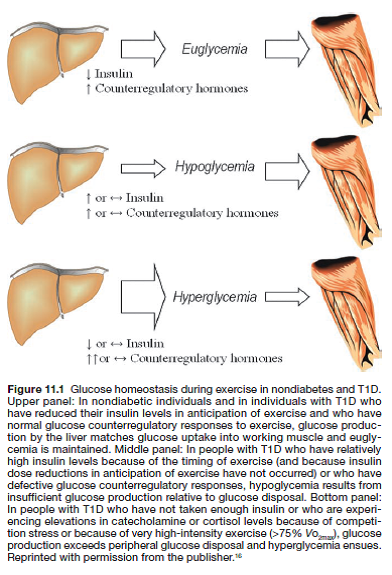
During exercise, relative hyperinsulinemia may limit the effect of glucagon on hepatic glucose production and promote increases in peripheral glucose disposal, thereby reducing circulating levels rapidly.83 Since the total amount of glucose in the circulation is only ~4 g and because exercise increases glucose utilization rates five- to sixfold above rest, hypoglycemia can ensue within minutes if circulating insulin levels are not adjusted for the activity or if exogenous carbohydrates are not consumed.84,85 In addition to relative hyperinsulinemia, a failure in glucagon response during exercise or during hypoglycemia may also exist if a recent episode of exercise or hypoglycemia occurred.80 Finally, other factors such as an impaired adrenergic response to hypoglycemia during exercise or a reduced level of liver glycogen because of recent hypoinsulinemia may contribute to exercise-associated hypoglycemia.86,87 Based on euglycemic clamp studies of adolescents with T1D, it would appear that insulin sensitivity is elevated during exercise and immediately in recovery and again hours later.88 This biphasic increase in the glucose requirements to maintain euglycemia may predict the risk for postexercise hypoglycemia. Indeed, the glycemic nadir after exercise appears to be about 7–11h after the end of exercise.89–94
Hyperglycemia. The development of hyperglycemia during and after exercise may occur for a number of reasons. First, the high likelihood of hypoglycemia caused by exercise may force individuals to consume excessive carbohydrates before and following exercise. Second, the fear of hypoglycemia may promote an overly aggressive reduction in insulin dose before the activity, with some individuals omitting insulin administration altogether. Third, the stress of competition may increase catecholamine and cortisol levels, which leads to greater glucose production by the liver and limited peripheral glucose disposal. Finally, brief periods of intense aerobic or anaerobic activities promote dramatic increases in catecholamine release, which would normally be compensated for by increased insulin secretion in the individual without diabetes.95 This latter phenomenon caused by intense exercise has been shown to particularly aggravate postexercise hyperglycemia in people with T1D, even if insulin is administered during recovery.96
With respect to the second reason given, individuals using pump therapy may find that discontinuing insulin infusion (i.e., pump disconnect) during exercise may cause hyperglycemia, particularly if the activity is prolonged.97 Strategies to limit exercise-associated hyperglycemia, based on limited experimental data, are described in the following section.
Effects of glycemia on maximal oxidative capacity and performance. Maintenance of normal glucose homeostasis during exercise in people with T1D is challenging for a number of physiological and psychosocial or behavioral reasons. Behaviorally, a fear of hypoglycemia caused by exercise may promote hyperglycemia, while at the same time, the sophisticated hormonal regulatory system that maintains euglycemia during the activity is often defective when disease is long-standing.32,83 Thus, many patients are exercising when blood glucose levels are suboptimal; this may affect exercise and sports performance. Moreover, a number of physiological processes may be compromised by prolonged suboptimal glycemic control.
If impairment in physical work capacity exists in patients with T1D, it would appear to be related to the level of glycemic control. For example, two studies report that physical capacities are inversely related to the level of metabolic control, as measured by A1C.22,98 It is unclear, however, if a reduced work capacity in youth with T1D is a result of poorer oxygenation of muscle or a lower amount of muscle capillarization, or if poorer metabolic control is a function of lower amounts of habitual physical activity.99–101
Studies investigating muscular strength and endurance capacity in individuals with T1D have shown mixed results, although a generalized myopathy does exist if glycemic control is poor.102 Fatigue is a common complaint in diabetes, particularly at the time of diagnosis or with elevated glycemia.103,104 Surprisingly, the effect of T1D on exercise endurance capacity is not clear. Compared to controls, patients with T1D have been reported to have both impaired105 and enhanced106 endurance capacity during relatively brief bouts of intense exercise. Ratings of perceived exertion during prolonged aerobic exercise have been reported to be higher in boys with T1D compared to controls without diabetes.107 During prolonged aerobic exercise, those with T1D who are under reasonable glycemic control have a higher glycolytic flux and rely more on muscle glycogen utilization, thereby resulting in premature fatigue.71,108 Exercising while hyperglycemic has been shown to increase reliance on muscle glycogen compared to exercising while euglycemic, and the individual who is exercising while hypoinsulinemic and hyperglycemic would be prone to early dehydration and acidosis, all factors that might promote early fatigue.109,110 A diet rich in carbohydrate (~60% of total energy) for 3 weeks has been shown to increase glycemia and insulin requirements, reduce muscle glycogen levels, and lower exercise capacity compared to a lower carbohydrate diet (50% of total energy) in athletes with diabetes.111 More-over, increasing blood glucose levels to 288 mg/dl (16 mmol/l) has been shown to reduce isometric muscle strength, but not maximal isokinetic muscle strength, compared with strength measured at normal glycemia.112 This reduction in isometric strength might play a role in the development of early fatigue during certain types of resistance and anaerobic activities.
If individuals with T1D are actively engaged in regular exercise and are under reasonable glycemic control, then they can achieve elite level performance. One German study of 10 middle-aged long-distance triathletes with T1D followed over 3 years showed that overall endurance performance was normal, despite documented hyperglycemia during the early part of a race, then hypoglycemia during the marathon leg.113 Another study found that good glycemic control, as measured by A1C, was associated with a normal peak cardiopulmonary exercise response and performance, while suboptimal control was associated with deterioration in athletic performance.23
The degree to which acute blood glucose levels influence sports skill performance or exercise performance has also been examined.107,114–116 In one study of prepubertal boys with T1D (n = 16), lowering the insulin dose prior to exercise to reduce the likelihood of hypoglycemia did not influence aerobic capacity during cycling compared to the usual insulin dose.114 In eight endurance-trained adults with T1D, elevating blood glucose levels from 95 to 225 mg/dl (5.3 mmol/l to 12.4 mmol/l) failed to change peak power output or other physiological end points, such as lactate, heart rate, or respiratory exchange ratio.116 In another study, compared with hyperglycemia or euglycemia, exercise capacity was reduced and ratings of perceived exertion increased with hypoglycemia in a group of youth with T1D, although the research investigators (not the subjects) always stopped the exercise for possible safety reasons.52 Another study demonstrated that the oral administration of dextrose at 1g/kg body mass 30 min before cycling exercise (55–60% Vo2max) results in a 12% improvement in cycling performance time compared with placebo, perhaps as euglycemia is facilitated and because working muscles are provided more fuel for oxidation.117,118 A sports camp field study of 28 youth with T1D found that the ability to carry out fundamental sports skills was shown to be markedly reduced by mild hypoglycemia of 55 mg/dl (3 mmol/l) compared with either euglycemia or hyperglycemia of 300 mg/dl (~17 mmol/l).115 Importantly, this finding of significantly impaired sports performance with hypoglycemia appeared universally across nearly all subjects and is similar to the well-documented detrimental effects of hypoglycemia on cognitive processing.119
Profound or sustained hyperglycemia also likely impairs endurance performance in those with T1D, although the evidence for this statement is somewhat limited. Prolonged hyperglycemia with low insulin levels would be expected to lower muscle glycogen levels, reduce muscle strength, and predispose the individual to dehydration and electrolyte imbalance.120 Exercising while hyperglycemic has been shown to increase the reliance on muscle glycogen as a fuel source and limit the capacity to switch from carbohydrate to lipid as an energy source.109 Thus, overall, evidence suggests that optimal glycemic control and regular exercise may be needed to maximize muscle strength and endurance performance.
- Physical Activity Guidelines Advisory Committee: Physical Activity Guidelines Advisory Committee Report. U.S. Department of Health and Human Services, 2008
- Chimen M, Kennedy A, Nirantharakumar K, Pang TT, Andrews R, Narendran P: What are the health benefits of physical activity in type 1 diabetes mellitus? A literature review. Diabetologia 55:542–551, 2012
- Aman J, Skinner TC, de Beaufort CE, Swift PG, Aanstoot HJ, Cameron F; Hvidoere Study Group on Childhood Diabetes: Associations between physical activity, sedentary behavior, and glycemic control in a large cohort of adolescents with type 1 diabetes: the Hvidoere Study Group on Child-hood Diabetes. Pediatr Diabetes 10:234–239, 2009
- Moy CS, Songer TJ, LaPorte RE, Dorman JS, Kriska AM, Orchard TJ, Becker DJ, Drash AL: Insulin-dependent diabetes mellitus, physical activity, and death. Am J Epidemiol 137:74–81, 1993
- Soedamah-Muthu SS, Fuller JH, Mulnier HE, Raleigh VS, Lawrenson RA, Colhoun HM: All-cause mortality rates in patients with type 1 diabetes mel-litus compared with a non-diabetic population from the UK general practice research database, 1992-1999. Diabetologia 49:660–666, 2006
- Koivisto VA, Yki-Jarvinen H, DeFronzo RA: Physical training and insulin sensitivity. Diabetes Metab Rev 1:445–481, 1986
- Ramalho AC, de Lourdes Lima M, Nunes F, Cambui Z, Barbosa C, Andrade A, Viana A, Martins M, Abrantes V, Aragao C, Temistocles M: The effect of resistance versus aerobic training on metabolic control in patients with type-1 diabetes mellitus. Diabetes Res Clin Pract 72:271–276, 2006
- Kriska AM, LaPorte RE, Patrick SL, Kuller LH, Orchard TJ: The association of physical activity and diabetic complications in individuals with insulin-dependent diabetes mellitus: the Epidemiology of Diabetes Complications Study—VII. J Clin Epidemiol 44:1207–1214, 1991
- Balducci S, Iacobellis G, Parisi L, Di Biase N, Calandriello E, Leonetti F, Fallucca F: Exercise training can modify the natural history of diabetic peripheral neuropathy. J Diabetes Complicat 20:216–223, 2006
- Nielsen PJ, Hafdahl AR, Conn VS, Lemaster JW, Brown SA: Meta-analysis of the effect of exercise interventions on fitness outcomes among adults with type 1 and type 2 diabetes. Diabetes Res Clin Pract 74:111–120, 2006
- Waden J, Forsblom C, Thorn LM, Saraheimo M, Rosengard-Barlund M, Heikkila O, Lakka TA, Tikkanen H, Groop PH; FinnDiane Study Group: Physical activity and diabetes complications in patients with type 1 diabe-tes: the Finnish Diabetic Nephropathy (FinnDiane) Study. Diabetes Care 31:230–232, 2008
- Bouchard C, Shephard RJ: Physical activity, fitness, and health: the model and key concepts. In Physical Activity, Fitness and Health:International Proceedings and Consensus Statement. Bouchard C, Shephard RJ, Stephens T, Eds. Champaign, IL, Human Kinetics, 1994, p. 77–88
- Hart TL, Craig CL, Griffiths JM, Cameron C, Andersen RE, Bauman A, Tudor-Locke C: Markers of sedentarism: the joint Canada/U.S. Survey of health. J Phys Act Health 8:361–371, 2011
- Bernardini AL, Vanelli M, Chiari G, Iovane B, Gelmetti C, Vitale R, Errico MK: Adherence to physical activity in young people with type 1 diabetes. Acta Biomed 75:153–157, 2004
- Waden J, Tikkanen H, Forsblom C, Fagerudd J, Pettersson-Fernholm K, Lakka T, Riska M, Groop PH; FinnDiane Study Group: Leisure time physical activity is associated with poor glycemic control in type 1 diabetic women: the FinnDiane study. Diabetes Care 28:777–782, 2005
- Riddell MC, Perkins BA: Type 1 diabetes and exercise: part I: applications of exercise physiology to patient management during vigorous activity. Can J Diab 30:63–71, 2006
- Sigal R, Kenny G, Oh P, Perkins BA, Plotnikoff RC, Prud’homme D, Riddell MC: Physical activity and diabetes. Canadian Diabetes Association Clini-cal Practice Guidelines Expert Committee. Canadian Diabetes Association 2008 clinical practice guidelines for the prevention and management of diabetes in Canada. Can J Diab 32:S37–S39, 2008
- Evans CH, White RD: Exercise Testing for Primary Care and Sports Medicine Physicians. New York, Springer, 2009
- Niranjan V, McBrayer DG, Ramirez LC, Raskin P, and Hsia CC: Glycemic control and cardiopulmonary function in patients with insulin-dependent diabetes mellitus. Am J Med 103:504–513, 1997
- Komatsu WR, Gabbay MA, Castro ML, Saraiva GL, Chacra AR, de Barros Neto TL, Dib SA: Aerobic exercise capacity in normal adolescents and those with type 1 diabetes mellitus. Pediatr Diabetes 6:145–149, 2005.
- Williams BK, Guelfi KJ, Jones TW, Davis EA: Lower cardiorespiratory fitness in children with type 1 diabetes. Diabet Med 28:1005–1007, 2011
- Poortmans JR, Saerens P, Edelman R, Vertongen F, Dorchy H: Influence of the degree of metabolic control on physical fitness in type I diabetic adoles-cents. Int J Sports Med 7:232–235, 1986
- Baldi JC, Cassuto NA, Foxx-Lupo WT, Wheatley CM, Snyder EM: Glycemic status affects cardiopulmonary exercise response in athletes with type I diabetes. Med Sci Sports Exerc 42:1454–1459, 2010
- Baldi JC, Hofman PL: Does careful glycemic control improve aerobic capacity in subjects with type 1 diabetes? Exerc Sport Sci Rev 38:161–167, 2010
- Riddell MC, Burr J: Evidence-based risk assessment and recommendations for physical activity clearance: diabetes mellitus and related comorbidities. Appl Physiol Nutr Metab 36 (Suppl. 1):S154–S189, 2011
- Janssen I, Leblanc AG: Systematic review of the health benefits of physical activity and fitness in school-aged children and youth. Int J Behav Nutr Phys Act 7:40, 2010
- Expert Panel on Integrated Guidelines for Cardiovascular Health and Risk Reduction in Children and Adolescents and National Heart, Lung, and Blood Institute: Expert panel on integrated guidelines for cardiovascular health and risk reduction in children and adolescents: summary report. Pedi- atrics 128 (Suppl. 5):S213–S256, 2011
- Rachmiel M, Buccino J, Daneman D: Exercise and type 1 diabetes mellitus in youth; review and recommendations. Pediatr Endocrinol Rev 5:656–665, 2007
- Kelder SH, Perry CL, Klepp KI, Lytle LL: Longitudinal tracking of adolescent smoking, physical activity, and food choice behaviors. Am J Public Health 84:1121–1126, 1994
- Astrup AS: Cardiovascular morbidity and mortality in diabetes mellitus: prediction and prognosis. Dan Med Bull 58:B4152, 2011
- Galler A, Lindau M, Ernert A, Thalemann R, Raile K: Associations between media consumption habits, physical activity, socioeconomic status, and glycemic control in children, adolescents, and young adults with type 1 diabe-tes. Diabetes Care 34:2356–2359, 2011
- Brazeau AS, Rabasa-Lhoret R, Strychar I, Mircescu H: Barriers to physical activity among patients with type 1 diabetes. Diabetes Care 31:2108–2109, 2008
- Herbst A, Kordonouri O, Schwab KO, Schmidt F, Holl RW; DPV Initiative of the German Working Group for Pediatric Diabetology Germany: Impact of physical activity on cardiovascular risk factors in children with type 1 diabetes: a multicenter study of 23,251 patients. Diabetes Care 30:2098–2100, 2007
- Durak EP, Jovanovic-Peterson L, Peterson CM: Randomized crossover study of effect of resistance training on glycemic control, muscular strength, and cholesterol in type I diabetic men. Diabetes Care 13:1039– 1043, 1990
- Zoppini G, Carlini M, Muggeo M: Self-reported exercise and quality of life in young type 1 diabetic subjects. Diabetes Nutr Metab 16:77–80, 2003
- Salem MA, Aboelasrar MA, Elbarbary NS, Elhilaly RA, Refaat YM: Is exercise a therapeutic tool for improvement of cardiovascular risk factors in adolescents with type 1 diabetes mellitus? A randomised controlled trial. Diabetol Metab Syndr 2:47, 2010
- Zinman B, Zuniga-Guajardo S, Kelly D: Comparison of the acute and long- term effects of exercise on glucose control in type I diabetes. Diabetes Care 7:515–519, 1984
- Raile K, Kapellen T, Schweiger A, Hunkert F, Nietzschmann U, Dost A, Kiess W: Physical activity and competitive sports in children and adoles-cents with type 1 diabetes. Diabetes Care 22:1904–1905, 1999
- Roberts L, Jones TW, Fournier PA: Exercise training and glycemic control in adolescents with poorly controlled type 1 diabetes mellitus. J Pediatr Endocrinol Metab 15:621–627, 2002
- Harmer AR, Chisholm DJ, McKenna MJ, Morris NR, Thom JM, Bennett G, Flack JR: High-intensity training improves plasma glucose and acid-base regulation during intermittent maximal exercise in type 1 diabetes. Diabetes Care 30:1269–1271, 2007
- Garber CE, Blissmer B, Deschenes MR, Franklin BA, Lamonte MJ, Lee IM, Nieman DC, Swain DP; American College of Sports Medicine: American College of Sports Medicine position stand. Quantity and quality of exer-cise for developing and maintaining cardiorespiratory, musculoskeletal, and neuromotor fitness in apparently healthy adults: guidance for prescribing exercise. Med Sci Sports Exerc 43:1334–1359, 2011
- Warburton DE, Nicol CW, Bredin SS: Prescribing exercise as preventive therapy. CMAJ 174:961–974, 2006
- Reddigan JI, Riddell MC, Kuk JL: The joint association of physical activ- activ-ity and glycaemic control in predicting cardiovascular death and all-cause mortality in the US population. Diabetologia 55:632–635, 2012
- Physical Activity Guidelines Advisory Committee: Report, 2008. To the secretary of health and human services. Part A: executive summary. Nutr Rev 67:114–120, 2009
- Tremblay MS, Warburton DE, Janssen I, Paterson DH, Latimer AE, Rhodes RE, Kho ME, Hicks A, Leblanc AG, Zehr L, Murumets K, Duggan M: New Canadian physical activity guidelines. Appl Physiol Nutr Metab 36:36–46, 47–58, 2011
- Chu L, Hamilton J, Riddell MC: Clinical management of the physically active patient with type 1 diabetes. Phys Sportsmed 39:64–77, 2011
- Guelfi KJ, Ratnam N, Smythe GA, Jones TW, Fournier PA: Effect of intermittent high-intensity compared with continuous moderate exercise on glucose production and utilization in individuals with type 1 diabetes. Am J Physiol Endocrinol Metab 292:E865–E870, 2007
- Yardley JE, Kenny GP, Perkins BA, Riddell MC, Malcolm J, Boulay P, Khandwala F, Sigal RJ: Effects of performing resistance exercise before versus after aerobic exercise on glycemia in type 1 diabetes. Diabetes Care 35:669–675, 2012
- Caron D, Poussier P, Marliss EB, Zinman B: The effect of postprandial exercise on meal-related glucose intolerance in insulin-dependent diabetic individuals. Diabetes Care 5:364–369, 1982
- Temple MY, Bar-Or O, Riddell MC: The reliability and repeatability of the blood glucose response to prolonged exercise in adolescent boys with IDDM. Diabetes Care 18:326–332, 1995
- Riddell MC, Bar-Or O, Ayub BV, Calvert RE, Heigenhauser GJ: Glucose ingestion matched with total carbohydrate utilization attenuates hypoglycemia during exercise in adolescents with IDDM. Int J Sport Nutr 9:24–34, 1999
- Kilbride L, Charlton J, Aitken G, Hill GW, Davison RC, McKnight JA: Managing blood glucose during and after exercise in type 1 diabetes: reproducibility of glucose response and a trial of a structured algorithm adjusting insulin and carbohydrate intake. J Clin Nurs 20:3423–3429, 2011
- Krause MP, Moradi J, Nissar AA, Riddell MC, Hawke TJ: Inhibition of plasminogen activator inhibitor-1 restores skeletal muscle regeneration in untreated type 1 diabetic mice. Diabetes 60:1964–1972, 2011
- Lira FS, Rosa JC, Lima-Silva AE, Souza HA, Caperuto EC, Seelaender MC, Damaso AR, Oyama LM, Santos RV: Sedentary subjects have higher PAI-1 and lipoproteins levels than highly trained athletes. Diabetol Metab Syndr 2:7, 2010
- Belalcazar LM, Ballantyne CM, Lang W, Haffner SM, Rushing J, Schwenke DC, Pi-Sunyer FX, Tracy RP; Look Action for Health in Diabetes Research Group: Metabolic factors, adipose tissue, and plasminogen activator inhibitor-1 levels in type 2 diabetes: findings from the look AHEAD study. Arterioscler Thromb Vasc Biol 31:1689–1695, 2011
- Wallberg-Henriksson H, Gunnarsson R, Henriksson J, DeFronzo R, Felig P, Ostman J, Wahren J: Increased peripheral insulin sensitivity and muscle mitochondrial enzymes but unchanged blood glucose control in type I diabetics after physical training. Diabetes 31:1044–1050, 1982
- Yki-Jarvinen H, DeFronzo RA, Koivisto VA: Normalization of insulin sensitivity in type I diabetic subjects by physical training during insulin pump therapy. Diabetes Care 7:520–527, 1984
- Lehmann R, Kaplan V, Bingisser R, Bloch KE, Spinas GA: Impact of physical activity on cardiovascular risk factors in IDDM. Diabetes Care 20:1603– 1611, 1997
- Mosher PE, Nash MS, Perry AC, LaPerriere AR, Goldberg RB: Aerobic circuit exercise training: effect on adolescents with well-controlled insulin- dependent diabetes mellitus. Arch Phys Med Rehabil 79:652–657, 1998
- Laaksonen DE, Atalay M, Niskanen LK, Mustonen J, Sen CK, Lakka TA, Uusitupa MI: Aerobic exercise and the lipid profile in type 1 diabetic men: a randomized controlled trial. Med Sci Sports Exerc 32:1541–1548, 2000
- Rigla M, Sanchez-Quesada JL, Ordonez-Llanos J, Prat T, Caixas A, Jorba O, Serra JR, de Leiva A, Perez A: Effect of physical exercise on lipoprotein(a) and low-density lipoprotein modifications in type 1 and type 2 diabetic patients. Metabolism 49:640–647, 2000
- Fuchsjager-Mayrl G, Pleiner J, Wiesinger GF, Sieder AE, Quittan M, Nuhr MJ, Francesconi C, Seit HP, Francesconi M, Schmetterer L, Wolzt M: Exercise training improves vascular endothelial function in patients with type 1 diabetes. Diabetes Care 25:1795–1801, 2002
- Valerio G, Spagnuolo MI, Lombardi F, Spadaro R, Siano M, Franzese A: Physical activity and sports participation in children and adolescents with type 1 diabetes mellitus. Nutr Metab Cardiovasc Dis 17:376–382, 2007
- Coggan AR: Plasma glucose metabolism during exercise in humans. Sports Med 11:102–124, 1991
- Wahren J, Felig P, Ahlborg G, Jorfeldt L: Glucose metabolism during leg exercise in man. J Clin Invest 50:2715–2725, 1971
- Bergeron R, Kjaer M, Simonsen L, Bulow J, Galbo H: Glucose production during exercise in humans: a-hv balance and isotopic-tracer measurements compared. J Appl Physiol 87:111–115, 1999
- Purdon C, Brousson M, Nyveen SL, Miles PD, Halter JB, Vranic M, Marliss EB: The roles of insulin and catecholamines in the glucoregulatory response during intense exercise and early recovery in insulin-dependent diabetic and control subjects. J Clin Endocrinol Metab 76:566–573, 1993
- Coggan AR, Coyle EF: Reversal of fatigue during prolonged exercise by carbohydrate infusion or ingestion. J Appl Physiol 63:2388–2395, 1987
- Coggan AR, Coyle EF: Effect of carbohydrate feedings during high- intensity exercise. J Appl Physiol 65:1703–1709, 1988
- Raguso CA, Coggan AR, Gastaldelli A, Sidossis LS, Bastyr EJ 3rd, Wolfe RR: Lipid and carbohydrate metabolism in IDDM during moderate and intense exercise. Diabetes 44:1066–1074, 1995
- Krzentowski G, Pirnay F, Pallikarakis N, Luyckx AS, Lacroix M, Mosora F, Lefebvre PJ: Glucose utilization during exercise in normal and diabetic subjects: the role of insulin. Diabetes 30:983–989, 1981
- Riddell MC, Bar-Or O, Schwarcz HP, Heigenhauser GJ: Substrate utilization in boys during exercise with [13C]-glucose ingestion. Eur J Appl Physiol 83:441–448, 2000
- Robitaille M, Dube MC, Weisnagel SJ, Prud’homme D, Massicotte D, Peronnet F, Lavoie C: Substrate source utilization during moderate inten-sity exercise with glucose ingestion in Type 1 diabetic patients. J Appl Physiol 103:119–124, 2007
- Younk LM, Mikeladze M, Tate D, Davis SN: Exercise-related hypoglycemia in diabetes mellitus. Expert Rev Endocrinol Metab 6:93–108, 2011
- Sotsky MJ, Shilo S, Shamoon H: Regulation of counterregulatory hormone secretion in man during exercise and hypoglycemia. J Clin Endocrinol Metab 68:9–16, 1989
- Zinker BA, Allison RG, Lacy DB, Wasserman DH: Interaction of exercise, insulin, and hypoglycemia studied using euglycemic and hypoglycemic insu-lin clamps. Am J Physiol 272: E530–E542, 1997
- Camacho RC, Galassetti P, Davis SN, Wasserman DH: Glucoregulation during and after exercise in health and insulin-dependent diabetes. Exerc Sport Sci Rev 33:17–23, 2005
- Karelis AD, Smith JW, Passe DH, Peronnet F: Carbohydrate administra-tion and exercise performance: what are the potential mechanisms involved? Sports Med 40:747–763, 2010
- Chokkalingam K, Tsintzas K, Snaar JE, Norton L, Solanky B, Leverton E, Morris P, Mansell P, Macdonald IA: Hyperinsulinaemia during exercise does not suppress hepatic glycogen concentrations in patients with type 1 diabetes: a magnetic resonance spectroscopy study. Diabetologia 50:1921–1929, 2007
- Briscoe VJ, Tate DB, Davis SN: Type 1 diabetes: exercise and hypoglycemia. Appl Physiol Nutr Metab 32:576–582, 2007
- Berger M, Halban PA, Assal JP, Offord RE, Vranic M, Renold AE: Pharmacokinetics of subcutaneously injected tritiated insulin: effects of exercise. Diabetes 28 (Suppl. 1):53–57, 1979
- Edelmann E, Staudner V, Bachmann W, Walter H, Haas W, Mehnert H: Exercise-induced hypoglycaemia and subcutaneous insulin infusion. Diabet Med 3:526–531, 1986
- Wasserman DH: Berson award lecture 2008 four grams of glucose. Am J Physiol Endocrinol Metab 296:E11–E21, 2009
- Wasserman DH: Regulation of glucose fluxes during exercise in the postabsorptive state. Annu Rev Physiol 57:191–218, 1995
- Francescato MP, Carrato S: Management of exercise-induced glycemic imbalances in type 1 diabetes. Curr Diabetes Rev 7:253–263, 2011
- Schneider SH, Vitug A, Ananthakrishnan R, Khachadurian AK: Impaired adrenergic response to prolonged exercise in type I diabetes. Metabolism 40:1219–1225, 1991
- Cline GW, Rothman DL, Magnusson I, Katz LD, Shulman GI: 13C-nuclear magnetic resonance spectroscopy studies of hepatic glucose metabolism in normal subjects and subjects with insulin-dependent diabetes mellitus. J Clin Invest 94:2369–2376, 1994
- McMahon SK, Ferreira LD, Ratnam N, Davey RJ, Youngs LM, Davis EA, Fournier PA, Jones TW: Glucose requirements to maintain euglycemia after moderate-intensity afternoon exercise in adolescents with type 1 diabetes are increased in a biphasic manner. J Clin Endocrinol Metab 92:963–968, 2007
- Diabetes Research in Children Network (DirecNet) Study Group; Tsalikian E, Kollman C, Tamborlane WB, Beck RW, Fiallo-Scharer R, Fox L, Janz KF, Ruedy KJ, Wilson D, Xing D, Weinzimer SA: Prevention of hypoglycemia during exercise in children with type 1 diabetes by suspending basal insulin. Diabetes Care 29:2200–2204, 2006
- Iscoe KE, Campbell JE, Jamnik V, Perkins BA, Riddell MC: Efficacy of continuous real-time blood glucose monitoring during and after prolonged high-intensity cycling exercise: spinning with a continuous glucose moni-toring system. Diabetes Technol Ther 8:627–635, 2006
- Diabetes Research in Children Network (DirecNet) Study Group: Impaired overnight counterregulatory hormone responses to spontaneous hypoglyce-mia in children with type 1 diabetes. Pediatr Diabetes 8:199–205, 2007
- Iscoe KE, Corcoran M, Riddell MC: High rates of nocturnal hypoglycemia in a unique sports camp for athletes with type 1 diabetes: lessons learned from continuous glucose monitoring. Can J Diab 32:182–189, 2008
- Maran A, Pavan P, Bonsembiante B, Brugin E, Ermolao A, Avogaro A, Zaccaria M: Continuous glucose monitoring reveals delayed nocturnal hypoglycemia after intermittent high-intensity exercise in nontrained patients with type 1 diabetes. Diabetes Technol Ther 12:763–768, 2010
- Taplin CE, Cobry E, Messer L, McFann K, Chase HP, Fiallo-Scharer R: Preventing post-exercise nocturnal hypoglycemia in children with type 1 diabetes. J Pediatr 157:784–8.e1, 2010
- Marliss EB, Vranic M: Intense exercise has unique effects on both insulin release and its roles in glucoregulation: implications for diabetes. Diabetes 51 (Suppl. 1):S271–S283, 2002
- Sigal RJ, Purdon C, Fisher SJ, Halter JB, Vranic M, Marliss EB: Hyperinsu- Hyperinsu-linemia prevents prolonged hyperglycemia after intense exercise in insulin-dependent diabetic subjects. J Clin Endocrinol Metab 79:1049–1057, 1994
- Delvecchio M, Zecchino C, Salzano G, Faienza MF, Cavallo L, De Luca F, Lombardo F: Effects of moderate-severe exercise on blood glucose in type 1 diabetic adolescents treated with insulin pump or glargine insulin. J Endo-crinol Invest 32:519–524, 2009
- Huttunen NP, Kaar ML, Knip M, Mustonen A, Puukka R, Akerblom HK: Physical fitness of children and adolescents with insulin-dependent diabetes mellitus. Ann Clin Res 16:1–5, 1984
- Ditzel J, Standl E: The problem of tissue oxygenation in diabetes mellitus. Acta Med Scand Suppl 578:59–68, 1975
- Kivela R, Silvennoinen M, Touvra AM, Lehti TM, Kainulainen H, Vihko V: Effects of experimental type 1 diabetes and exercise training on angiogenic gene expression and capillarization in skeletal muscle. FASEB J 20:1570–1572, 2006
- Robertson K, Adolfsson P, Scheiner G, Hanas R, Riddell MC: Exercise in children and adolescents with diabetes. Pediatr Diabetes 10 (Suppl. 12):154– 168, 2009
- Krause MP, Riddell MC, Hawke TJ: Effects of type 1 diabetes mellitus on skeletal muscle: clinical observations and physiological mechanisms. Pediatr Diabetes 12:345–364, 2011
- Surridge DH, Erdahl DL, Lawson JS, Donald MW, Monga TN, Bird CE, Letemendia FJ: Psychiatric aspects of diabetes mellitus. Brit J Psychiat 145:269–276, 1984
- Van der Does FE, De Neeling JN, Snoek FJ, Kostense PJ, Grootenhuis PA, Bouter LM, Heine RJ: Symptoms and well-being in relation to glycemic control in type II diabetes. Diabetes Care 19:204–210, 1996
- Almeida S, Riddell MC, Cafarelli E: Slower conduction velocity and motor unit discharge frequency are associated with muscle fatigue during isometric exercise in type 1 diabetes mellitus. Muscle Nerve 37:231–240, 2008
- Andersen H: Muscular endurance in long-term IDDM patients. Diabetes Care 21:604–609, 1998
- Riddell MC, Bar-Or O, Gerstein HC, Heigenhauser GJ: Perceived exertion with glucose ingestion in adolescent males with IDDM. Med Sci Sports Exerc 32:167–173, 2000
- Crowther GJ, Milstein JM, Jubrias SA, Kushmerick MJ, Gronka RK, Conley KE: Altered energetic properties in skeletal muscle of men with well- controlled insulin-dependent (type 1) diabetes. Am J Physiol Endocrinol Metab 284:E655–E62, 2003
- Magee MF, Bhatt BA: Management of decompensated diabetes: diabetic ketoacidosis and hyperglycemic hyperosmolar syndrome. Crit Care Clin 17:75–106, 2001
- Jenni S, Oetliker C, Allemann S, Ith M, Tappy L, Wuerth S, Egger A, Boesch C, Schneiter P, Diem P, Christ E, Stettler C: Fuel metabolism during exer-cise in euglycaemia and hyperglycaemia in patients with type 1 diabetes mellitus—a prospective single-blinded randomised crossover trial. Diabetologia 51:1457–1465, 2008
- McKewen MW, Rehrer NJ, Cox C, Mann J: Glycaemic control, muscle glycogen and exercise performance in IDDM athletes on diets of varying carbohydrate content. Int J Sports Med 20:349–353, 1999
- Andersen H, Schmitz O, Nielsen S: Decreased isometric muscle strength after acute hyperglycaemia in type 1 diabetic patients. Diabet Med 22:1401– 1407, 2005
- Boehncke S, Poettgen K, Maser-Gluth C, Reusch J, Boehncke WH, Baden-hoop K: Endurance capabilities of triathlon competitors with type 1 diabetes mellitus. Dtsch Med Wochenschr 134:677–682, 2009
- Heyman E, Briard D, Dekerdanet M, Gratas-Delamarche A, Delamarche P: Accuracy of physical working capacity 170 to estimate aerobic fitness in prepubertal diabetic boys and in 2 insulin dose conditions. J Sports Med Phys Fitness 46:315–321, 2006
- Stettler C, Jenni S, Allemann S, Steiner R, Hoppeler H, Trepp R, Christ ER, Zwahlen M, Diem P: Exercise capacity in subjects with type 1 diabetes mel-litus in eu- and hyperglycaemia. Diabetes Metab Res Rev 22:300–306, 2006
- Kelly D, Hamilton JK, Riddell MC: Blood glucose levels and performance in a sports camp for adolescents with type 1 diabetes mellitus: a field study. Int J Pediatr 2010: 216167. E-pub Aug 2, 2010
- Ramires PR, Forjaz CL, Strunz CM, Silva ME, Diament J, Nicolau W, Liberman B, Negrao CE: Oral glucose ingestion increases endurance capacity in normal and diabetic (type I) humans. J Appl Physiol 83:608–614, 1997
- Riddell MC, Bar-Or O, Hollidge-Horvat M, Schwarcz HP, Heigenhauser GJ: Glucose ingestion and substrate utilization during exercise in boys with IDDM. J Appl Physiol 88:1239–1246, 2000
- Gonder-Frederick LA, Zrebiec JF, Bauchowitz AU, Ritterband LM, Magee JC, Cox DJ, Clarke WL: Cognitive function is disrupted by both hypo- and hyperglycemia in school-aged children with type 1 diabetes: a field study. Diabetes Care 32:1001–1006, 2009
- Jimenez CC, Corcoran MH, Crawley JT, Guyton Hornsby W, Peer KS, Philbin RD, Riddell MC: National athletic trainers’ association position statement: management of the athlete with type 1 diabetes mellitus. J Athl Train 42:536–545, 2007
- Tansey MJ, Tsalikian E, Beck RW, Mauras N, Buckingham BA, Weinzimer SA, Janz KF, Kollman C, Xing D, Ruedy KJ, Steffes MW, Borland TM, Singh RJ, Tamborlane WV; Diabetes Research in Children Network (DirecNet) Study Group: The effects of aerobic exercise on glucose and counterregula-tory hormone concentrations in children with type 1 diabetes. Diabetes Care 29:20–25, 2006
- Mendez-Villanueva A, Fernandez-Fernandez J, Bishop D: Exercise-induced homeostatic perturbations provoked by singles tennis match play with reference to development of fatigue. Br J Sports Med 41:717–722, discussion 722, 2007
- Graveling AJ, Frier BM: Risks of marathon running and hypoglycaemia in type 1 diabetes. Diabet Med 27:585–588, 2010
- Murillo S, Brugnara L, Novials A: One year follow-up in a group of half- marathon runners with type-1 diabetes treated with insulin analogues. J Sports Med Phys Fitness 50:506–510, 2010
- Tuominen JA, Karonen SL, Melamies L, Bolli G, Koivisto VA: Exercise- induced hypoglycaemia in IDDM patients treated with a short-acting insu-lin analogue. Diabetologia 38:106–111, 1995
- Gerich JE, Langlois M, Noacco C, Karam JH, Forsham PH: Lack of glucagon response to hypoglycemia in diabetes: evidence for an intrinsic pancreatic alpha cell defect. Science 182:171–173, 1973
- Zander E, Schulz B, Chlup R, Woltansky P, Lubs D: Muscular exercise in type I-diabetics. II. Hormonal and metabolic responses to moderate exercise. Exp Clin Endocrinol 85:95–104, 1985
- American Diabetes Association: Standards of medical care in diabetes: 2012. Diabetes Care 35 (Suppl. 1):S11–S63, 2012
- Guelfi KJ, Jones TW, Fournier PA: New insights into managing the risk of hypoglycaemia associated with intermittent high-intensity exercise in indi-viduals with type 1 diabetes mellitus: implications for existing guidelines. Sports Med 37:937–946, 2007
- Wasserman DH, Zinman B: Exercise in individuals with IDDM. Diabetes Care 17:924–937, 1994
- Dube MC, Weisnagel SJ, Prud’homme D, Lavoie C: Exercise and newer insulins: how much glucose supplement to avoid hypoglycemia? Med Sci Sports Exerc 37:1276–1282, 2005
- Riddell MC, Iscoe KE: Physical activity, sport, and pediatric diabetes. Pedi- atr Diabetes 7:60–70, 2006
- Francescato MP, Geat M, Fusi S, Stupar G, Noacco C, Cattin L: Carbohy-drate requirement and insulin concentration during moderate exercise in type 1 diabetic patients. Metabolism 53:1126–1130, 2004
- Bracken RM, Page R, Gray B, Kilduff LP, West DJ, Stephens JW, Bain SC: Isomaltulose improves glycaemia and maintains run performance in type 1 diabetes. Med Sci Sports Exerc 2011
- American College of Sports Medicine and American Diabetes Association joint position statement: Diabetes mellitus and exercise. Med Sci Sports Exerc 29:i–vi, 1997
- Gallen I: Exercise in type 1 diabetes. Diabet Med 20 (Suppl. 1):2–5, 2003
- Steppel JH, Horton ES: Exercise in the management of type 1 diabetes mellitus. Rev Endocr Metab Disord 4:355–360, 2003
- De Feo P, Di Loreto C, Ranchelli A, Fatone C, Gambelunghe G, Lucidi P, Santeusanio F: Exercise and diabetes. Acta Biomed 77 (Suppl. 1):14–17, 2006
- Rabasa-Lhoret R, Bourque J, Ducros F, Chiasson JL: Guidelines for premeal insulin dose reduction for postprandial exercise of different intensities and durations in type 1 diabetic subjects treated intensively with a basal-bolus insulin regimen (ultralente-lispro). Diabetes Care 24:625–630, 2001
- Mauvais-Jarvis F, Sobngwi E, Porcher R, Garnier JP, Vexiau P, Duvallet A, Gautier JF: Glucose response to intense aerobic exercise in type 1 diabetes: maintenance of near euglycemia despite a drastic decrease in insulin dose. Diabetes Care 26:1316–1317, 2003
- West DJ, Morton RD, Bain SC, Stephens JW, Bracken RM: Blood glucose responses to reductions in pre-exercise rapid-acting insulin for 24 h after running in individuals with type 1 diabetes. J Sports Sci 28:781–788, 2010
- West DJ, Stephens JW, Bain SC, Kilduff LP, Luzio S, Still R, Bracken RM: A combined insulin reduction and carbohydrate feeding strategy 30 min before running best preserves blood glucose concentration after exercise through improved fuel oxidation in type 1 diabetes mellitus. J Sports Sci 29:279–289, 2011
- Sane T, Helve E, Pelkonen R, Koivisto VA: The adjustment of diet and insu-lin dose during long-term endurance exercise in type 1 (insulin-dependent) diabetic men. Diabetologia 31:35–40, 1988
- Berger M, Berchtold P, Cuppers HJ, Drost H, Kley HK, Muller WA, Wiegelmann W, Zimmerman-Telschow H, Gries FA, Kruskemper HL, Zimmermann H: Metabolic and hormonal effects of muscular exercise in juvenile type diabetics. Diabetologia 13:355–365, 1977
- Klip A, Marette A, Dimitrakoudis D, Ramlal T, Giacca A, Shi ZQ, Vranic M: Effect of diabetes on glucoregulation. From glucose transporters to glucose metabolism in vivo. Diabetes Care 15:1747–1766, 1992
- Perkins BA, Riddell MC: Type 1 diabetes and exercise: part II: using the insulin pump to maximum advantage. Can J Diab 30:72–80, 2006
- Riddell MC, Perkins BA: Exercise and glucose metabolism in persons with diabetes mellitus: perspectives on the role for continuous glucose monitoring. J Diabetes Sci Technol 3:914–923, 2009
- Zisser H, Robinson L, Bevier W, Dassau E, Ellingsen C, Doyle FJ, Jovanovic L: Bolus calculator: a review of four “smart” insulin pumps. Diabetes Technol Ther 10:441–444, 2008
- Wilson DM, Beck RW, Tamborlane WV, Dontchev MJ, Kollman C, Chase P, Fox LA, Ruedy KJ, Tsalikian E, Weinzimer SA; DirecNet Study Group: The accuracy of the FreeStyle Navigator continuous glucose monitoring system in children with type 1 diabetes. Diabetes Care 30:59–64, 2007
- Iscoe KE, Riddell MC: Continuous moderate-intensity exercise with or without intermittent high-intensity work: effects on acute and late glycae-mia in athletes with type 1 diabetes mellitus. Diabet Med 2011
- Diabetes Research In Children Network (Direcnet) Study Group; Buckingham BA, Kollman C, Beck R, Kalajian A, Fiallo-Scharer R, Tansey MJ, Fox LA, Wilson DM, Weinzimer SA, Ruedy KJ, Tamborlane WV: Evaluation of factors affecting CGMS calibration. Diabetes Technol Ther 8:318–325, 2006
- Davey RJ, Ferreira LD, Jones TW, Fournier PA: Effect of exercise-mediated acidosis on determination of glycemia using CGMS. Diabetes Technol Ther 8:516–518, 2006
- Davey RJ, Stevens K, Jones TW, Fournier PA: The effect of short-term use of the Guardian RT continuous glucose monitoring system on fear of hypoglycaemia in patients with type 1 diabetes mellitus. Prim Care Diabetes 6:35–39, 2012
- Adolfsson P, Ornhagen H and Jendle J: The benefits of continuous glucose monitoring and a glucose monitoring schedule in individuals with type 1 diabetes during recreational diving. J Diabetes Sci Technol 2:778–784, 2008
- Riddell MC, Milliken J: Preventing exercise-induced hypoglycemia in type 1 diabetes using real-time continuous glucose monitoring and a new carbohydrate intake algorithm: an observational field study. Diabetes Technol Ther 13:819–825, 2011
- Iscoe KE, Davey RJ, Fournier PA: Increasing the low-glucose alarm of a continuous glucose monitoring system prevents exercise-induced hypoglycemia without triggering any false alarms. Diabetes Care 34:e109, 2011
- Bernbaum M, Albert SG, Cohen JD: Exercise training in individuals with diabetic retinopathy and blindness. Arch Phys Med Rehabil 70:605–611, 1989
- Graham C, Lasko-McCarthey P: Exercise options for persons with diabetic complications. Diabetes Educ 16:212–220, 1990
- Albert SG, Bernbaum M: Exercise for patients with diabetic retinopathy. Diabetes Care 18:130–132, 1995
- Draznin MB: Type 1 diabetes and sports participation: strategies for training and competing safely. Phys Sportsmed 28:49–56, 2000
- Chipkin SR, Klugh SA, Chasan-Taber L: Exercise and diabetes. Cardiol Clin 19:489–505, 2001
- Flood L, Constance A: Diabetes and exercise safety. Am J Nurs 102:47–55, quiz 56, 2002
- Kanade RV, van Deursen RW, Harding K, Price P: Walking performance in people with diabetic neuropathy: benefits and threats. Diabetologia 49:1747– 1754, 2006
- Colberg SR, Sigal RJ, Fernhall B, Regensteiner JG, Blissmer BJ, Rubin RR, Chasan-Taber L, Albright AL, Braun B; American College of Sports Medicine; American Diabetes Association: Exercise and type 2 diabetes: the American College of Sports Medicine and the American Diabetes Association: joint position statement executive summary. Diabetes Care 33:2692– 2696, 2010
- Nathan DM, Cleary PA, Backlund JY, Genuth SM, Lachin JM, Orchard TJ, Raskin P, Zinman B; Diabetes Control and Complications Trial/Epidemiology of Diabetes Interventions and Complications (DCCT/EDIC) Study Research Group: Intensive diabetes treatment and cardiovascular disease in patients with type 1 diabetes. N Engl J Med 353:2643–2653, 2005
- Hughes BC, White RD: Testing in special populations. In Exercise Testing for Primary Care and Sports Medicine. New York, Springer-Verlag, 2005, p. 55–77
- Gill JM, Malkova D: Physical activity, fitness and cardiovascular disease risk in adults: interactions with insulin resistance and obesity. Clin Sci (Lond) 110:409–425, 2006
- Konduracka E, Gackowski A, Rostoff P, Galicka-Latala D, Frasik W, Piwowarska W: Diabetes-specific cardiomyopathy in type 1 diabetes mellitus: no evidence for its occurrence in the era of intensive insulin therapy. Eur Heart J 28:2465–2471, 2007
- Aiello LP, Cahill MT and Wong JS: Systemic considerations in the manage-ment of diabetic retinopathy. Am J Ophthalmol 132:760–776, 2001
- Schneider SH, Khachadurian AK, Amorosa LF, Clemow L, Ruderman NB: Ten-year experience with an exercise-based outpatient life-style modification program in the treatment of diabetes mellitus. Diabetes Care 15:1800– 1810, 1992
- Cruickshanks KJ, Moss SE, Klein R, Klein BE: Physical activity and pro-liferative retinopathy in people diagnosed with diabetes before age 30 yr. Diabetes Care 15:1267–1272, 1992
- Cruickshanks KJ, Moss SE, Klein R, Klein BE: Physical activity and the risk of progression of retinopathy or the development of proliferative retinopathy. Ophthalmology 102:1177–1182, 1995
- Samanta A, Burden AC, Jagger C: A comparison of the clinical features and vascular complications of diabetes between migrant Asians and Caucasians in Leicester, U.K. Diabetes Res Clin Pract 14:205–213, 1991
- LaPorte RE, Dorman JS, Tajima N, Cruickshanks KJ, Orchard TJ, Cav-ender DE, Becker DJ, Drash AL: Pittsburgh Insulin-Dependent Diabetes Mellitus Morbidity and Mortality Study: physical activity and diabetic com-plications. Pediatrics 78:1027–1033, 1986
- Orchard TJ, Dorman JS, Maser RE, Becker DJ, Ellis D, LaPorte RE, Kuller LH, Wolfson SK Jr, Drash AL: Factors associated with avoidance of severe complications after 25 yr of IDDM. Pittsburgh Epidemiology of Diabetes Complications Study I. Diabetes Care 13:741–747, 1990
- Aiello LP, Wong J, Cavallerano JD, Bursel SE, Aiken LM: Retinopathy. In Handbook of Exercise in Diabetes. Ruderman NB, Devlin JT, Schneider SH, Kriska AM, Eds. Alexandria, VA, American Diabetes Association, 2002, p. 401–413
- Jawa A, Kcomt J, Fonseca VA: Diabetic nephropathy and retinopathy. Med Clin North Am 88:1001–1036, xi, 2004
- National Institutes of Health: Consensus Development Conference on Diet and Exercise in Non-Insulin-Dependent Diabetes Mellitus. National Insti-tutes of Health. Diabetes Care 10:639–644, 1987
- Sigal RJ, Kenny GP, Wasserman DH, Castaneda-Sceppa C: Physical activity/exercise and type 2 diabetes. Diabetes Care 27:2518–2539, 2004
- Lemaster JW, Reiber GE, Smith DG, Heagerty PJ, Wallace C: Daily weight-bearing activity does not increase the risk of diabetic foot ulcers. Med Sci Sports Exerc 35:1093–1099, 2003
- Armstrong DG, Lavery LA, Holtz-Neiderer K, Mohler MJ, Wendel CS, Nixon BP, Boulton AJ. Variability in activity may precede diabetic foot ulceration. Diabetes Care 27:1980–1984, 2004
- Headley SA, Germain MJ, Braden GL: Nephropathy: advanced. In Hand-book of Exercise in Diabetes. Ruderman NB, Devlin JT, Schneider SH, Kriska AM, Eds. Alexandria, VA, American Diabetes Association, 2002, p. 451–462
- Mogensen CE: Nephropathy: early. In Handbook of Exercise in Diabetes. Ruderman NB, Devlin JT, Schneider SH, Kriska AM, Eds. Alexandria, VA, American Diabetes Association, 2002, p. 433–449
- Evans N, Forsyth E: End-stage renal disease in people with type 2 diabetes: systemic manifestations and exercise implications. Phys Ther 84:454–463, 2004
- Oh-Park M, Fast A, Gopal S, Lynn R, Frei G, Drenth R, Zohman L: Exercise for the dialyzed: aerobic and strength training during hemodialysis. Am J Phys Med Rehabil 81:814–821, 2002
- Painter PL: Exercise in end-stage renal disease. Exerc Sport Sci Rev 16:305– 339, 1988
- Moore GE, Painter PL, Brinker KR, Stray-Gundersen J, Mitchell JH: Cardiovascular response to submaximal stationary cycling during hemodialysis. Am J Kidney Dis 31:631–637, 1998
- Painter PL, Hector L, Ray K, Lynes L, Dibble S, Paul SM, Tomlanovich SL, Ascher NL: A randomized trial of exercise training after renal transplanta-tion. Transplantation 74:42–48, 2002
- Painter PL, Hector L, Ray K, Lynes L, Paul SM, Dodd M, Tomlanovich SL, Ascher NL: Effects of exercise training on coronary heart disease risk factors in renal transplant recipients. Am J Kidney Dis 42:362–369, 2003
- Burge MR, Garcia N, Qualls CR, Schade DS: Differential effects of fasting and dehydration in the pathogenesis of diabetic ketoacidosis. Metabolism 50:171–177, 2001
- American College of Sports Medicine; Sawka MN, Burke LM, Eichner ER, Maughan RJ, Montain SJ, Stachenfeld NS: American College of Sports Medicine position stand: exercise and fluid replacement. Med Sci Sports Exerc 39:377–390, 2007
- Tamis-Jortberg B, Downs DA Jr, Colten ME: Effects of a glucose polymer sports drink on blood glucose, insulin, and performance in subjects with diabetes. Diabetes Educ 22:471–487, 1996
- Hubing KA, Bassett JT, Quigg LR, Phillips MD, Barbee JJ, Mitchell JB: Exercise-associated hyponatremia: the influence of pre-exercise carbohy-drate status combined with high volume fluid intake on sodium concentra-tions and fluid balance. Eur J Appl Physiol 111:797–807, 2011
- Peacock OJ, Thompson D, Stokes KA: Voluntary drinking behaviour, fluid balance and psychological affect when ingesting water or a carbohydrate-electrolyte solution during exercise. Appetite 58:56–63, 2012
- Hernandez JM, Moccia T, Fluckey JD, Ulbrecht JS, Farrell PA: Fluid snacks to help persons with type 1 diabetes avoid late onset postexercise hypogly-cemia. Med Sci Sports Exerc 32:904–910, 2000
- Perrone C, Laitano O, Meyer F: Effect of carbohydrate ingestion on the glycemic response of type 1 diabetic adolescents during exercise. Diabetes Care 28:2537–2538, 2005
- Meinders AE, Willekens FL, Heere LP: Metabolic and hormonal changes in IDDM during long-distance run. Diabetes Care 11:1–7, 1988
- Koivisto VA, Sane T, Fyhrquist F, Pelkonen R: Fuel and fluid homeostasis during long-term exercise in healthy subjects and type I diabetic patients. Diabetes Care 15:1736–1741, 1992
- Tuominen JA, Ebeling P, Vuorinen-Markkola H, Koivisto VA: Post-marathon paradox in IDDM: unchanged insulin sensitivity in spite of glycogen depletion. Diabet Med 14:301–308, 1997
- Tuominen JA, Ebeling P, Koivisto VA: Exercise increases insulin clearance in healthy man and insulin-dependent diabetes mellitus patients. Clin Physiol 17:19–30, 1997
- Cauza E, Hanusch-Enserer U, Strasser B, Ludvik B, Kostner K, Dunky A, Haber P: Continuous glucose monitoring in diabetic long distance runners. Int J Sports Med 26:774–780, 2005
- American Diabetes Association; Clarke W, Deeb LC, Jameson P, Kaufman F, Klingensmith G, Schatz D, Silverstein JH, Siminerio LM: Diabetes care in the school and day care setting. Diabetes Care 35 (Suppl. 1):S76–S80, 2012
- Choleau C, Aubert C, Cahane M, Reach G: High day-to-day glucose vari-ability: a frequent phenomenon in children and adolescents with type 1 diabetes attending summer camp. Diabetes Metab 34:46–51, 2008
- Ruzic L, Sporis G, Matkovic BR: High volume-low intensity exercise camp and glycemic control in diabetic children. J Paediatr Child Health 44:122– 128, 2008
- Santiprabhob J, Likitmaskul S, Kiattisakthavee P, Weerakulwattana P, Chai-chanwattanakul K, Nakavachara P, Peerapatdit T, Nitiyanant W: Glycemic control and the psychosocial benefits gained by patients with type 1 diabetes mellitus attending the diabetes camp. Patient Educ Couns 73:60–66, 2008
- Wang YC, Stewart S, Tuli E, White P: Improved glycemic control in ado-lescents with type 1 diabetes mellitus who attend diabetes camp. Pediatr Diabetes 9:29–34, 2008
- Miller AR, Nebesio TD and Dimeglio LA: Insulin dose changes in children attending a residential diabetes camp. Diabet Med 28:480–486, 2011
- McTavish L, Wiltshire E: Effective treatment of hypoglycemia in children with type 1 diabetes: a randomized controlled clinical trial. Pediatr Diabetes 12:381–387, 2011
- American Diabetes Association: Management of diabetes at diabetes camps. Diabetes Care 22:167–169, 1999
- Ciambra R, Locatelli C, Suprani T, Pocecco M: Management of diabetes at summer camps. Acta Biomed 76 (Suppl. 3):81–84, 2005 211
- Dear Gde L, Pollock NW, Uguccioni DM, Dovenbarger J, Feinglos MN, Moon RE: Plasma glucose responses in recreational divers with insulin-requiring diabetes. Undersea Hyperb Med 31:291–301, 2004
- Bonomo M, Cairoli R, Verde G, Morelli L, Moreo A, Grottaglie MD, Bram-billa MC, Meneghini E, Aghemo P, Corigliano G, Marroni A: Safety of recreational scuba diving in type 1 diabetic patients: the Deep Monitoring programme. Diabetes Metab 35:101–107, 2009
- Lormeau B, Sola A, Tabah A, Chiheb S, Dufaitre L, Thurninger O, Bresson R, Lormeau C, Attali JR, Valensi P: Blood glucose changes and adjustments of diet and insulin doses in type 1 diabetic patients during scuba diving (for a change in French regulations). Diabetes Metab 31:144–151, 2005
- Edge CJ, Grieve AP, Gibbons N, O’Sullivan F, Bryson P: Control of blood glucose in a group of diabetic scuba divers. Undersea Hyperb Med 24:201– 207, 1997
- Edge CJ, St Leger Dowse M, Bryson P: Scuba diving with diabetes mellitus: the UK experience 1991-2001. Undersea Hyperb Med 32:27–37, 2005
- Adolfsson P, Ornhagen H and Jendle J: Accuracy and reliability of continu-ous glucose monitoring in individuals with type 1 diabetes during recre-ational diving. Diabetes Technol Ther 11:493–497, 2009
- Kruger DF, Owen SK,Whitehouse FW: Scuba diving and diabetes. Practical guidelines. Diabetes Care 18:1074, 1995
- Influence of intensive diabetes treatment on body weight and composition of adults with type 1 diabetes in the Diabetes Control and Complications Trial. Diabetes Care 24:1711–1721, 2001
- Ferriss JB, Webb D, Chaturvedi N, Fuller JH, Idzior-Walus B; EURODIAB Prospective Complications Group: Weight gain is associated with improved glycaemic control but with adverse changes in plasma lipids and blood pres-sure in type 1 diabetes. Diabet Med 23:557–564
- Jacob AN, Salinas K, Adams-Huet B, Raskin P: Potential causes of weight gain in type 1 diabetes mellitus. Diabetes Obes Metab 8:404–411, 2006
- Conway B, Miller RG, Costacou T, Fried L, Kelsey S, Evans RW, Orchard TJ: Temporal patterns in overweight and obesity in Type 1 diabetes. Diabet Med 27:398–404, 2010
- Brown RJ, Wijewickrama RC, Harlan DM, Rother KI: Uncoupling intensive insulin therapy from weight gain and hypoglycemia in type 1 diabetes. Diabetes Technol Ther 13:457–460, 2011
- Okamoto MM, Anhe GF, Sabino-Silva R, Marques MF, Freitas HS, Mori RC, Melo KF, Machado UF: Intensive insulin treatment induces insulin resistance in diabetic rats by impairing glucose metabolism-related mecha-nisms in muscle and liver. J Endocrinol 211:55–64, 2011
- Elder SJ, Roberts SB: The effects of exercise on food intake and body fat-ness: a summary of published studies. Nutr Rev 65:1–19, 2007
- Weinsier RL, Hunter GR, Desmond RA, Byrne NM, Zuckerman PA, Dar-nell BE: Free-living activity energy expenditure in women successful and unsuccessful at maintaining a normal body weight. Am J Clin Nutr 75:499– 504, 2002
- D’hooge R, Hellinckx T, Van Laethem C, Stegen S, De Schepper J, Van Aken S, Dewolf D, Calders P: Influence of combined aerobic and resistance training on metabolic control, cardiovascular fitness and quality of life in adolescents with type 1 diabetes: a randomized controlled trial. Clin Rehabil 25:349–359, 2011
- Heyman E, Toutain C, Delamarche P, Berthon P, Briard D, Youssef H, Dekerdanet M, Gratas-Delamarche A: Exercise training and cardiovascular risk factors in type 1 diabetic adolescent girls. Pediatr Exerc Sci 19:408–419, 2007
Anne Peters, MD, and Lori Laffel, MD, MPH, Editors
Jane Lee Chiang, MD, Managing Editor
Used with permission by the American Diabetes Association. Copyright © 2013 American Diabetes Association.
Please note: We are proud to have Dr. Anne Peters as a member of our Advisory Board member for Diabetes In Control, Inc.
|
|