 Diabetes In Control. A free weekly diabetes newsletter for Medical Professionals. News and information for Medical Professionals.
I just finished up a two day advisory board meeting for an insulin manufacturer. We looked at some new products and studies as well as new ideas about diabetes care. Part of our discussion had to do with the increased use of EMRs (electronic medical records), EHRs (electronic health records) and …
Read More »Monthly Archives: May 2013
ADA/JDRF Type 1 Diabetes Sourcebook, Excerpt #2:Adjunctive Therapies, Part 1 of 3
Anne Peters, MD, and Lori Laffel, MD, MPH, editors Jane Lee Chiang, MD, managing editor Introduction Jeremy Hodson Pettus, MD, and Steven Edelman, MD The discovery of insulin over 90 years ago remains one of the greatest success stories in the history of medicine.
Read More »Quality Measures in Cholesterol and Diabetes Management, Part 4 of 4
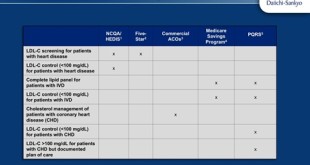
This week, we wrap up our series of Homerun Slides on Quality Measures, with summaries of the commonalities and differences across both cholesterol and diabetes measures, as well as a comparison between the two….
Read More »Letter from the Editor, #677
This week I happened to run into a physician friend I had not seen for a while. While we were chatting, I noticed that he must have gotten at least six pages from his answering service. Each time he had to call in and listen to the operator describe the …
Read More »Liptruzet® – A Lipid-lowering Combination

Liptruzet® – A Lipid-lowering Combination The FDA has approved a new lipid-lowering combination tablet (Liptruzet) that includes atorvastatin and ezetimibe. The tablet is available as a once-daily tablet containing 10 mg of ezetimibe combined with 10, 20, 40, or 80 mg of atorvastatin, can be used to treat elevated …
Read More »Brown Adipose Tissue Holds Weight Loss Potential
Researchers from Sweden have demonstrated that brown cells as well as "brite" cells exist in the neck region in adult humans. The "classical" brown fat tissue, common in newborns but previously not thought to be present in adults, has potent energy burning capacity. "If we can find out how to …
Read More »Higher A1c Rates in Diabetes Patients Who Sleep Late
Type 2 diabetes patients who go to bed late and sleep in late showed higher BMI and A1c rates, had more depressive symptoms, and were more likely to require insulin. Patients who sleep late also tend to eat more calories at dinner, which may lead to negative metabolic effects, researchers …
Read More »Older Black Men with Diabetes Have Higher Risk of Hypoglycemia
The risk of hypoglycemic events during hospitalization was 2.5 to three times higher in older black men with diabetes, but not in women, compared with other patients ages 65 and older. Higher hospital hypoglycemia rates were also seen in patients ages 75 and older and those with a medical history …
Read More »Diabetes Increases Cancer Risk by 20 Percent

Joint research by the Japan Diabetes Society and the Japanese Cancer Association has found that people with diabetes run a 20 percent higher risk of contracting cancer….
Read More »Infection Linked to Injecting through Clothing
After extending incubation period for cultures, non-tuberculous mycobacteria cutaneous infection was found on woman injecting insulin through clothing….
Read More »