Jul 27, 2026
Articles, Blood Glucose Control, Blood Glucose Control, Diabetes, Nephrology, Neurology, Ophthalmology, Prevention, Type 2 Diabetes, Type 2 Diabetes
2,053 views
Diabetes is known for raising blood sugar levels, but its long-term complications often have the greatest impact on health. Kidney disease, vision loss, nerve damage, and cardiovascular disease affect millions of people living with diabetes. For years, researchers focused on inflammation, oxidative stress, and poor circulation to explain these complications. …
Read More »
Jul 23, 2026
Articles, Diabetes, Nephrology, Type 2 Diabetes, Type 2 Diabetes
1,562 views
For years, diabetic kidney disease (DKD) has been viewed as a single condition that progresses in a fairly predictable way. However, new research suggests that this assumption may overlook important biological differences between patients. Scientists have now identified a previously hidden subtype of diabetic kidney disease marked by increased B-cell …
Read More »
Jul 21, 2026
Articles, Blood Glucose Control, Blood Glucose Control, Cardiology, Nephrology, SGLT-2 Therapy Center, Type 2 Diabetes, Type 2 Diabetes
4,277 views
For many people living with type 2 diabetes, the biggest challenge is not finding an effective medication. It is being able to afford it. That reality may begin to change now that the U.S. Food and Drug Administration (FDA) has approved the first generic versions of Farxiga (dapagliflozin), potentially making …
Read More »
Jul 9, 2026
Articles, Cardiology, Diabetes, Type 2 Diabetes, Type 2 Diabetes
2,093 views
Not long ago, diabetes management focused primarily on controlling blood glucose levels. Today, that approach has evolved dramatically as cardiologists and endocrinologists increasingly work together to reduce cardiovascular risk. Thanks to groundbreaking cardiovascular outcome trials (CVOTs), clinicians now understand that treating type 2 diabetes means protecting the heart, kidneys, and …
Read More »
Jul 8, 2026
Articles, Diabetes, Nephrology, SGLT-2 Therapy Center, Therapies, Type 2 Diabetes, Type 2 Diabetes
2,483 views
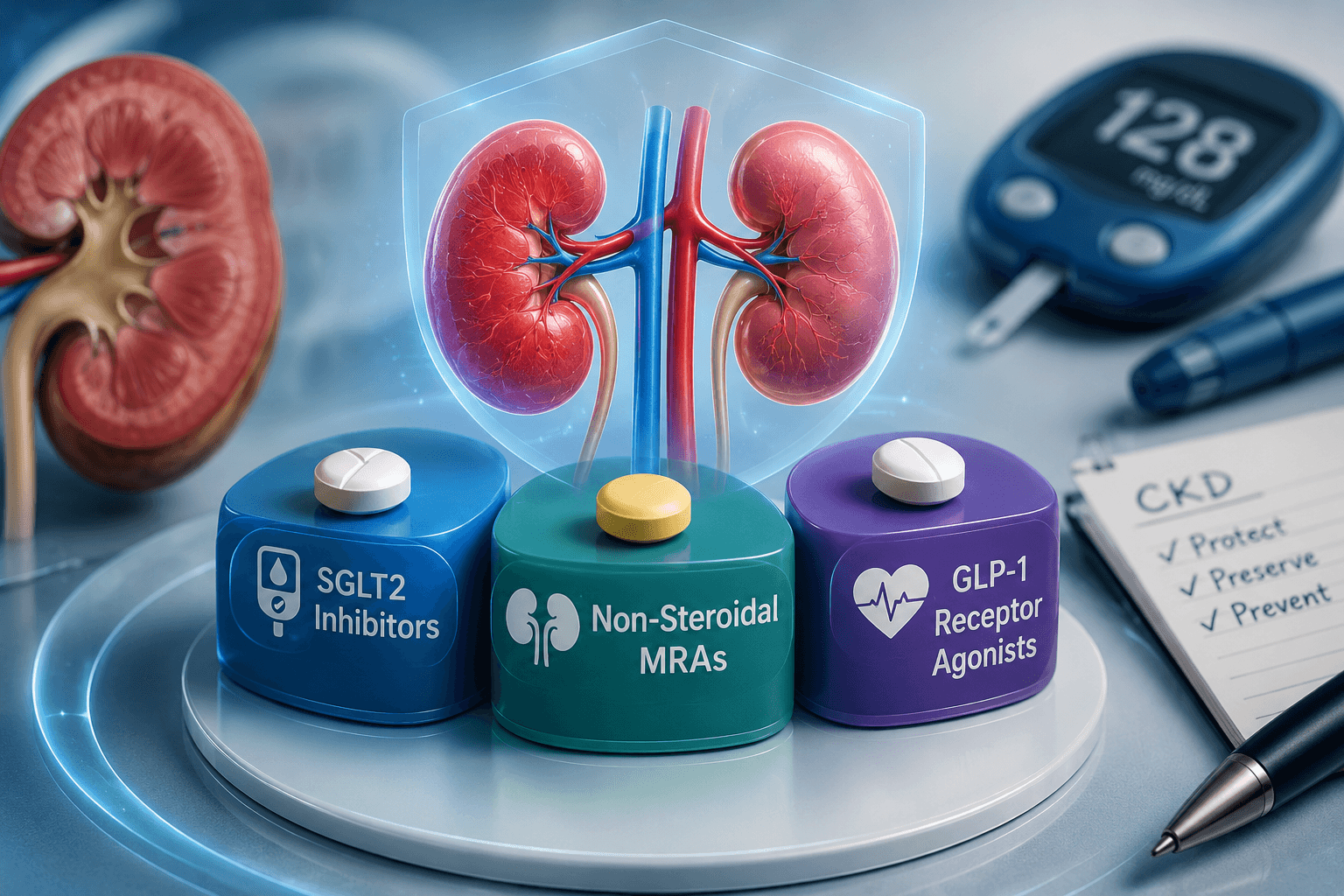
For years, the treatment of diabetic kidney disease focused primarily on glycemic control and blood pressure management. More recently, SGLT2 inhibitors and GLP-1 receptor agonists have transformed the landscape by reducing kidney disease progression and cardiovascular events. However, another therapeutic class is rapidly gaining recognition. Non-steroidal mineralocorticoid receptor antagonists (MRAs) …
Read More »
Jun 18, 2026
Articles, Blood Glucose Control, Blood Glucose Control, Diabetes, Type 2 Diabetes, Type 2 Diabetes
1,745 views
Blood pressure control remains one of the most powerful tools for reducing cardiovascular and kidney complications in people with diabetes. While clinicians have traditionally focused on achieving targets below 140/90 mmHg, recent evidence and the 2026 American Diabetes Association Standards of Care support a more intensive approach for selected high-risk …
Read More »
Mar 11, 2026
Articles, Diabetes, GLP- 1 Agonist Therapy Center, Nephrology, Type 2 Diabetes, Type 2 Diabetes
2,289 views
Chronic kidney disease (CKD) remains one of the most serious complications associated with diabetes, affecting millions of patients worldwide. While SGLT2 inhibitors have become foundational therapies for protecting kidney function, researchers are increasingly examining whether other drug classes may also slow renal decline. In particular, growing interest surrounds how GLP-1 …
Read More »
Mar 6, 2026
Articles, Blood Glucose Control, Blood Glucose Control, Diabetes, Safety, Sulfonylurea, Type 2 Diabetes, Type 2 Diabetes
4,620 views
Managing the risk of hypoglycemia remains a central challenge in diabetes care, even as newer therapies lower the rate of severe events. Although GLP-1 receptor agonists and SGLT2 inhibitors have reshaped treatment strategies, insulin and sulfonylureas are still widely used, especially among older adults and patients with chronic kidney disease …
Read More »
Feb 27, 2026
Articles, Therapies, Type 2 Diabetes, Type 2 Diabetes
3,910 views
As GLP-1 receptor agonists dominate headlines and prescribing trends, many clinicians wonder whether older therapies are losing relevance. However, SGLT2 inhibitors remain foundational in type 2 diabetes care. More importantly, evidence now supports the use of SGLT2 inhibitors and GLP-1 combination therapy in patients at high cardiovascular and renal risk. …
Read More »
Jan 26, 2026
Articles, Cardiology, Diabetes, Featured, Therapies, Type 2 Diabetes, Type 2 Diabetes
9,167 views
The updated ADA 2026 standards represent a major shift in how clinicians approach diabetes management. Rather than focusing solely on lowering A1C, these new recommendations promote a broader, holistic strategy that integrates cardiovascular, kidney, and metabolic (CKM) risk management into everyday care. This article breaks down the key updates and …
Read More »
 Diabetes In Control. A free weekly diabetes newsletter for Medical Professionals. News and information for Medical Professionals.