Jul 8, 2026
Articles, Diabetes, Nephrology, SGLT-2 Therapy Center, Therapies, Type 2 Diabetes, Type 2 Diabetes
1,765 views
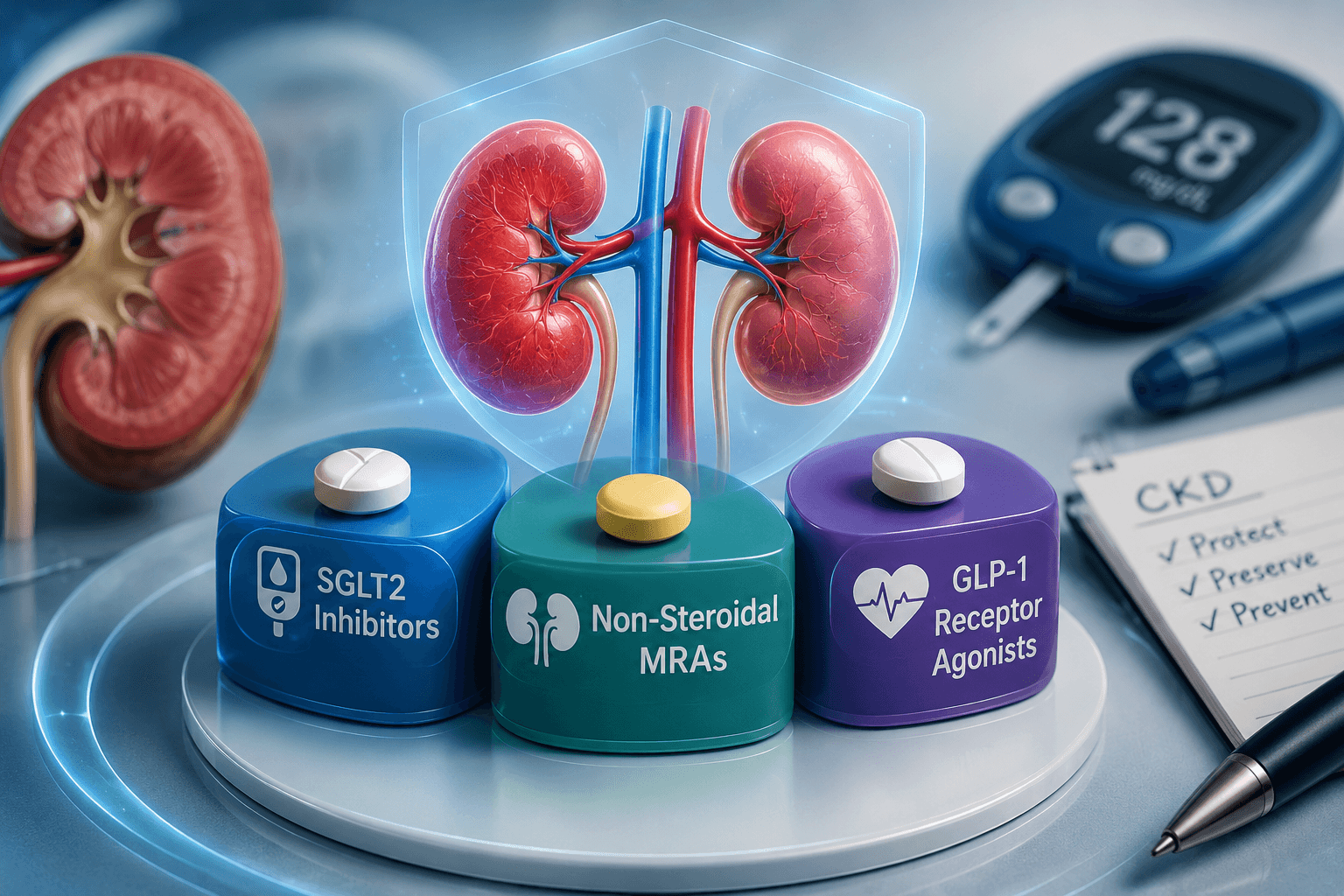
For years, the treatment of diabetic kidney disease focused primarily on glycemic control and blood pressure management. More recently, SGLT2 inhibitors and GLP-1 receptor agonists have transformed the landscape by reducing kidney disease progression and cardiovascular events. However, another therapeutic class is rapidly gaining recognition. Non-steroidal mineralocorticoid receptor antagonists (MRAs) …
Read More »
Jun 18, 2026
Articles, Blood Glucose Control, Blood Glucose Control, Diabetes, Type 2 Diabetes, Type 2 Diabetes
1,186 views
Blood pressure control remains one of the most powerful tools for reducing cardiovascular and kidney complications in people with diabetes. While clinicians have traditionally focused on achieving targets below 140/90 mmHg, recent evidence and the 2026 American Diabetes Association Standards of Care support a more intensive approach for selected high-risk …
Read More »
Apr 27, 2026
Articles, Diabetes, GLP- 1 Agonist Therapy Center, GLP-1 Agonist Therapy Center, Type 2 Diabetes, Type 2 Diabetes
3,377 views
Patients today are more informed than ever, but are they always getting the full picture? With headlines and social media amplifying new findings, counseling patients on GLP-1 therapies has become more complex. Many individuals now ask about benefits beyond glucose control and weight loss, from heart protection to cognitive health. …
Read More »
Apr 27, 2026
Articles, Blood Glucose Control, Blood Glucose Control, Diabetes, GLP- 1 Agonist Therapy Center, GLP-1 Agonist Therapy Center
1,959 views
Can a therapy improve metabolic health even if the scale does not budge? This question is becoming increasingly relevant as clinicians observe patients benefiting from GLP-1 therapy even without significant weight loss. While weight reduction has long been a primary goal of incretin-based therapies, emerging data suggest that metabolic improvements …
Read More »
Mar 5, 2026
Articles, Cardiology, Diabetes, Type 2 Diabetes, Type 2 Diabetes
1,920 views
GLP-1 receptor agonists have transformed type 2 diabetes and obesity management, but the cost-effectiveness of GLP-1 therapies is now at the center of payer and policy debates. With drugs like semaglutide, liraglutide, dulaglutide, and tirzepatide expanding beyond glycemic control into cardiovascular and weight management, a key question remains: do their …
Read More »
Mar 3, 2026
Articles, Therapies, Type 2 Diabetes, Type 2 Diabetes
2,637 views
Using GLP-1 therapy for lean type 2 diabetes challenges a long-standing assumption in diabetes care: that glucagon-like peptide-1 receptor agonists are primarily for patients with obesity. But what if body mass index is not the right guide for treatment decisions? Lean individuals with type 2 diabetes often exhibit insulin resistance, …
Read More »
Feb 26, 2026
Articles
2,413 views
Inflammation sits at the heart of cardiometabolic disease. While GLP-1 receptor agonists are best known for improving glycemic control and supporting weight loss, emerging research suggests their role may extend further. Could the anti-inflammatory effects of GLP-1 therapies help explain some of the cardiovascular benefits observed in large outcome trials? …
Read More »
Feb 25, 2026
Articles, Cardiology, Diabetes, GLP- 1 Agonist Therapy Center, GLP-1 Agonist Therapy Center
8,853 views
Changes in resting heart rate with GLP-1 receptor agonists have become an important topic in diabetes and cardiometabolic care. As glucagon-like peptide-1 receptor agonists such as semaglutide, liraglutide, and dulaglutide gain widespread use, clinicians often notice a modest rise in resting heart rate. Should this increase raise concern, especially in …
Read More »
Feb 23, 2026
Articles, Cardiology, GLP-1 Agonist Therapy Center, Type 2 Diabetes, Type 2 Diabetes
2,324 views
The potential link between GLP-1 therapies and atrial fibrillation is drawing increasing clinical interest as cardiometabolic care continues to evolve. Patients with type 2 diabetes face a significantly higher risk of atrial fibrillation, yet GLP-1 receptor agonists are rarely discussed in rhythm management conversations. Could medications such as semaglutide (Ozempic), …
Read More »
Feb 9, 2026
Articles, Cardiology, Diabetes, Therapies
2,427 views
GLP-1–based therapies have quickly become a cornerstone of modern diabetes care. While most clinicians think of these agents for glucose lowering and weight loss, growing evidence suggests they may also support better blood pressure control. For patients living with diabetes and hypertension, that overlap raises an important question. Can GLP-1 …
Read More »
 Diabetes In Control. A free weekly diabetes newsletter for Medical Professionals. News and information for Medical Professionals.