 Diabetes In Control. A free weekly diabetes newsletter for Medical Professionals. News and information for Medical Professionals.
If environmental factors such as enteroviruses can trigger beta-cell autoimmunity, then is it possible that rotavirus vaccination can reduce the likelihood of developing type 1 diabetes?
Scientists have theorized for decades that type 1 diabetes can be triggered by environmental exposures in predisposed individuals. Although we do not currently have a method to prevent type 1 diabetes, understanding the triggers may lead us to disease prevention therapy.
Previous studies have linked the rotavirus infection to antibodies associated with diabetes in both animal and human studies. The rotavirus surface protein closely resembles the β- cell antigens that are associated with the development of type 1 diabetes. This resemblance could cause the immune system to launch an attack and may be the link between rotavirus and type 1 diabetes. Research has shown that a rotavirus infection accelerates the destruction of β-cells in mice who are genetically predisposed to diabetes.
According to a recent cohort study of 1,474,535 infants in the United States from 2001-2017, the completion of the rotavirus vaccine series is associated with a reduced risk of type 1 diabetes. The study was designed using data from Clinformatics DataMart and carried out using the National Institute of Health guidelines.
Study eligibility requirements include: an infant less than 1 year of age and health insurance coverage for a minimum of one year. Infants who showed symptoms of diabetes prior to completion of the rotavirus vaccine series or within 6 months of initiation of the study for unvaccinated children, were removed. Infants were categorized as fully vaccinated against rotavirus, partially vaccinated without completion of the rotavirus series, or unvaccinated against rotavirus.
There are currently two types of rotavirus vaccines used in the United States, Rotarix and RotaTeq. This cohort study observed a 33% reduction in the risk of type 1 diabetes with Rotarix, and a 37% reduction with RotaTeq. There was no protection added to children who were only partially vaccinated for rotavirus.
The rotavirus vaccine was introduced in 2006, and since the introduction, there has been an overall 3.4% decrease in the annual diagnosis of type 1 diabetes. When comparing children who received a complete rotavirus vaccine series to those who did not, children who received the rotavirus vaccine series were 56% less likely to develop type 1 diabetes.
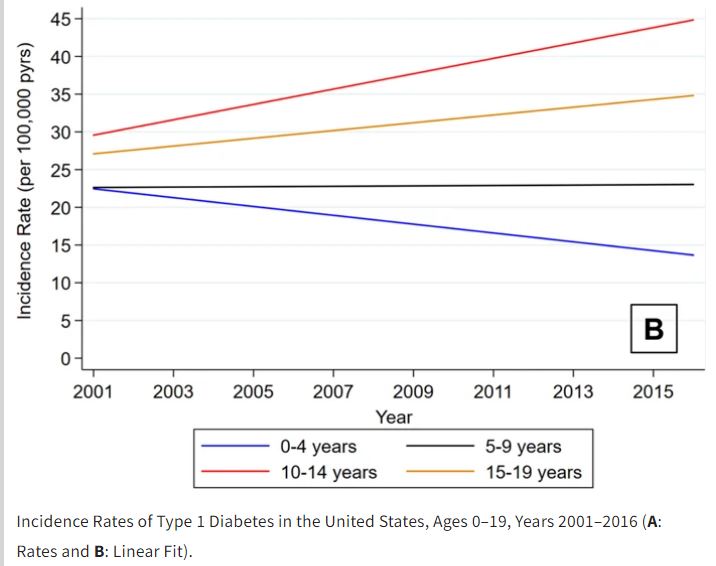
Figure 3. Incidence Rates of Type 1 Diabetes in the United States, Ages 0-19, Years 2001-2016, linear fit
Click here for full image: https://www.nature.com/articles/s41598-019-44193-4/figures/3
On January 22, 2019, JAMA Pediatrics released an analysis of Australia’s type 1 diabetes incidence. The results support the United States cohort that type 1 diabetes incidence has declined since the introduction of the rotavirus vaccine series. In Australia, new cases of diabetes are easier to track due to the national health system. The results of this Australian analysis were exciting: after the introduction of the rotavirus vaccine series into the vaccine schedule, new cases of type 1 diabetes dropped by 14% in children aged 0-4.
In accordance with the recommended vaccination schedule, most children in these studies received diphtheria, tetanus, and pertussis on the same day as the rotavirus vaccine. It is worth noting that the children who received all their scheduled vaccinations on the same day as the rotavirus series, were less likely to develop type 1 diabetes. Administering multiple vaccines at the same time proved to add further protection. This suggests that administering multiple vaccines on the same day may elicit a better immune response.
More research will need to be conducted before we can conclude that the rotavirus vaccine series is the reason for this decrease in type 1 diabetes, but the data is promising. Longer longitudinal studies are warranted to confirm this pattern is caused by the rotavirus vaccination series. As we would expect, some children received the full vaccination series and still developed type 1 diabetes; therefore, other factors are involved in this complex disease.
Practice Pearls:
- The United States cohort and JAMA Australian analysis both indicated a decrease in the incidence of type 1 diabetes after the introduction of the rotavirus vaccine series in children aged 0-4.
- There was no reduction in risk for patients who were only partially vaccinated against rotavirus.
- Although this does not prove that the rotavirus vaccination series protects against type 1 diabetes, it does highlight the association and need for further research.
References:
Rogers, Mary A. M., et al. “Lower Incidence Rate of Type 1 Diabetes after Receipt of the Rotavirus Vaccine in the United States, 2001–2017.” Nature News, Nature Publishing Group, 13 June 2019, www.nature.com/articles/s41598-019-44193-4.
Rossi, Kristi. “Rotavirus Vaccine Associated with Lower incidence of Type 1 Diabetes.” MD Magazine, 22 Jan. 2019, www.mdmag.com/medical-news/rotavirus-vaccine-associated-lower-incidences-type-1-diabetes.
Kirsten P. Perrett, Kim Jachno, Terry M. Nolan, Leonard C. Harrison. Association of Rotavirus Vaccination With the Incidence of Type 1 Diabetes in Children. JAMA Pediatrics, 2019; DOI:
Kassey James, Pharm.D. Candidate, LECOM School of Pharmacy