 Diabetes In Control. A free weekly diabetes newsletter for Medical Professionals. News and information for Medical Professionals.
Letter from the Editor
 I have a good friend who recently left her position as head of a kidney and liver transplant center on the west coast of Florida. She had been an ADN at a large hospital and when they decided to open a transplant center, she was tasked with the responsibility of designing, building and staffing the facility. The facility was up and running on time and they were taking patients on a regular basis. However, as time went by, her frustrations with the availability of good kidneys grew.
You may not know but there is a long process and a longer waiting list to get a new kidney or liver, and just because there is one available in your area does not mean your patient will get it. Part of the problem is the lack of healthy donors. Potential donors are eliminated for many reasons, and a kidney from a person with diabetes is never used for a transplant. This makes sense because diabetes is a major cause of kidney failure, and with the increase in the incidence of diabetes the rates of kidney failure are bound to increase.
This week our LECOM Pharm.D candidate, Annahita Forghan, has prepared two articles on the value of monitoring and correcting albumin to creatinine ratios to reduce end stage kidney risk, and the logic behind that idea.
*****************************
We can make a difference!
*****************************
Dave Joffe
Editor-in-chief
This Week's Survey
Which exercise equipment do you feel can be the most beneficial for those who have excess weight and who have diabetes or prediabetes?
– Treadmill
– Rowing Machine
– Elliptical Trainer
– Exercise Bike
– Weight Machine
Follow the link to share your opinion.
New Product: New Artificial Intelligence Insulin Software and Pump Presented at Consumer Technology Show
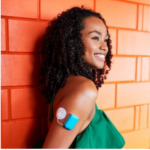 The machine learning capabilities of a new AI insulin software and pump were on display recently at a consumer tech showcase. Diabeloop, which can predict glucose levels and automatically deliver insulin doses in a pediatric population, received CE marking in November for its DBLG1 hybrid closed-loop system. It is the second so-called artificial pancreas to receive such a designation in Europe and clinical trials of the pediatric version will begin in Belgium and France later this year.
In adapting its DBLG1 automated insulin delivery system for adults to children, Diabeloop wants to boost pediatric care and improve the short-term quality of life and overall longevity of children while relieving their loved ones of the stress of managing the disease on a daily basis.
The DBLG1 hybrid closed-loop system connects DexCom’s G6 continuous glucose monitor system, Kaleido’s patch insulin pump and an algorithm connected to a user’s phone to predict glucose levels and command the insulin pump at an optimal rate. How does the DBLG1 system work? Every 5 minutes, a glucose measurement is transmitted via Bluetooth technology to the handset. DBLG1 artificial intelligence analyzes data in real time and takes into account the patient’s physiology, history, and data entries (meals or exercise) to determine the correct dose of insulin to administer.
Test Your Knowledge
From 2002 to 2016, US deaths from chronic kidney disease (CKD) increased by how much?
A. 20%
B. 32%
C. 38%
D. 38%
E. 58%
Follow the link for the answer.
Did You Know: The Sun Can Help Protect Against Diabetes
 In a current study, researchers found that Brazilian women with lower vitamin D levels were 30% more like to have high glucose. In the study, among the quarter of women with a serum 25(OH)D level less than 20 ng/mL, there was also significantly higher odds of having a glucose level of 100 mg/dL or higher, although the magnitude was no greater. Self-reported use of supplements was not associated with glucose levels. The researchers showed that vitamin D plays a role in pancreatic beta cell function, improving the insulin response to an increase in the glucose levels.
Those data underscore a potential benefit of a higher 25(OH)D level in individuals who still have a minimal beta cell population, improving the insulin response and perhaps preventing the progression of insulin dependence. The findings were consistent with the literature, the researchers said, although intervention studies haven’t shown any significant benefit to vitamin D supplements. It is important that we understand the importance of the relationship between low vitamin D levels and type 2 diabetes if vitamin D supplementation may help improve glucose levels since no causal relationship between these two variables has been proven yet.
For the study, they analyzed 680 women ages 35-74. The women completed interviews and physical exams and gave blood samples. Their mean glucose was 105 mg/dL, while the average 25(OH)D level was 26.4 ng/mL. Among the cohort, 3.5% reported taking vitamin D supplementation, which — as expected — was negatively associated with having low vitamin D levels. For the analysis, women who reported having habitual sun exposure also saw lower odds of having a serum vitamin D level under 30 ng/, but no significant risk of excessive glucose levels. The current study’s cutoff of 30 ng/mL for vitamin D deficiency is the same as that recommended by AACE and ACE. From the results it was shown that a glucose level of 100 mg/dL or higher wasn’t only associated with low vitamin D levels, but was also significantly tied to obesity, hypertension, and older age among women, and more studies are needed to see if supplementation can have an impact.
Optimism correlated with lower incidence of type 2 in postmenopausal women.
Major changes in weight, including weight loss, can affect diagnosis risk.
There is more going on than just the immune system attacking.
Use of albuminuria level changes as the endpoint to determine need to reduce albumin-to-creatinine ratio.
Is there a difference in glucose tolerance based on body weight and adipose tissue in type 2 diabetes?
Change in albuminuria as surrogate endpoint for progression of chronic kidney disease strongly supported by biological plausibility, but empirical evidence to support its validity in epidemiological studies lacking.
Quote of the Week!
“Gratitude is the sign of noble souls.”
….Aesop
Diabetes in Control gratefully acknowledges the assistance of the following pharmacy doctoral candidates in the preparation of this week’s newsletter:
Michael Zaccaro, Pharm. D. Candidate 2019, LECOM School of Pharmacy
Annahita Forghan, Pharm.D. Candidate 2019, LECOM College of Pharmacy
Your Friends in Diabetes Care
Steve, Dave, and Joy
Diabetes In Control
810 Bear Tavern Road Suite 102
Ewing, NJ, 08628
USA
www.diabetesincontrol.com