 Diabetes In Control. A free weekly diabetes newsletter for Medical Professionals. News and information for Medical Professionals.
- Family History of Diabetes and CHD Linked to Poorer Health Outcomes
- Caution Using Metformin For Patients With Reduced Kidney Function
- Many Elderly Receiving Home Care for Diabetes May Be Unaware of Impact
- Diabetic Neuropathy Can Indicate Poor Oral Health
- Over 60% of Adults with Type 1 Diabetes Experience Sexual Dysfunction, Urologic Complications
- Using Electricity to Cure Type 2 Diabetes
Editor's Note

Way back in July of 2003, Steve and I attended the “Chromium in Health and Disease” summit in Boston. You have to remember that was when nutritional products were not so easily accepted by leading health care experts. This conference was somewhat remarkable in that there were “real” diabetes professionals talking about the use of chromium for such diseases as diabetes, coronary heart disease, depression and women’s health. . The list of speakers was like a who’s who of diabetes and one of them was Lois Jovanovic, M.D., of the Sansum Medical Research Center in Santa Barbara, CA. She presented real results from the use of chromium in gestational diabetes, the most common complication in pregnancy.
Over the years we got to know Dr. Jovanovic, and she joined our Medical Advisory Board. In 2016 she sat down with our Publisher, Steve Freed, and we have the videos of Steve’s complete interview with her. Click here for part 1: Video or Transcript.
As an introduction to that video series our Medical Editor, Joy Pape shared her feelings about the good doctor and how Dr. Jovanovic changed the way we treat diabetes.
Many of you know that this week Dr Jovanovic passed away; when Joy and I spoke about this she wanted me to share “Not only has Lois Jovanovic changed the lives of so many people who have diabetes. She changed me and my practice, by always teaching, encouraging and supporting me to challenge ‘conventional wisdom’ to help individuals who have diabetes.”
We at DiabetesInControl hope to continue to carry out her legacy. Thank you Lois Jovanovic. The diabetes world is a better place because of you.
*****************************
We can make a difference!
*****************************
Dave Joffe
Editor-in-chief
This Week's Survey
In your opinion, which diabetes patients are the best candidates for CGM?
– Patients on more than five diabetes medications
– Patients unable to achieve their HbA1c goal despite focused efforts
– Patients with frequent or extreme glucose excursions (>200 mg/dL, within day or day-to-day)
– or All of the above?
Follow the link to see how you and your colleagues compare.
New Product: Xeris’ Glucagon Rescue Pen
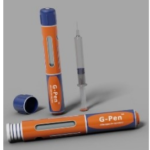 The Xeris Glucagon Rescue Pen is designed as an auto-injector, features a ready-to-use liquid glucagon — a safer and more convenient treatment option for severe hypoglycemia. Xeris has submitted its Glucagon Rescue Pen — the “G-Pen” — for the emergency treatment of extremely low blood sugar (severe hypoglycemia) to the FDA. Unlike current glucagon kits, Xeris’ glucagon is a room-temperature stable liquid. Because it does not require mixing prior to use, it will be “ready to inject” (like an EpiPen for allergies) in two simple steps: (1) remove the cap from the pen and (2) press the pen against the skin (presumably arm or leg or wherever is available). Upon contact with the skin, the automatic injector will deliver a rescue dose of glucagon. This will make glucagon administration during emergencies easier and faster than current options. Assuming a standard review process, we hope for an approval decision from the FDA in roughly mid-2019.
Test Your Knowledge
What proportion of Americans age 45 y and older have self-reported memory problems?
A. 1 in 30
B. 1 in 16
C. 1 in 9
D. 1 in 4
Follow the link for the answer.
Did You Know: CGM Can Be Effective for Patients With Type 2 Diabetes
Over the past five years, continuous glucose monitors have evolved and matured into a commercially viable device to impact the lives of those with type 1 diabetes. We now have four CGM’s available: Medtronic, Dexcom, Libre, and the implantable sensor Eversense. This review and meta-analysis was done to examine the newest data around these devices and their effectiveness as a treatment addition in type 2 diabetes. The meta-analysis looked at 10 original studies using CGM technology in people with type 2 diabetes. The pooled sample included more than 6,200 patients. Currently, the evidence on effectiveness of CGM in patients with type 2 diabetes has been debatable. This systematic review and meta-analysis was provided to synthesize current evidence of effectiveness of CGM in adults with type 2 diabetes. Cochrane, Embase, PubMed, and Web of Science were searched to include all studies that reported effectiveness of CGM in terms of HbA1c in adults age 18 and older, with type 2 diabetes, and on any treatment for diabetes. The results showed that real-time CGM technology was associated with a significant reduction in HbA1c. The analysis of current evidence suggests that CGM is effective in improving HbA1c in adults with type 2 diabetes. Due to insufficient evidence, it is premature to form conclusions on the effectiveness of FGM. This is an important review and meta-analysis for clinicians because it clearly summarizes the available technologies and also analyzes recent data to show an arguably unexpected conclusion.
Diabetes Technology & Therapeutics Vol. 20, No.9. Published in Diabetes, September 03, 2018
People with type 2 diabetes found at increased risk for microvascular and macrovascular complications.
FDA label change warns of increased risk of lactic acidosis in patients with severe renal dysfunction.
Recent study explores link between disease and psychological well-being in older adults.
A new study shows an association between nerve and gum diseases in patients with diabetes.
Study shows at least one urologic complication was experienced during the course of seven years.
Can neuromodulation prevent the onset of metabolic dysfunction associated with the onset of diabetes?
Quote of the Week!
“Happiness doesn’t depend on any external conditions, it is governed by our mental attitude.”
….Dale Carnegie
Diabetes in Control gratefully acknowledges the assistance of the following pharmacy doctoral candidates in the preparation of this week’s newsletter:
Melissa Bailey, Pharm.D. Candidate, USF College of Pharmacy
Kaytie A. Weierstahl, Pharm.D. Candidate, LECOM School of Pharmacy
Clarke Powell, Pharm.D. Candidate 2019, LECOM School of Pharmacy
Your Friends in Diabetes Care
Steve, Dave, and Joy
Diabetes In Control
810 Bear Tavern Road Suite 102
Ewing, NJ, 08628
USA
www.diabetesincontrol.com***