 Diabetes In Control. A free weekly diabetes newsletter for Medical Professionals. News and information for Medical Professionals.
- Diabetes and the Use of Complementary and Alternative Medicine
- Patients With T2D, Mild Renal Impairment Can Benefit From A DPP-4 Inhibitor
- Semaglutide Causes Weight Loss in Type 2 Diabetes Regardless of Baseline BMI
- Overtreatment of Diabetes in Patients 75 Years or Older
- Dapagliflozin Improves Glycemic Index in Patients with T1DM but Increases Risk for DKA
- Lose Weight and Lose Type 2 Diabetes?
Letter from the Editor

This week our Pharm D candidate, Melissa Bailey, was looking at how some patients actually can reverse their diabetes by losing weight. We have all told our patients this, but how many times could you actually identify which patients would actually succeed if they tried? Melissa was able to peruse through the DIRECT study and has teased out the information on how to best select patients for success.
This information makes a perfect lead-in to soon to be Dr. Kaytie A. Weierstahl’s review of the new SUSTAIN trial and how the use of semaglutide can cause weight loss in our patients, regardless of how much they weigh at initiation.
*****************************
We can make a difference!
*****************************
Dave Joffe
Editor-in-chief***
This Week's Survey
Do you have a program in place to improve medication compliance? Follow the link to see how you and your colleagues compare.
Newsflash - New Product: FDA approves FreeStyle Libre Sensors for 14-Day Wear and 1-Hour Warm-up
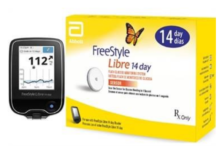 The FDA has updated its original approval of Abbott’s FreeStyle Libre CGM for 14-day wear with a one-hour warm-up. The original US approval last fall was for 10-day wear and a 12-hour warm-up, so this means that people will have much smaller gaps in CGM data when they start a new sensor and will insert new sensors less frequently (two sensors per month rather than three). The sensor and reader remain the same size; the difference involves minor software updates. This new version will launch in participating pharmacies and durable medical equipment (DME) suppliers in the U.S. in the coming months.
Test Your Knowledge
What proportion of Americans age 45 years and older have self-reported memory problems — is it 1 in 30, 1 in 16, 1 in 9, or 1 in 4?
Follow the link for the answer.
Did You Know: Measuring the Strength of Children Gives Information About Future Health
Children with a strong handgrip — an indicator of overall muscle strength — have better odds of being healthy over time, according to a two-year study of 368 elementary school children. While other studies have shown that muscle weakness as measured by grip strength is a predictor of unhealthy outcomes — including cardiovascular and metabolic diseases, disability and even early mortality — this is the first study to do so for adolescent health over time. The published study tracked students in the fall of their fourth-grade year and at the end of the fifth grade. Using the norms for grip strengths in boys and girls, researchers measured the students’ grips in their dominant and non-dominant hands with an instrument called a handgrip dynamometer. Researchers found that initially, 27.9 percent of the boys and 20.1 percent of the girls were classified as weak. Over the course of the study, boys and girls with weak grips were more than three times as likely to decline in health or maintain poor health as those who were strong. Researchers also screened for and analyzed other metabolic risk factor indicators, including physical activity, cardiorespiratory fitness, body composition (the proportion of fat and fat-free mass), blood pressure, family history, fasting blood lipids and glucose levels. Even after taking into account other factors like cardiorespiratory fitness, physical activity and lean body mass, we continue to see an independent association between grip strength and both cardiometabolic health maintenance and health improvements. While much emphasis has been placed on the benefits of a nutritious diet and aerobic activity, this study suggests that greater emphasis needs to be placed on improving and maintaining muscular strength during adolescence.
The study — “Grip Strength is Associated with Longitudinal Health Maintenance and Improvement in Adolescents” — is published in The Journal of Pediatrics. It was conducted by researchers at Baylor University, the University of Michigan and the University of New England.
Herbal therapies and acupuncture among the most common alternative therapies used by patients with diabetes.
Sitagliptin showed greater glycemic efficacy over dapagliflozin when added onto existing therapy.
The SUSTAIN trials showed significant reductions in weight, but the true reason for the weight loss still unknown.
Recent studies show one-quarter of the population over the age of 75 who have type 2 diabetes are tightly managed with medications and are high risk for hypoglycemia.
SGLT shown as useful adjunctive agent when insulin monotherapy fails, but decrease in insulin use may prove harmful.
Scientists find dramatic weight loss may reverse type 2 diabetes in some patients.
Quote of the Week!
“Calm mind brings inner strength and self-confidence, so that’s very important for good health.”
…Dalai Lama
Diabetes in Control gratefully acknowledges the assistance of the following pharmacy doctoral candidates in the preparation of this week’s newsletter:
Kaytie A. Weierstahl, Pharm.D. Candidate, LECOM School of Pharmacy
Melissa Bailey, Pharm.D. Candidate, USF College of Pharmacy
Clarke Powell, Pharm.D. Candidate 2019, LECOM School of Pharmacy
Your Friends in Diabetes Care
Steve, Dave, and Joy
Diabetes In Control
810 Bear Tavern Road Suite 102
Ewing, NJ, 08628
USA
www.diabetesincontrol.com***