 Diabetes In Control. A free weekly diabetes newsletter for Medical Professionals. News and information for Medical Professionals.
- Prediabetes in Adolescence Dramatically Increases Cardiovascular Risk
- What Comes First, Diabetes or Cancer?
- Omnipod Insulin Delivery System Receives FDA Clearance
- Dual-Hormone Closed-Loop Delivery System Compatible with Exercise
- Is There a Future for BGM?
- Guest Post by David Kliff, Editor, Diabetic Investor
Letter from the Editor
 This week, it is all about devices, and how they look to change the way we manage diabetes.
First off, we have a new device that seems to work similar to the V-Go insulin delivery system. This device becomes the 3rd “mechanical pump” that will be available to patients and, as you well know, the more brands there are, the more price decreases and insurance covers, so look for an uptick in usage of these products. Next, we have information on an upgrade to the Omnipod Insulin delivery system. The new version sticks better, goes deeper in the water, and has a much improved PDM as well as smartphone capabilities.
Finally, we have a special feature from our good friend and marathon runner David Kliff on the not-so-rosy future of finger stick monitoring and how payment will likely be based on how good a patient’s A1c is over time.
*****************************
We can make a difference!
*****************************
Dave Joffe
Editor-in-chief
This Week's Survey
Would you be open to using a CGM for your type 2 patients who are not on insulin? Follow the link to share your response.
News Flash: FDA Approves the FreeStyle Libre 14-day Sensor
FreeStyle Libre 14-day system has a 1-hour warmup and greater accuracy compared to the FreeStyle Libre 10 day system with a mean absolute relative difference (MARD) of 9.4 compared to 9.7, respectively. It will be available via prescription in the coming months at participating pharmacies and durable medical equipment suppliers (DMEs) in the U.S.
News Flash: Lilly Submits NDA for Nasal Glucagon
Nasal glucagon will be for the treatment of severe hypoglycemia in adults and pediatric patients with diabetes, according to a statement from the company.
News Flash: CeQue Acquires Calibra Medical Assets
CeQur announced that the company has acquired select assets of Calibra Medical Inc., one of Johnson & Johnson’s Diabetes Care divisions. These assets include an FDA-approved, wearable, bolus insulin-delivery device, which complements CeQur’s PAQ – a wearable, basal-and-bolus insulin delivery device in development. Both devices provide three days of simple insulin delivery for adults with diabetes who require insulin and want to avoid multiple daily injections (MDIs). See This Week’s New Product:
New Product: OneTouch Via™
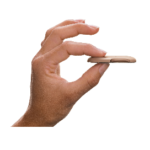 The Calibra system enables people with diabetes to discreetly and conveniently deliver rapid-acting insulin at mealtime. The Calibra device is a complement to PAQ, the basal and bolus insulin-infusion device. Both wearable devices provide simple, discreet, three-day insulin delivery without the barriers and discomfort created by injections. CeQur, who just purchased Calibra, plans to launch the insulin delivery device under a new name in mid-2019. Results of a global 62-site clinical study presented at the American Diabetes Association 2018 Scientific Sessions comparing the Calibra device to insulin pens to initiate and maintain bolus insulin dosing among 278 people with type 2 diabetes showed that this device provided positive clinical benefits with less glycemic variability than pens, significantly higher ease-of-use and patient satisfaction scores, and similar safety.
Test Your Knowledge
Which one of the following is NOT associated with increased Alzheimer’s disease risk?
A. Diabetes mellitus
B. Statin use
C. High hemoglobin levels
D. Lower social engagement
Follow the link for the answer.
Did You Know: Elevated A1c At Time Of Conception Increases Risk of Major Cardiac Defects in Newborns
For mothers, any elevation of A1c of 6.5% or higher at conception significantly increases the risk of major cardiac defects in infants born to mothers with type 1 diabetes compared with children born to women without diabetes, a representative nationwide Swedish study indicates. Indeed, even mothers with HbA1c levels that meet the recommended target of less than 6.5% have a two-fold increased risk of giving birth to an infant with a heart defect compared with infants born to mothers without diabetes, the same study indicates. This confirms previous findings that there is a higher risk of birth defects, primarily of the heart (in infants born to mothers with type 1 diabetes). Blood glucose plays a vital part and is sensitive to factors during early pregnancy. — The study was published online July 5 in BMJ. The Higher the HbA1c the Greater the Risk
Getting diabetes in our later years increases risk for CVD, but getting diabetes or prediabetes as a youth increases risk for CVD and death dramatically.
New study shows that within the first two years of a diagnosis of cancer, the risk for type 2 diabetes increases.
The Omnipod Dash™ device approved for commercialization and release in the U.S. by mid-2018.
Addition of glucagon prevents exercise-induced hypoglycemia.
Guest Post by David Kliff, Editor, Diabetic Investor
With each passing day, it’s becoming more apparent that CGM will replace BGM as the standard for glucose measurement. CGM systems are becoming more patient-friendly, i.e. no calibrations, simple insertion, and cheaper too. The data provided by CGM is transformative, leading to improved outcomes. It is no longer a question of if this will happen but when this will happen.
Quote of the Week!
“Sometimes the heart sees what is invisible to the eye.”
…H. Jackson Brown Jr.
Diabetes in Control gratefully acknowledges the assistance of the following pharmacy doctoral candidates in the preparation of this week’s newsletter:
Kaytie A. Weierstahl, Pharm.D. Candidate, LECOM School of Pharmacy
Amanda Cortes, PharmD Candidate, LECOM School of Pharmacy
Kennen Munoz Munoz, Pharm. D. Candidate 2019, LECOM School of Pharmacy
Your Friends in Diabetes Care
Steve, Dave, and Joy
Diabetes In Control
810 Bear Tavern Road Suite 102
Ewing, NJ, 08628
USA
www.diabetesincontrol.com