 Diabetes In Control. A free weekly diabetes newsletter for Medical Professionals. News and information for Medical Professionals.
American Diabetes Association 78th Scientific Sessions Special Issue
This newsletter is Part 2 of our series on all the breaking news coming from the 78th Scientific Sessions of the American Diabetes Association 2018 in Orlando
-
- New Closed-Loop Delivery System Improves Glycemic Control for People with T1D
- Metformin Alone or Combined with Insulin Does Not Improve or Preserve Beta-Cell Function in T2D
- Intense Multifactorial Treatment for Type 2 Diabetes Shown to be Cost Effective: Steno 2 Study
- Liraglutide Plus Insulin for People with Type 1 Diabetes Improves Glycemic Control
- New Omnipod® Closed-Loop Insulin Delivery System Improves Glycemic Control
- Using Diabetes Technologies Like CGM During Exercise
- By Sheri R. Colberg, PhD, FACSM
Letter from the Editor
 This week, we have another jam-packed newsletter with the latest from the ADA Scientific Sessions in Orlando. There are some great articles on the use of CGM and insulin delivery systems both alone and in concert with each other. There is a look at a new system that uses AI to calculate insulin doses and send to the delivery device. These things all combine to make diabetes care more effective, especially for our insulin-using patients.
This week, our Exercise and Health Guru, Dr. Sheri Colberg, has a special feature on how the use of these technologies with patients who exercise can benefit them, and how you and your patients can avoid some common pitfalls of depending on them all the time.
*****************************
We can make a difference!
*****************************
Dave Joffe
Editor-in-chief
This Week's Survey
Which brand of Continuous Glucose Monitor (CGM) do you prefer — Dexcom, Abbott FreeStyle Libre, or Eversense? Follow the link to respond.
New Product: Diabeloop
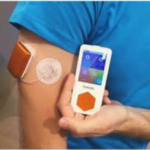 Diabeloop is a Closed-loop (CL) system with a Model Predictive Control (MPC) algorithm reinforced by a decisional matrix, uploaded on a dedicated android smartphone linked to Dexcom CGM and a Cellnovo or Kaleido insulin patch-pump. The Diabeloop software calculates the insulin dose according to the patient’s needs. It also transfers all the information to a smartphone.
New research finds that people with type 1 diabetes (T1D) who used the Diabeloop DBLG1 therapeutic, closed-loop insulin delivery system in a home setting experienced a greater percentage of time in the target glucose range and fewer hypoglycemic events compared to patients who used an open-loop system, consisting of their regular pump and sensor. See Item #1.
Test Your Knowledge
Mrs. Wilson is woman who is 71 years of age, African American and has excess weight. She has come to your clinic today for a new patient visit. She recently moved to the area to live with her daughter and is concerned about her diabetes care plan. She was diagnosed with type 2 diabetes 12 years ago at a wellness check through routine screening. In hindsight, she wonders if maybe she “went undiagnosed for a while” because she “didn’t get to the clinic very often and was having some problems with frequent urination at night” before she was screened. She currently takes metformin, glyburide, captopril, pravastatin, and aspirin, and has recently titrated to.6 U/kg/day insulin NPH as a nightly basal dose. Her current A1C goal is less than 7.5% and she has been working hard to get to that level. However, for the first time her life, she is finding herself to be nauseated and irritable in the morning, but always feels better after a little breakfast. She states she feels “pretty good for her age,” although she occasionally has “a little chest tightness when walking more than 4 or 5 blocks.” Last time she remembered to check her glucose was a few days ago. GHer postprandial glucose was “a little high” at 214 mg/dL. Her office A1C is 8.6%. Based on what you know about the patient, what is the most likely cause of her morning distress?
A. Hyperglycemia
B. Hypoglycemia
C. Anxiety
D. Cognitive decline
Follow the link for the answer.
Did You Know: Amylin Analog in Fixed Combination with Insulin Glargine
Besides insulin therapy, amylin analogs are also important in the treatment of type 1 diabetes. An amylin analog named BZ043 was studied in rats with streptozotocin-induced diabetes alone and in combination with insulin glargine. When the amylin analog was administered proportionally to meals, it prevented post-prandial hyperglycemia. Co-treatment with glargine maintained normoglycemia, but when BZ043 was added to a vial of glargine, there were no variations of glycemia and it promoted a long lasting normoglycemia effect. These results suggest that people with type 1 diabetes may benefit from this fixed combination. Studies in humans are needed to confirm the efficacy.
BZ043, a Novel Amylin Analog, in a Fixed Combination with Insulin Glargine—Nonclinical Results [Presentations] Number: 76-OR | Type: Oral Presentations – Session Title: Emerging Targets for Diabetes Treatment – ADA 78th Scientific Sessions Diabetes 2018 Jul; 67(Supplement 1): -.https://doi.org/10.2337/db18-76-OR – Amanda Cortes, PharmD Candidate, LECOM School of Pharmacy
Multi-center study compares closed-loop device to standard open-loop system in a home setting.
Restoring Insulin Secretion (RISE) Pediatric Medication Study shows that youth have markedly reduced insulin sensitivity and respond differently to medications.
Analysis of European Steno 2 study examines long-term economic implications of interventions targeting complications.
Hybrid closed-loop (HCL) system combines technology of CGM and insulin pumps, and a personalized, model-predictive control algorithm to deliver insulin day and night.
One-year, randomized study shows lower HbA1c, blood glucose, blood pressure and body weight without significant increase in hypoglycemia.
By Sheri R. Colberg, PhD, FACSM
A topic that comes up frequently nowadays is the use of diabetes technologies with exercise. When I surveyed close to 300 active individuals with diabetes, more than 60 percent used an insulin pump (which is well above the national average), but even more of these exercisers—over 75 percent—wear a continuous glucose monitoring (CGM) device (1). The technology fervor has grown even louder since the FDA recently granted approval in the United States to an implantable, three-month CGM sensor called Eversense (made by Senseonics). Can active people benefit from using these CGM and other devices, especially when active?
Quote of the Week!
“It always seems impossible until it’s done.”
…Nelson Mandela
Diabetes in Control gratefully acknowledges the assistance of the following pharmacy doctoral candidates in the preparation of this week’s newsletter:
Kaytie A. Weierstahl, Pharm.D. Candidate, LECOM School of Pharmacy
Kennen Munoz Munoz, Pharm. D. Candidate 2019, LECOM School of Pharmacy
Your Friends in Diabetes Care
Steve and Dave
Diabetes In Control
810 Bear Tavern Road Suite 102
Ewing, NJ, 08628
USA
www.diabetesincontrol.com