 Diabetes In Control. A free weekly diabetes newsletter for Medical Professionals. News and information for Medical Professionals.
- Relationship Between HbA1c and Stroke Risk
- Sotagliflozin (Zynquista): A Novel SGLT Medication
- Another Look at Blood Pressure Targets for People with Type 2 Diabetes
- Risk of Euglycemic Diabetic Ketoacidosis After Initiation of an SGLT-2 Inhibitor
- Text Messages That Will Help Patients Get Glycemic Control
- Cost Effectiveness of Continuous Glucose Monitoring in Type 1 Diabetes
Letter from the Editor

On June 4th the 2018 Apple WWDC (World Wide Developers Conference) took place. This is the meeting where Apple shows us the future for all their products. New hardware, software and apps are introduced by both Apple and developers.
There were a couple of interesting apps that were shown that pointed to the immense amount of time that we spend on our devices every day. One of the apps actually was developed to help users overcome their addiction to their device by telling them how much time they spent on the web, email and texting, while another one allowed users to set up a program to wean themselves off of excessive texting and Facebooking.
The development of these apps is a good indicator that the more we communicate with our patients by text or social media, the more they will see the information–but will they pay attention to what they are seeing?
This week our LECOM School of Pharmacy, Pharm. D. Candidate, Kennen Munoz Munoz has information on a study that proves that patients will pay attention to the texts they receive about their diabetes.
With this issue, we’re honored to welcome five new Diabetes in Control Advisory Board members: Dr. Carol Levy, MD; Jane K. Dickinson, RN, PhD, CDE; Susan Guzman, PhD; Dr. Stuart Weiss, MD; and Joshua Neumiller, Pharm.D., CDE, FASCP. We’re delighted to add their expertise to our Board, and know they will help us further our mission to offer our readers the best in diabetes information and education. Visit the Advisory Board page to learn more about our new members, or check out our exclusive interviews with Jane Dickinson & Susan Guzman and Stuart Weiss to hear them speak for themselves.
*****************************
We can make a difference!
*****************************
Dave Joffe
Editor-in-chief
News Flash: CMS Announces Major Change in Coverage for People with Diabetes
The Centers for Medicare and Medicaid Services announces that Medicare will soon cover smartphone apps used in conjunction with an approved Continuous Glucose Monitoring (CGM) device. AADE, diabetes educators, peer support communities, and others have been advocating for this change since the original guidance designating approved CGMs as Durable Medical Equipment (and a covered benefit) was released in early 2017. This means better monitoring, especially for those patients with caregivers who are a distance away. Healthcare professionals will be able to interpret data from meals, exercises, medications and insulin boluses to make improved decisions. A revised policy article will be issued soon, at which time the change will be effective.
This Week's Survey
Have you recommended to any patients the drug treatment of using a GLP-1 receptor agonist and a SGLT-2 inhibitor combination? Follow the link to share your opinion.
New Product: FDA Clears Omnipod DASH System for Diabetes Management
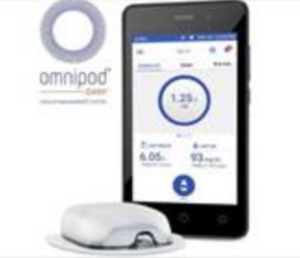 Insulet announced that the FDA has granted 510(k) clearance for the Omnipod DASH Insulin Management System, a new tubeless, wearable insulin pump for diabetes management. It consists of a discreet, tubeless, waterproof Pod, which is worn on the body, and the Personal Diabetes Manager (PDM), a handheld wireless device used to control the Pod. The system can be used with the Contour Next One Blood Glucose Meter for wireless transfer of blood glucose readings to the DASH PDM. The pump can hold up to 200 units of U-100 insulin and delivers continuous insulin through customizable basal rates and bolus doses. Through Bluetooth technology, the user can connect to the Omnipod DISPLAY and Omnipod VIEW apps. Both apps provide patients and caregivers access to insulin therapy on their smartphones. The DISPLAY app allows patients to monitor their PDM data whereas the VIEW app allows caregivers to monitor someone’s treatment progress; PDM status can be shared with up to 12 friends or family members. — Omnipod DASH
Test Your Knowledge
Mr. Carlson is a man, 52-years of age. He is Caucasian and works as a grocery store manager. His labs show that they were significant for elevated random plasma glucose 166 mg/dL, A1C 7.6% and elevated lipids (TG=175 mg/dL, LDL 148 mg/dL, HDL 38 mg/dL, total cholesterol 221 mg/dL). His physical exam is notable for central abdominal obesity (waist circumference 42”), BP 147/91, HR 72, RR 18, BMI 36 kg/m2, but otherwise normal. He is started on metformin and a dietitian is recommended. The dietitian discusses with him the benefits of medical nutrition therapy on weight, glycemic control, blood pressure, lipid profile, and overall wellbeing. Which following statement regarding macronutrients is true?
A. The ratio of carbohydrates, protein and fat is the same for all patients.
B. Total calories consumed per day is the key strategy for achieving glycemic control.
C. Reduced intake of trans fat lowers the HDL and raises the LDL.
D. Saturated fat should be less than 7% of total calories.
Follow the link for the answer.
Did You Know: People with Type 2 in Cardiovascular Risk Denial
What most people with type 2 don’t know is that their CVD risk could kill them. In a national online survey, it was revealed that many of those patients with type 2 are unaware of their cardiovascular risk. The information, that patients with diabetes do not die from diabetes but from cardiovascular disease, is well known in the medical community, but not for those patients with type 2 diabetes. The survey included 500+ patients with type 2 who have a good grasp of their increased risk of microvascular complications, such as neuropathy, nephropathy, and retinopathy, but they were lacking in the knowledge about their risk for CVD, and that it is the number-one killer of people with type 2 diabetes. Only one-third of those surveyed were aware of this risk. Plus, an even lower proportion of just 31% of the 365 respondents who had a friend or relative with type 2 diabetes were even aware of this fact. Even in the general population, there was the similar low rate of awareness for over 1,000 respondents who don’t have diabetes. When asked about their risk for having an amputation, just 24% of the group with type 2 diabetes rated themselves as likely to undergo amputation. The same attitude pertained to the prospect of having an acute MI — “it is more likely that others are at increased risk, not me.” Then once the patients were educated as to their risk, they said they would take preventive measures to reduce that risk, including dietary modification and a conversation with their family doctor. The survey showed that most people with type 2 diabetes displayed an attitude of denial. Letting our patients know their cardiovascular risks should be one of the first things shared with newly patients who are newly diagnosed. — For Your Sweetheart Survey.
New meta-analysis striving to expand on the notion that glycemic control and stroke risk are closely associated.
Sotagliflozin to be reviewed by the FDA as possible oral adjunct for people with insulin-treated type 1 diabetes.
Discrepancies prompt additional analyses of ACCORD-BP and SPRINT studies to determine best blood pressure target for those with diabetes.
Detection of euglycemic ketoacidosis could be a challenge for physicians since this condition can mask an underlying diabetic ketoacidosis.
With more than 8 trillion text messages sent worldwide every year, self-management support for blood glucose (SMS4BG) has potential to help improve glycemic management of patients who have diabetes.
Data from DIAMOND trial to help determine if CGM helps those with consistently high glucose.
Quote of the Week!
“Your positive action combined with positive thinking results in success.”
…Shiv Khera
Diabetes in Control gratefully acknowledges the assistance of the following pharmacy doctoral candidates in the preparation of this week’s newsletter:
Kaytie A. Weierstahl, Pharm.D. Candidate, LECOM School of Pharmacy
Kennen Munoz Munoz, Pharm. D. Candidate 2019, LECOM School of Pharmacy
Your Friends in Diabetes Care
Steve and Dave
Diabetes In Control
810 Bear Tavern Road Suite 102
Ewing, NJ, 08628
USA
www.diabetesincontrol.com