 Diabetes In Control. A free weekly diabetes newsletter for Medical Professionals. News and information for Medical Professionals.
- American College of Physicians Misses A1C Target
- by Stanley S. Schwartz, MD and Mary E Herman, PhD
- Prediabetes Is Just the Beginning
- One More Benefit for SGLT-2 Inhibitors
- Diabetes Risks Develop 20 Years Before Diagnosis
- Dipeptidyl Peptidase-4 Inhibitors and Incidence of Inflammatory Bowel Disease
- Why Being Physically Active Does a Body Good
- by Sheri R. Colberg, PhD, FACSM
Letter from the Editor

Over the past 24 years the United States and the world have made great strides in cleaning up the air we breathe. We have installed scrubbers to ensure cleaner coal burning, switched to Natural Gas and increased the use of wind and solar power. Developing countries no longer randomly use dirty energy and many of them are moving straight to clean sources of power.
We have increased efficiencies of motor vehicles and even large trucks have almost doubled their MPG during that time while cutting down on the smoke in the air. All of this has led to less respiratory problems, and less days that cities like Los Angeles, Houston and Tampa have a dark haze hanging in the air.
We have eliminated cigarette smoke in almost every indoor building and the air is much cleaner. How many of you would tolerate sitting down for dinner in a restaurant and having someone light up at the table next to you?
All of these improvements took a lot of work and dedication and no one wanted to give up and go back to the “way we were.” The same does not seem to be true when it comes to the American College of Physicians and their new 2018 Diabetes Guidelines. This week we have an exclusive article from Stanley S. Schwartz, MD and Mary E Herman, PhD on why the new ACP guidelines are a GIANT step in the wrong direction.
*****************************
We can make a difference!
*****************************
Dave Joffe
Editor-in-chief
This Week's Survey
For a patient with type 2 who has an A1c of 8% and is on metformin, has tried diet change and exercise, and is 25 pounds overweight, which of the following would you prefer: GLP-1, SGLT-2, or something else?
Follow the link to share your opinion.
New Product: Beginner Guides for Your Patients
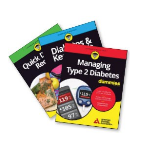 For a great way to help your patients who are newly diagnosed with type 2 diabetes or prediabetes, have them pick up Managing Type 2 Diabetes for Dummies, published by the American Diabetes Association in partnership with John Wiley & Sons. These guides help the patient to decide who should be on their diabetes care team, why exercise helps them manage their diabetes, and how to get started on a Mediterranean or low-carb meal plan. The book ($19.99), as well as its companions Diabetes & Keeping Fit for Dummies, Quick Diabetic Recipes for Dummies, and Diabetes & Carb Counting for Dummies ($22.99 each), is available at shopdiabetes.org and wherever books and e-books are sold.
Correction
Our April 28th article, Treating Hypoglycemia With A Needle-Free Glucagon, incorrectly stated that Lilly’s investigational nasal glucagon had already been approved for use in Europe. It is not yet approved for use in Europe or any other market globally at this time. We have corrected the article and apologize for the error.
Test Your Knowledge
How much higher is the rate of cardiovascular (CV) death among unmarried vs married patients who are at high CV risk, according to a recent study?
A. 19%
B. 28%
C. 34%
D. 45%
E. 56%
Follow the link for the answer.
Did You Know: How Fast Should You Walk to Reduce Risk of CVD?
After following more than a thousand patients (mean age, 64 years; 867 men) with cardiovascular disease and hypertension for three years, they found that those who walked at a speed of 3.17 miles per hour (5.1 kilometers per hour) had a reduced risk of hospitalization than those who walked at a slower pace. It showed that hospitalization risk was reduced 19% for every 1 kilometer per hour increase in speed. The researchers asked patients to walk 1 km on a treadmill at moderate speed and stratified them into three groups based on speed: slow (mean, 2.6 km per hour; n = 359), intermediate (mean, 3.9 km per hour; n = 362) and fast (mean, 5.1 km per hour; n = 357). Throughout the duration of the 3-year study, they recorded the number of all-cause hospitalizations and length of stay. According to the researchers, 51% of slow, 44% of intermediate, and 31% of fast walkers had at least one hospitalization during follow-up. Compared with the slow group, the fast group had reduced risk for hospitalization. The researchers found a 19% reduction in the likelihood of hospitalization for each 1 km per hour (0.62 mph) increase in walking speed.
Merlo C, et al. Eur J Prev Cardiol. 2018;doi:10.1177/2047487318767463.
By Stanley S. Schwartz, MD and Mary E Herman, PhD
Despite guidelines, hypoglycemia can largely be avoided without shortchanging tight glucose control.
Diagnosis can be the first symptom of chronic diseases regardless of obesity.
Treatment method reduced the amount of liver fat more than standard treatment alone.
Screening, treatment delay may hasten or increase cardiovascular disease risk.
Prolonged use of medication increases risk of bowel condition, but exact cause yet to be determined.
By Sheri R. Colberg, PhD, FACSM
How active are you? Unless you’re exercising more than several hours a day already, you probably have room to add more in for additional health benefits. Exercise is about the best medicine that there is for so many health conditions, including diabetes. Being active helps manage emotional stress and stave off depression—far better than antidepressant medications and with no bad side effects. It naturally bestows your body with antioxidant effect, making you less likely to develop most types of cancer—or even the common cold.
Quote of the Week!
“The best preparation for tomorrow is doing your best today.”
…H. Jackson Brown, Jr.
Diabetes in Control gratefully acknowledges the assistance of the following pharmacy doctoral candidates in the preparation of this week’s newsletter:
Vidhi Patel, Pharm. D. Candidate 2018, LECOM College of Pharmacy
Your Friends in Diabetes Care
Steve and Dave
Diabetes In Control
810 Bear Tavern Road Suite 102
Ewing, NJ, 08628
USA
www.diabetesincontrol.com