 Diabetes In Control. A free weekly diabetes newsletter for Medical Professionals. News and information for Medical Professionals.
- Real-World Benefits for SGLT-2 Inhibitors
- Study Finds Moderate Increase in Physical Activity Reduces Glucose, A1c
- Omega-6 Fatty Acid Reduces Risk of Type 2 Diabetes
- Are Statins Related to Diabetes Progression?
- Prevalence of and Risk Factors for Diabetic Peripheral Neuropathy In Youth With Type 1 and 2 Diabetes
- Why Data-Driven Diabetes Management Systems are the Future
- by Guest Writer David Kliff, Diabetic Investor
- Dr. Carla Greenbaum on Predicting and Preventing Type 1
Letter from the Editor
 For many years cardiovascular disease has been the number one cause of death among diabetes patients. So getting a CV benefit from diabetes drugs is a definite plus. Over the past few weeks Dr. Aaron Vinik has been sharing his views on the values of Cycloset for both diabetes and heart failure.
This week we have a feature that looks at another class of drugs, the SGLT-2 Inhibitors, and multiple studies showing their value in cardiovascular disease prevention.
*****************************
We can make a difference!
*****************************
Dave Joffe
Editor-in-chief
This Week's Survey
Are all your patients who use insulin pens trained and know how to use a vial and syringe? Follow the link to see how you and your colleagues compare.
Newsflash: Semaglutide Gets Approval for T2 Treatment
The US Food and Drug Administration (FDA) has approved semaglutide (Ozempic, Novo Nordisk) as an adjunct to diet and exercise for the treatment of type 2 diabetes in adults.The long-acting glucagon-like peptide-1 (GLP-1) receptor agonist was approved in 0.5-mg and 1.0-mg doses, to be administered once weekly via a dedicated prefilled pen device. Semaglutide is now the seventh GLP-1 receptor agonist on the US market and the third dosed once weekly. However, data suggest it might be more effective than some of its competitors.
New Product: MedAngel ONE: Wireless Remote Temperature Sensor and Alarm System Warns You When Your Insulin Goes BAD!
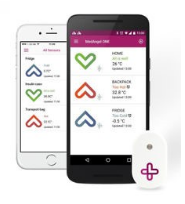 MedAngel ONE is a solution that helps you to keep your medications at the right temperature. It consists of a wireless smart sensor and a mobile app. The sensor is placed with the medications and continuously measures the temperature and communicates with your phone. The app alerts you when the temperature approaches or exceeds the safe range for your medications. MedAngel ONE highlights include:
- Supports the top temperature-sensitive medications in the US and EU, including the most widely prescribed insulins and biologics
- Smart alarms tailored to each medication
- Waterproof sensor design made for refrigerators and cool bags
- Up to seven days’ internal memory capacity on the sensor
- Two-year warranty
Available at www.doctorsoption.com
Current Interview
Dr. Carla Greenbaum is the Director of the Diabetes Research Program at Benaroya Research Institute at Virginia Mason in Seattle, WA.
Test Your Knowledge
You have decided that one of your patients, a 72-year-old, should add a basal insulin dose to her antihyperglycemic regimen. During your discussion with her, she voices concern that between her “arthritic hands and poor vision” she won’t be able to accomplish this. You make the recommendation that using an insulin pen will make injection easier for her. Which of the following statements regarding insulin pens is true?
A. They all require loading with an insulin cartridge.
B. They have more accurate dosing than syringes.
C. They can now dose insulin in .10 units increments.
D. They are now available for all types of insulin.
Follow the link for the answer.
Did You Know: Mouthwash Can Increase Risk of Diabetes and Prediabetes By 55%
Researchers found that using mouthwash twice a day destroys our friendly oral bacteria, which can alter blood sugar metabolism and promote diabetes. The scientists came to their intriguing findings by analyzing the data of 1,206 adults ages 40–65 who were overweight or had obesity. All adults were part of the San Juan Overweight Adults Longitudinal Study, and they were free of diabetes and major cardiovascular diseases at study baseline. The researchers suspect that mouthwash can not only destroy the bad bacteria but also “good” bacteria in the mouth that are important for the formation of nitric oxide, which is a chemical compound that helps to regulate insulin. As part of the study, participants were asked how often they used mouthwash. A total of 43 percent of the subjects said that they used mouthwash at least once daily, while 22 percent said that they used it at least twice daily. Over an average of 3 years of follow-up, the team monitored the development of prediabetes or diabetes among the 945 participants. Compared with participants who did not use mouthwash, those who reported using mouthwash at least twice daily were 55 percent more likely to develop prediabetes or diabetes over 3 years. These findings persisted after accounting for possible confounding factors, including diet, oral hygiene, sleep disorders, medication use, fasting glucose levels, income, and education levels. There was no association between using mouthwash less than twice per day and the risk of prediabetes or diabetes, the researchers report. Given that more than 200 million people in the U.S. use mouthwash, these latest findings could be a cause for concern. The study authors caution “the indiscriminate routine use” of antibacterial mouthwash may cause more harm than good. However, it is important to note that the study is purely observational. sciencedirect.com Dec, 2017
Patients with type 2 diabetes usually do not die from diabetes, but from cardiovascular disease and strokes.
Benefits of exercise shown to depend on duration, not exercise type
Study finds linoleic acid has long-term benefits in diabetes prevention, arachidonic acid not harmful.
Statin therapy may be elevating risk of type 2 diabetes in high-risk adults.
SEARCH For Diabetes In Youth Study finds more at risk of developing diabetic peripheral neuropathy than previously thought.
By Guest Writer David Kliff, Publisher, Diabetic Investor: Although it has taken much longer than I anticipated, market dynamics are forcing companies to think differently and we are now on the verge of patients being prescribed diabetes management systems rather than individual pieces of the system.
Quote of the Week!
“To succeed, you need to find something to hold on to, something to motivate you, something to inspire you.”
…Tony Dorsett
Diabetes in Control gratefully acknowledges the assistance of the following pharmacy doctoral candidates in the preparation of this week’s newsletter:
Jessica Quach, Doctor of Pharmacy Candidate 2018, GA-PCOM School of Pharmacy
Graciela Nieto, Doctor of Pharmacy Candidate 2018, LECOM School of Pharmacy
Jessica Lambert, Doctor of Pharmacy Candidate 2018, USF College of Pharmacy
Your Friends in Diabetes Care
Steve and Dave
Diabetes In Control
810 Bear Tavern Road Suite 102
Ewing, NJ, 08628
USA
www.diabetesincontrol.com